Resource library · five practices · tools · standards · case studies
Engineering resources for brownfield plants, across five practices
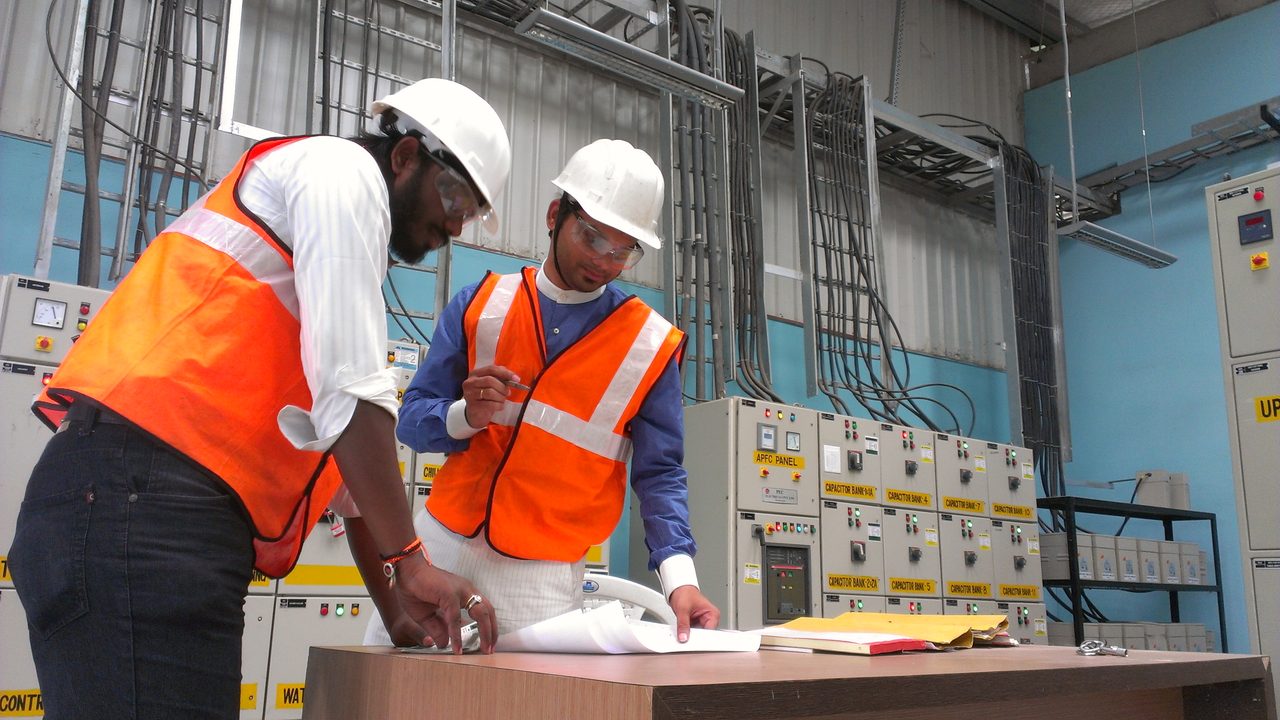
VB Engineering's resource library covers the five practices plant teams buy from VB: power system studies including arc flash, risk and process safety, 3D LiDAR scanning, as-built engineering and discrete event simulation. Each section links the service pages, free tools and standards that answer the question asked before a study is commissioned.
1,000+ studies21 countriesSince 2014Every tool free, no login
Which resource do I need?
Pick what you are trying to do. The library returns the pages that answer it, in the order to read them.
Everything in the library is free and ungated. The engineer's review of your scope sits behind a short form: no phone number, a reply from a practice engineer.
Trusted on plants that cannot stop









Five practices
What does VB Engineering do for an operating plant?
VB Engineering works on operating plants in five practices: power system studies, risk and process safety, 3D LiDAR scanning, as-built engineering and discrete event simulation. Each practice can be bought on its own, and they share one record of the plant: the LiDAR scan feeds the as-built drawings, the as-built drawings feed the studies, and the studies feed the safety reviews.
Arc flash, short circuit, protection coordination, load flow, harmonics, UPS and battery sizing, in ETAP and SKM PowerTools.
Power systems Practice 2Risk, safety and AMCHAZOP, SIL determination, LOPA, QRA and functional safety, with multi-year safety retainers.
Risk and safety Practice 33D LiDAR scanningScans of operating plants turned into registered point clouds, clash checks and digital twin foundations.
LiDAR scanning Practice 4As-built engineeringP&IDs, single-line diagrams, isometrics, loop drawings and cable schedules that match the field.
As-built Practice 5Discrete event simulationThroughput, bottleneck and capex decisions tested in a FlexSim model before the money is spent.
SimulationPractice 1 · Power system studies
Which power system study does my plant need?
A power system study models the plant's electrical network to check that equipment is rated for the fault current, protection clears faults selectively, voltages hold under load and workers know the arc flash hazard at every panel. VB builds every study in ETAP or SKM PowerTools from a verified single-line diagram, and the short circuit model is shared across the studies.
Fault currents at every bus and equipment duty checked against the rating.
Short circuit study IEEE 242Protection coordinationRelay and breaker settings graded on TCC curves so faults clear selectively and fast.
Protection coordination Load flowLoad flow analysisVoltage, loading and losses across the network before an expansion is connected.
Load flow analysis IEEE 519Harmonic analysisDistortion from drives and rectifiers measured, modeled and filtered to the limit.
Harmonic analysis Power qualityPower quality studyTHD, flicker, voltage sag and imbalance assessed where sensitive loads trip.
Power quality study IEEE 485UPS and battery sizingLithium-ion and VRLA battery and UPS sizing for critical loads and data halls.
UPS and battery sizing Solar · wind · BESSRenewable and BESS integrationGrid code compliance and plant impact before solar, wind or battery storage connects.
Renewable integration IEC 60076 · IEEE C57Transformer sizing and loadingLoading audit and sizing before a transformer is replaced or a load is added.
Transformer sizingArc flash tools and references
Arc flash has its own set of free tools. NFPA 70E Section 130.5(G) caps the review interval of an arc flash risk assessment at five years, and NEC 2026 Article 110.16(B) puts the date of the study on the label.
- Arc flash study cost calculatorIndicative US band by bus count
- Arc flash label date checkCurrent, due or overdue
- Arc flash study scope of workScope and RFP builder
- Arc flash study report reviewGap review of an existing report
- DC arc flash incident energy calculationDC method and estimator
- Battery storage and 800 VDC arc flash studyBESS and DC distribution
- Who can perform an arc flash studyStamping and qualification
- What changed in NFPA 70EEdition changes for the study
- Arc flash for data center campusesAC and DC in one model
- Arc flash study in IndiaIEEE 1584 and NFPA 70E
- Arc flash study in GeorgiaUnited States
- Arc flash study in Northern VirginiaUnited States
Practice 2 · Risk, safety and AMC
When does a process plant need a HAZOP, SIL or LOPA study?
A process hazard analysis such as a HAZOP is needed before start-up, after a significant change and at least every five years under US OSHA 29 CFR 1910.119(e)(6). SIL determination and LOPA follow from the HAZOP: they decide how reliable each safety instrumented function must be under IEC 61511, and VB runs all three on P&IDs verified against the field.
Node-by-node HAZOP and five-year revalidation on P&IDs that match the plant.
HAZOP study IEC 61508 · IEC 61511SIL determinationTarget SIL for each safety instrumented function and the SIS design to meet it.
SIL determination IEC 61511LOPALayer of protection analysis to test whether existing safeguards close the risk gap.
LOPA analysis Quantitative riskQRA studyIndividual and societal risk from fire, explosion and toxic release, modeled and mapped.
QRA study IEC 61508Functional safety assessmentSIL verification and functional safety assessment across the safety lifecycle.
Functional safety Multi-year retainerArc flash and safety AMCArc flash recertification, safety revalidation and HAZOP refresh on one annual contract.
Safety AMCPractice 3 · 3D LiDAR scanning
What can a LiDAR scan of an operating plant be used for?
A terrestrial LiDAR scan records an operating plant as it stands, as a registered point cloud that new designs, as-built drawings and digital twins are built from. VB specifies accuracy against the USIBD Level of Accuracy specification and scans from walkways while equipment stays energized, so a scan rarely needs a shutdown.
A survey-grade, classified point cloud of the plant that the twin is built on.
Digital twin foundation RetrofitClash detectionNew piping, ducts and steel checked against the scan before anything is fabricated.
Clash detection EAM and CMMSAsset register and taggingA verified equipment list with locations and tag readings, ready for maintenance systems.
Asset register Live plantHot-work-safe scanningScanning during live operations without lockout, for plants that cannot stop.
Hot-work-safe scanning PipelinesPipeline right-of-way surveyEncroachment, vegetation and terrain change along a pipeline corridor.
Pipeline ROW survey ProgramVB AssetTwinLiDAR, as-built drawings and a digital twin handed over as a baseline and refreshed every year.
VB AssetTwinPractice 4 · As-built engineering
Why do as-built drawings need to match the field?
As-built drawings are the plant's record of what is actually installed, and every study, permit and safety review is only as good as the drawing it is run on. US OSHA 29 CFR 1910.119(d)(3)(i)(B) makes P&IDs part of process safety information, and EU GMP Annex 15 Section 3.9 checks installation against the engineering drawings, so VB verifies each drawing against a walkdown or a LiDAR scan.
Field-verified P&IDs for process safety information, HAZOP and change control.
P&ID as-built IEEE 315 · ETAP-readyElectrical SLD reconstructionSingle-line diagrams rebuilt from switchgear, transformer and cable data, ready to model.
SLD reconstruction ISO 6428 · ASME B31.3Isometric drawingsPiping isometrics generated from the point cloud for tie-ins and replacements.
Isometric drawings ISA 5.1Loop drawing reconstructionInstrument loops traced from the field device to the control system termination.
Loop drawings Cable scheduleCable schedule as-builtEvery cable, its route, size and terminations, verified against the trays and panels.
Cable schedule Complete setFull as-built packageP&IDs, isometrics, single-line diagrams, GA drawings and asset register in one delivery.
Full as-built packagePractice 5 · Discrete event simulation
How does simulation de-risk a capex decision?
Discrete event simulation builds a working model of a production line in FlexSim, so a new machine, a layout change or a shift pattern is tested against real cycle times before money is committed. The model shows where the bottleneck moves, what throughput the investment buys and how long it takes to pay back.
Capacity found in the existing line before new equipment is bought.
Throughput optimization Root causeBottleneck analysisThe constraint identified, and where it moves once it is fixed.
Bottleneck analysis PaybackCapex ROI evaluationThroughput uplift, payback period and sensitivity for each investment option.
Capex ROI evaluation LayoutLayout and flow optimizationEquipment placement and material flow tested for a retrofit or a new hall.
Layout and flow SchedulingOperations optimizationProduction scheduling, resource allocation and dispatch rules tested on the model.
Operations optimizationStandards
Which standards does each study follow?
Each VB study is built to a named standard, and the deliverable cites the clause it meets. The table lists the standard behind each study across the five practices, so a scope or an RFP can be checked against it.
| Practice | Study | Standard | What the clause requires |
|---|---|---|---|
| Power systems | Arc flash risk assessment | NFPA 70E Section 130.5 | Assess the risk, label the equipment, review within five years |
| Power systems | Arc flash label | NEC 2026 Article 110.16(B) | The date of the study on the label |
| Power systems | Incident energy | IEEE 1584-2018 | AC calculation method, 208 V to 15 kV, three-phase |
| Power systems | Short circuit | IEC 60909 · IEEE C37 series | Fault currents and equipment duty |
| Power systems | Protection coordination | IEEE 242 | Selective, fast fault clearing |
| Power systems | Harmonics | IEEE 519 | Voltage and current distortion limits at the point of common coupling |
| Risk and safety | HAZOP revalidation | US OSHA 29 CFR 1910.119(e)(6) · IEC 61882 | Process hazard analysis revalidated at least every five years |
| Risk and safety | SIL and LOPA | IEC 61511 | Safety instrumented functions designed to a target SIL |
| As-built | P&IDs | US OSHA 29 CFR 1910.119(d)(3)(i)(B) | P&IDs held as process safety information |
| As-built | Pharma installation | EU GMP Annex 15 Section 3.9 | Installation verified against the engineering drawings |
| LiDAR | Scan accuracy | USIBD Level of Accuracy specification | Accuracy bands LOA10 to LOA50, stated at two standard deviations |
Flagship programs
How does VB keep studies current after they are delivered?
VB's four flagship programs turn a one-off study into a five-year retainer, one for each recurring obligation: the arc flash review, the power system re-tune, the as-built and twin refresh, and the HAZOP and SIL revalidation. Each starts with a baseline and adds a scheduled refresh, so the plant meets the cycle without a fresh tender.
A five-stage arc flash program: assess, label, train, enforce and renew.
VB Arc360 Power system studiesVB PowerPulseTen power system studies, relay setting files in the vendor's format and an annual re-tune.
VB PowerPulse LiDAR and as-builtVB AssetTwinLiDAR scanning, as-built drawings and a digital twin, refreshed every year.
VB AssetTwin Process safetyVB SafeWatchHAZOP, LOPA and SIL from field-verified P&IDs, with IEC 61511 revalidation built in.
VB SafeWatchCase studies
What changed on real plants after the study?
Each case is a delivered VB study, described by plant type rather than client name. The outcome figures are kept exact.
- 48% lower average incident energy, 11.2 to 5.8 cal/cm²
- 9 to 1 buses above PPE Category 2
- 14 substations, zero schedule slip
- 62% lower average incident energy
- 38 substations in one compliance file
- 11 weeks from start to delivered file
- 87 buses modeled
- 5 mills on one standard
- No major audit findings
Questions plant teams ask about the library
Are the tools and references free?
Yes. Every calculator, check, standards table and reference in the library is free and needs no login. A VB engineer's review of your specific scope sits behind a short form with no phone number.
Can I buy one practice without the others?
Yes. Each of the five practices is sold on its own. They are linked because they share one record of the plant: a LiDAR scan feeds the as-built drawings, and verified drawings feed the power system and safety studies.
Which software does VB use?
VB builds power system and arc flash studies in ETAP or SKM PowerTools, and discrete event simulation models in FlexSim. No study figure is calculated by hand or in a spreadsheet.
How often do the studies need to be repeated?
An arc flash risk assessment is reviewed at least every five years under NFPA 70E Section 130.5(G), and a process hazard analysis is revalidated at least every five years under US OSHA 29 CFR 1910.119(e)(6). Both are also redone when the plant changes.
Can a plant be laser scanned without a shutdown?
In most areas, yes. LiDAR scanning is non-contact, so the scanner works from walkways while equipment stays energized. Spaces inside an arc flash boundary are scanned with doors closed or during a planned outage.
Does a HAZOP need accurate P&IDs?
Yes. A HAZOP reviews the plant node by node on the P&IDs, so a drawing that does not match the field produces a review of a plant that does not exist. VB verifies the P&IDs before the HAZOP starts.
Are the case studies real projects?
Yes. Each is a delivered VB study. The plant is described by type and region rather than by name, and the outcome figures are kept exactly as delivered.
Is there a resource for my country?
The library has dedicated pages for the United States and India. For the UAE, Saudi Arabia and Australia, ask an engineer and VB will point you to the standard and the study that apply to your plant.
Can't find the resource you need?
Tell us the plant, the question and the deadline. A VB practice engineer replies with the reference that answers it, or the scope of the study that would.
Ask an engineerPrefer email? Write to connect@groupvb.com with your plant type in the subject line.