Building or expanding a plant? Get the lightning protection designed, drawn and signed to IS/IEC 62305.
Five parts, one design. Air terminals, down conductors, earthing, bonding and SPDs designed together for your plant.

Trusted by the World’s Most Demanding Plants.































































How is a lightning arrester system designed for a plant?
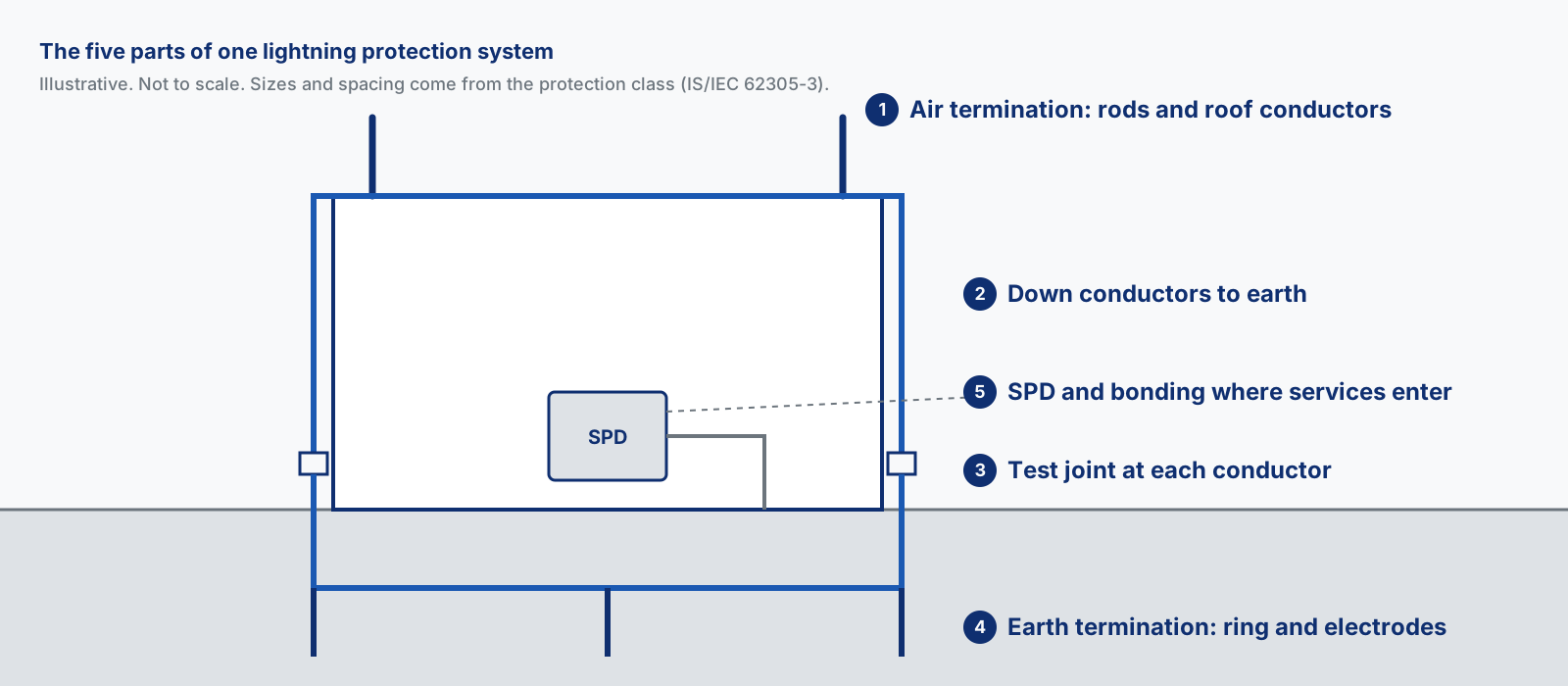
A lightning protection system for a plant is designed as one system of five parts: air terminals that take the strike, down conductors that carry the current, an earth termination that spreads it into the ground, equipotential bonding, and surge protective devices (SPDs) on the power and control lines. A rod on the roof is only the first of the five.
The air termination is the set of rods, masts, roof conductors and meshes placed where lightning would otherwise strike. The down conductor is the path the current follows to earth, kept away from people and equipment. The earth termination is the network of earth electrodes, usually in test pits joined by a ring, that discharges the current into the soil. VB designs all five together, to IS/IEC 62305, and draws them on your plant layout.
What are the five elements of a lightning protection system?
| Element | What it does |
|---|---|
| Air termination | Rods, masts, meshes or catenary wires that intercept the strike |
| Down conductors | Carry the current from the roof to earth, with test joints for checking |
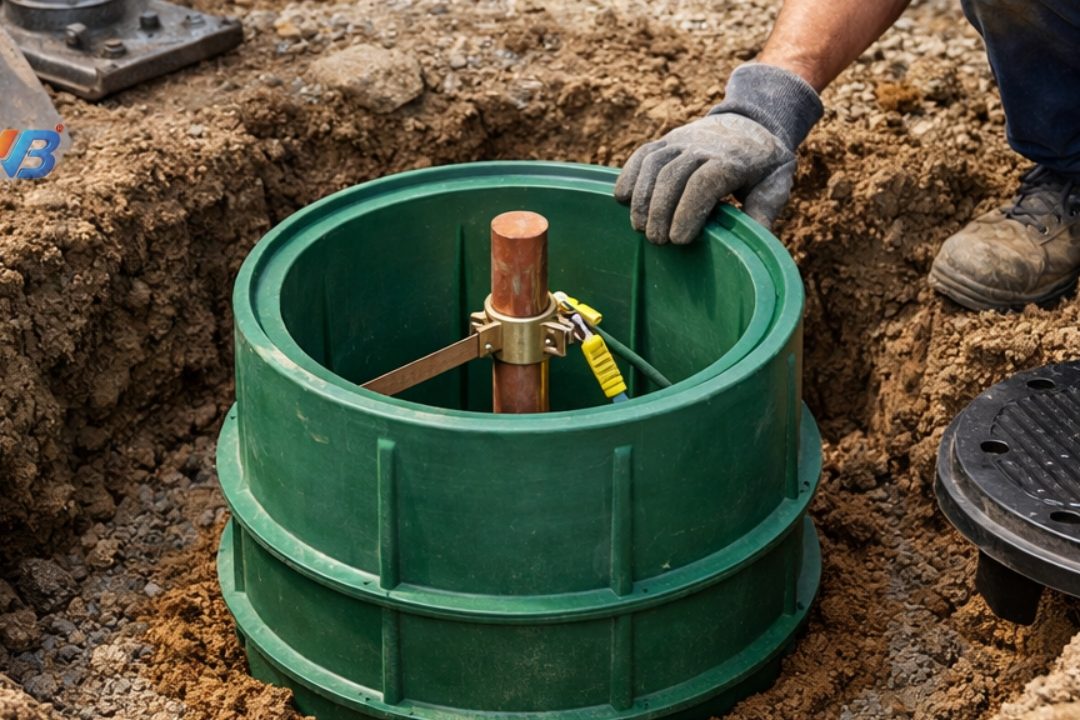
| Earth termination | Earth electrodes and a ring that spread the current into the ground |
| Equipotential bonding | Joins metal parts so no dangerous voltage builds up between them |
| Surge protective devices | Stop the surge entering power, control and data lines |
How is the protection zone of a lightning arrester calculated?
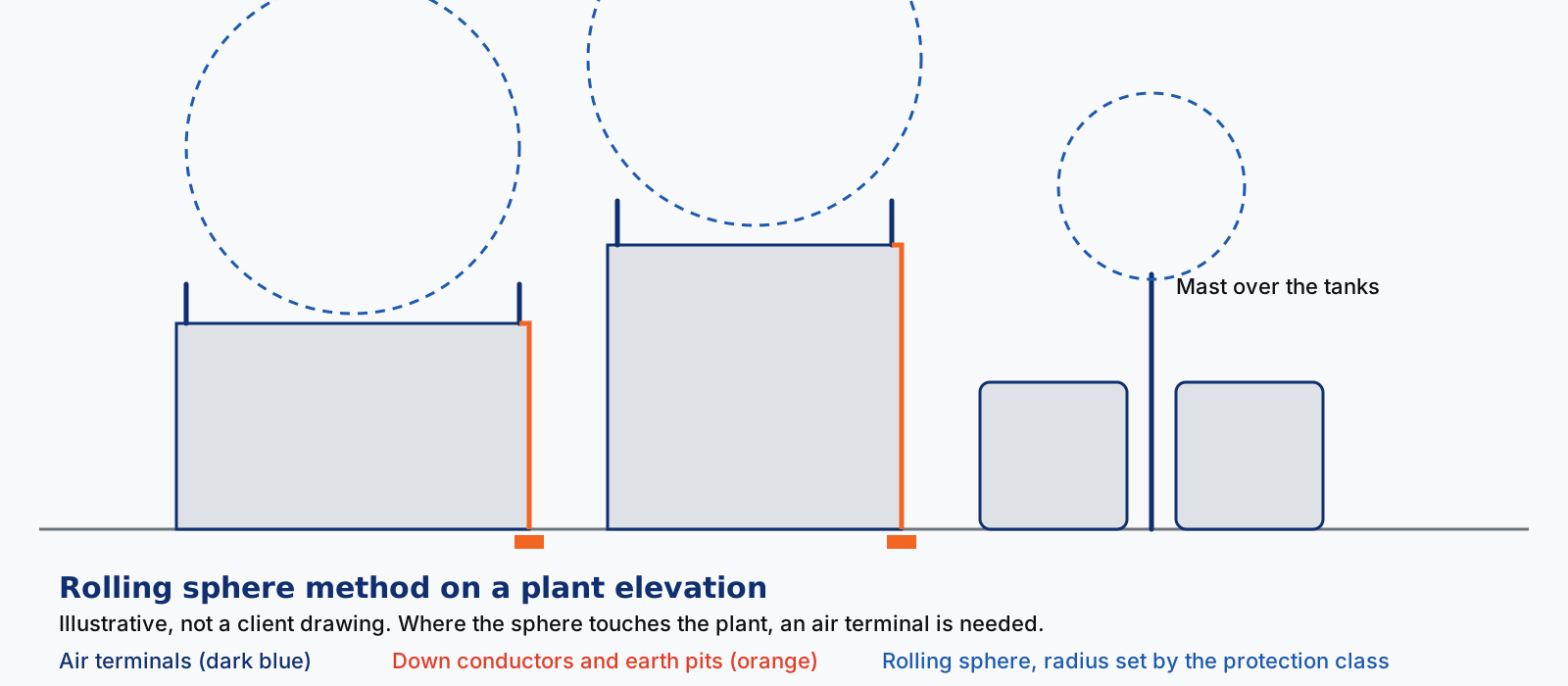
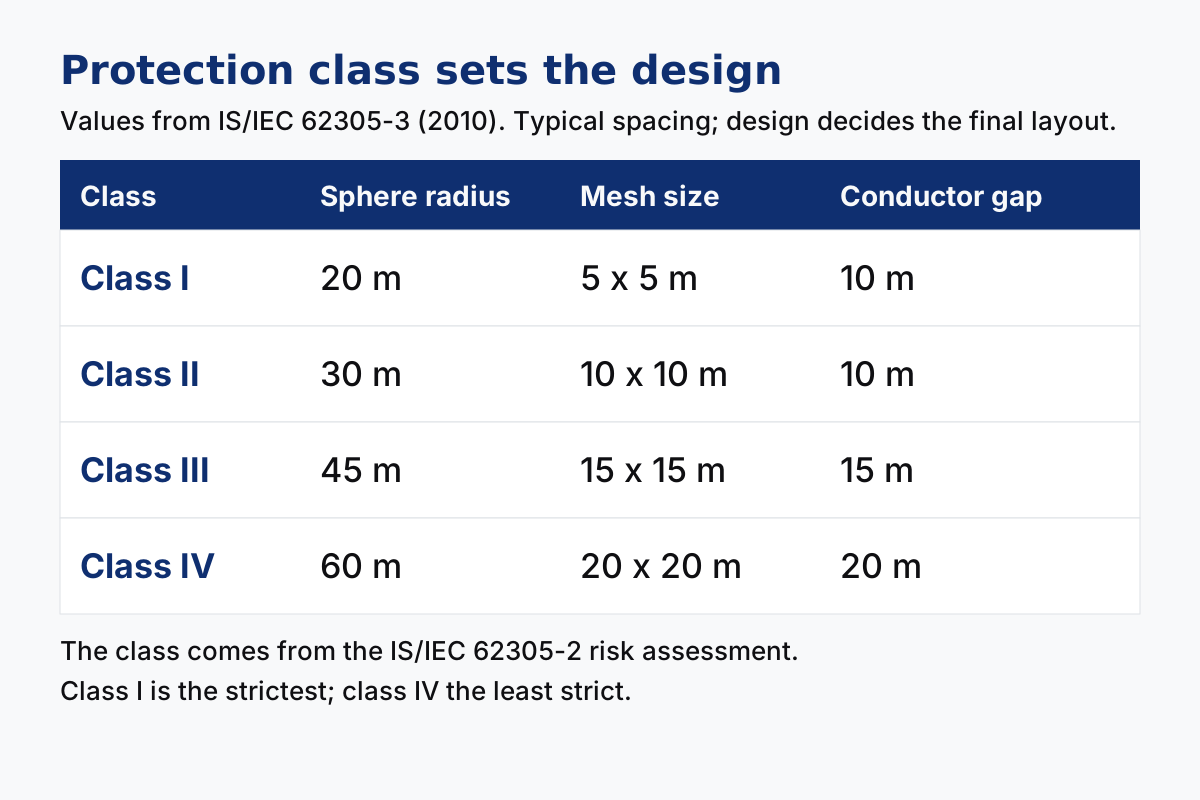
The protection zone is calculated with the methods in IS/IEC 62305-3: the rolling sphere method, the protection angle method and the mesh method. The protection class from the risk assessment sets the sphere radius, the mesh size and the spacing of down conductors, so the coverage area of an arrester depends on its height and the class, not on the product.
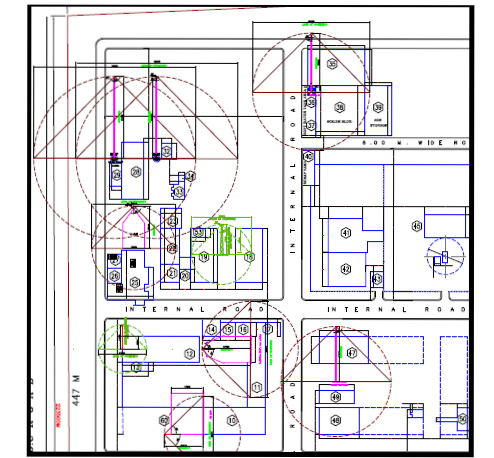
The rolling sphere method rolls an imaginary sphere over the plant; every point it touches can be struck and needs an air terminal. The protection angle method gives a cone under each rod, and works for simple, low structures. The mesh method covers flat roofs with a conductor grid. VB runs the calculation in software on your plant elevation and draws the result, so the zones can be checked on the drawing rather than taken on trust.
| Protection class | Rolling sphere radius | Mesh size | Typical down-conductor spacing |
|---|---|---|---|
| Class I | 20 m | 5 x 5 m | 10 m |
| Class II | 30 m | 10 x 10 m | 10 m |
| Class III | 45 m | 15 x 15 m | 15 m |
| Class IV | 60 m | 20 x 20 m | 20 m |
Not sure which class your plant needs? The IS/IEC 62305-2 risk assessment decides it.
Which plants does VB design lightning protection for?
VB designs lightning protection for oil and gas, chemical, pharmaceutical and data centre sites, where a strike costs more than a damaged roof.
Oil and gas, refineries and tank farms: hydrocarbon tanks, stacks and pipe racks need free-standing masts or catenary wires, and bonding that keeps sparks away from vapour; OISD-GDN-180 and API RP 545 shape the design. Chemical plants and hazardous areas: an isolated system keeps the strike current away from zoned equipment. Pharmaceutical plants: the risk is in the PLCs, HVAC and cleanroom controls, so the SPD design matters as much as the rods. Data centres and commercial buildings: a strike near the building can still reach the IT load through power and data cables, so internal protection is designed with the external system.
When does a plant need a lightning protection design?
A plant needs a lightning protection design whenever something new goes up or the protection on site has no design behind it.
Which standards does a lightning protection design follow?
A lightning protection design in India follows IS/IEC 62305: Part 3 for the structure and the people near it, Part 4 for the electrical and electronic systems inside, and Part 2 for the risk assessment that sets the class.
| Standard | What it sets in the design |
|---|---|
| IS/IEC 62305-3 | Air termination, down conductors, earth termination, separation distances and the protection zone methods (rolling sphere, protection angle, mesh). |
| IS/IEC 62305-4 | Surge protective devices, bonding and shielding for power, control and data systems inside the structure. |
| IS/IEC 62305-2 | The risk assessment that decides whether protection is needed and which class (I to IV) the design must meet. |
| IEC 62561 series | Requirements for lightning protection components: conductors, clamps, earth electrodes and test joints. |
Need to know whether the law requires it first? See lightning risk assessment and the codes that apply in India.
What do you receive with a lightning protection design?
Every design delivers drawings a contractor can build from and a report an inspector or insurer can check.
- Design basis: protection class from the IS/IEC 62305-2 risk assessment, with the inputs used
- Lightning protection layout drawings in AutoCAD (DWG and PDF): air terminals and protection zones in plan and elevation
- Down conductor routes, test joints and separation distances
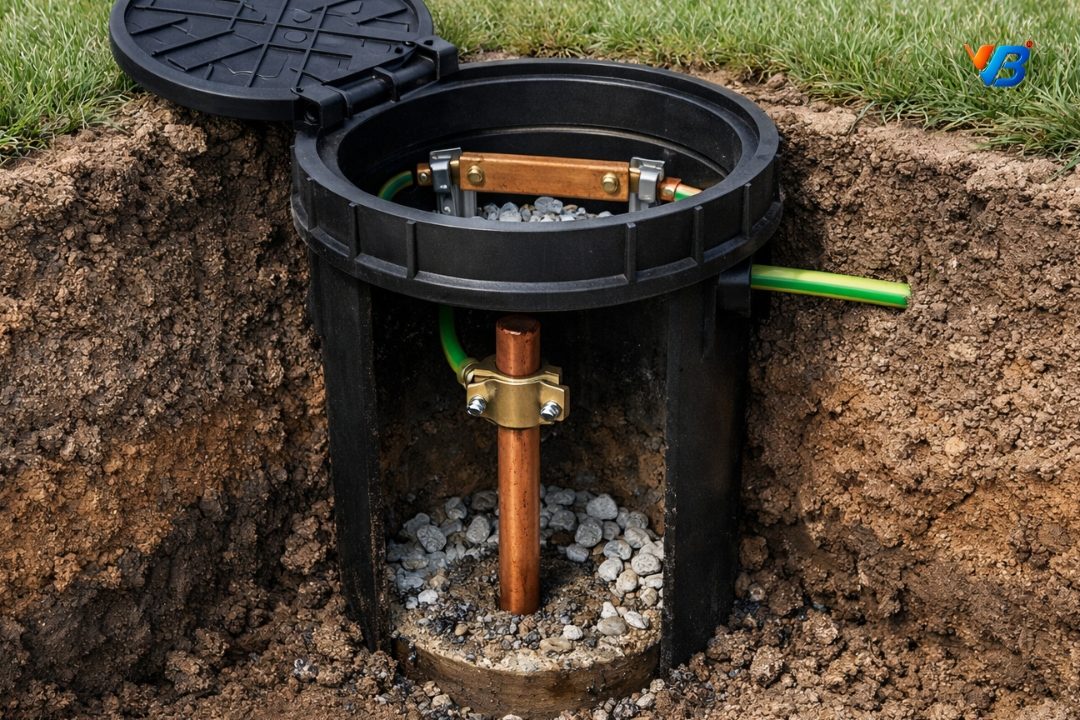
- Earth termination layout: earth pits, ring conductor and bonding points
- SPD schedule for power, control and data lines, with locations on the single-line diagram
- Bill of quantities and installation notes, so contractor quotes can be compared
- Signed design report, and support to your contractor during installation
Send your site layout: we tell you what the design will need from your team.
How much does lightning protection cost: design, installation and testing?
Lightning protection cost has three parts priced separately: the design, priced per structure by roof area and height; the installation, priced by your contractor against the design’s bill of quantities; and testing, priced per earth pit and test joint. Prices quoted per square foot usually cover hardware only, not the design that decides how much hardware is needed.
| Part of the work | How it is priced | What moves the price |
|---|---|---|
| Design and drawings | Per structure | Number of buildings, tanks and stacks; roof area and height; quality of your existing drawings |
| Risk assessment | Per structure | Number of structures, hazardous areas and the services entering each one |
| Testing | Per earth pit and test joint | Number of pits and joints, roof access and permits |
Get a price estimate
Three answers about your site are enough. An engineer compares them with lightning protection designs VB has delivered and emails you an estimate.
Nothing is priced on screen. An engineer reads your answers first, then sends the estimate with a proposal for your site.
How does VB design lightning protection for a plant?
A lightning protection design runs in four steps: the site is surveyed, the risk sets the class, the system is designed and drawn, and the design is issued and supported through installation.
Survey
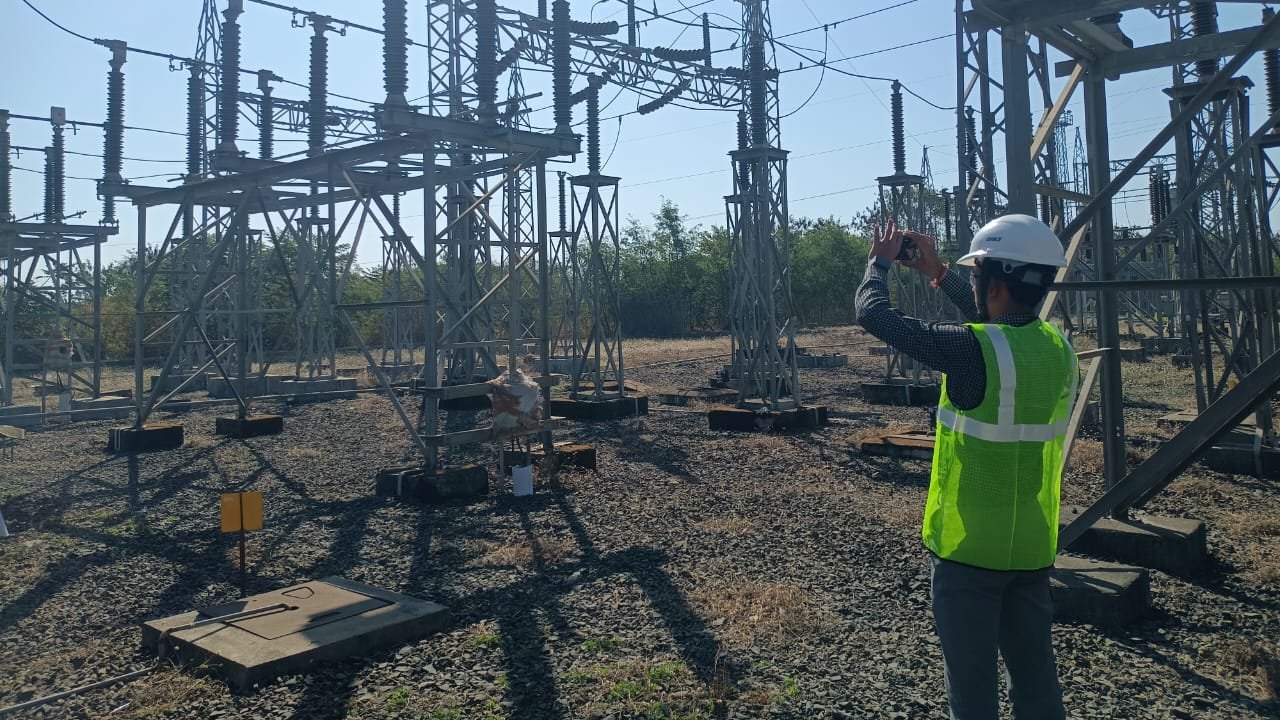
Structures, heights, roofs, tanks and services recorded; existing rods and earth pits found and tested.Assess
IS/IEC 62305-2 risk assessment sets the protection class for each structure.Design
Protection zones calculated on the plant elevation; conductors, earthing and SPDs designed and drawn.Issue and support
Drawings, bill of quantities and signed report issued; contractor questions answered on site.A rod on the roof is not a lightning protection system. Without down conductors, bonding and an earth termination designed with it, the current can jump to people, pipes and cables on its way to the ground.
Which tools does VB use to survey and design lightning protection?
VB surveys roofs, structures and existing earth pits on site, then draws the protection zones, conductors and earthing in AutoCAD on your plant layout. Your drawings come back in DWG and PDF, ready for the contractor and the inspector.
| Stage | Tools we work in | What you receive |
|---|---|---|
| Survey | Site walk-down with photos · structure heights from drawings or measured on site · earth resistance tester on existing pits | Structure heights, roof layouts and the condition of what is installed |
| Assess | IS/IEC 62305-2 risk calculation, per structure | Protection class and the inputs behind it |
| Design | AutoCAD, on your plant layout | Protection zones in plan and elevation, conductor routes, earthing layout |
| Specify | SPD and component schedules to IS/IEC 62305-4 and IEC 62561 | SPD schedule and a bill of quantities for the contractor |
Running a different platform? Tell us which one in the form. We deliver in the software and drawing standard your plant already uses.
Product names are trademarks of their respective owners.
What does a lightning protection design change at a chemical plant?
Illustrative example, modelled on a typical job and not a client record: a speciality chemicals plant in south India adding two solvent tanks and a taller process block.
The existing rods had been placed on the original block only, with no drawing of what they covered. The rolling sphere showed both new tanks and the new block outside any protection zone, and two down conductors ending without an earth ring. The design added a free-standing mast over the tank farm, a roof mesh and air terminals on the process block, down conductors with test joints, an earth ring tying the pits together, and SPDs at the DCS room incomers. The contractor quoted against one bill of quantities, so the plant compared like with like.
Adding tanks, stacks or a new block? Start with one structure.
Who designs and signs your lightning protection?
Every proposal names the engineer who surveys the site, the engineer who designs the system and the reviewer who signs it, with CVs.
Site engineer
CV shared with the proposalLightning protection design engineer
CV shared with the proposalVB Engineering reviewer
CV shared with the proposalLightning protection design: questions plant teams ask
What does a lightning protection consultant do?
A lightning protection consultant assesses the risk at each structure, sets the protection class, designs the air terminals, down conductors, earthing and SPDs, draws them for the contractor and signs the design. VB also supports the contractor during installation.
How much does a lightning risk assessment or protection study cost in India?
It is priced per structure: the number of buildings, tanks and stacks, the hazardous areas and the quality of your drawings move the price. The estimator on this page sends your answers to an engineer, who emails an estimate and a proposal.
How much does it cost to install a lightning protection system?
Installation is priced by the contractor against the design’s bill of quantities: conductors, terminals, clamps, earth electrodes and SPDs. Per square foot prices usually cover hardware only. A design first means every contractor quotes for the same system.
How much does lightning protection testing cost?
Testing is priced per earth pit and test joint, with roof access and permits adding time. A design with numbered test joints makes every later test faster and cheaper.
How do you size a lightning arrester?
By the protection class and the structure it protects. The class sets the rolling sphere radius; the rod height and position are then chosen so the sphere cannot touch the roof edges or equipment it should cover.
What is the coverage area of a lightning arrester in metres?
There is no single figure. Coverage depends on the rod height and the protection class: the rolling sphere radius is 20 m for class I, 30 m for class II, 45 m for class III and 60 m for class IV, and the zone is drawn from that.
What are the five elements of a lightning protection system?
Air termination, down conductors, earth termination, equipotential bonding and surge protective devices. A design that covers only the first is not a complete system.
What is level 4 lightning protection?
Protection class IV is the least strict of the four classes in IS/IEC 62305: a 60 m rolling sphere, a 20 x 20 m mesh and down conductors about 20 m apart. The risk assessment decides whether class IV is enough.
How is lightning protection calculated according to IEC 62305?
Part 2 calculates the risk and sets the class. Part 3 then uses the rolling sphere, protection angle or mesh method to place the air terminals, and sets the down conductors and earthing. Part 4 covers SPDs for the systems inside.
What is the minimum conductor size for lightning protection?
IS/IEC 62305-3 sets minimum cross-sections by material and use. For copper air terminals and down conductors it is 50 square millimetres. The design schedules the size of each conductor.
Where to go next
Get a price estimate for your lightning protection design
Share the site, the buildings, tanks and stacks to protect, and your build schedule. An engineer reads it and sends back an estimate, a survey plan and a proposal.
- A survey plan for your site
- The risk assessment and design steps, with what we need from your team
- An estimate and a schedule that fits your build
Prefer to write? connect@groupvb.com · or WhatsApp us from the chat button
VB Group® · Sustainability A Certainty.
Four details. One proposal.
Your name, work email and company, the structures to protect, and whether it is a new plant or an expansion.