Inspector, insurer or parent audit asking whether your lightning protection works? Get it audited and documented.
Five parts checked. Air terminals, down conductors, earth pits, bonding and SPDs, in one signed report.

Trusted by the World’s Most Demanding Plants.































































What does a lightning protection audit service cover?
A lightning protection audit checks every part of an installed system against IS/IEC 62305 and against the plant as it stands today: the air terminals and the zones they cover, the down conductors and test joints, the earth pits, the bonding of metal parts, and the surge protective devices where services enter.
An audit is a one-time engineering check of a system that already exists. It answers two questions an inspector, insurer or parent company will ask: does the system still protect every structure on site, and can you show it with records? Where the answer is no, the audit report says what to fix and in what order. VB audits plants across India, and for groups with sites in Asia, the Middle East and Australia, audits those sites to the same report format.
What VB checks in each part of the system
| Part | What is checked | Evidence in the report |
|---|---|---|
| Air terminals | Position, height and condition; whether the zones still cover every structure | Zones drawn on today’s layout, photos |
| Down conductors | Route, fixings, damage and continuity from roof to earth | Continuity readings per conductor |
| Test joints and earth pits | Found, numbered, accessible and measured | Earth resistance per pit, pit register |
| Bonding | Pipes, cable trays, tanks and fences joined to the system | Bonding points checked, gaps marked |
| SPDs | Fitted where power, control and data lines enter; status and rating | SPD list against the single-line diagram |
What is included in a lightning protection study report?
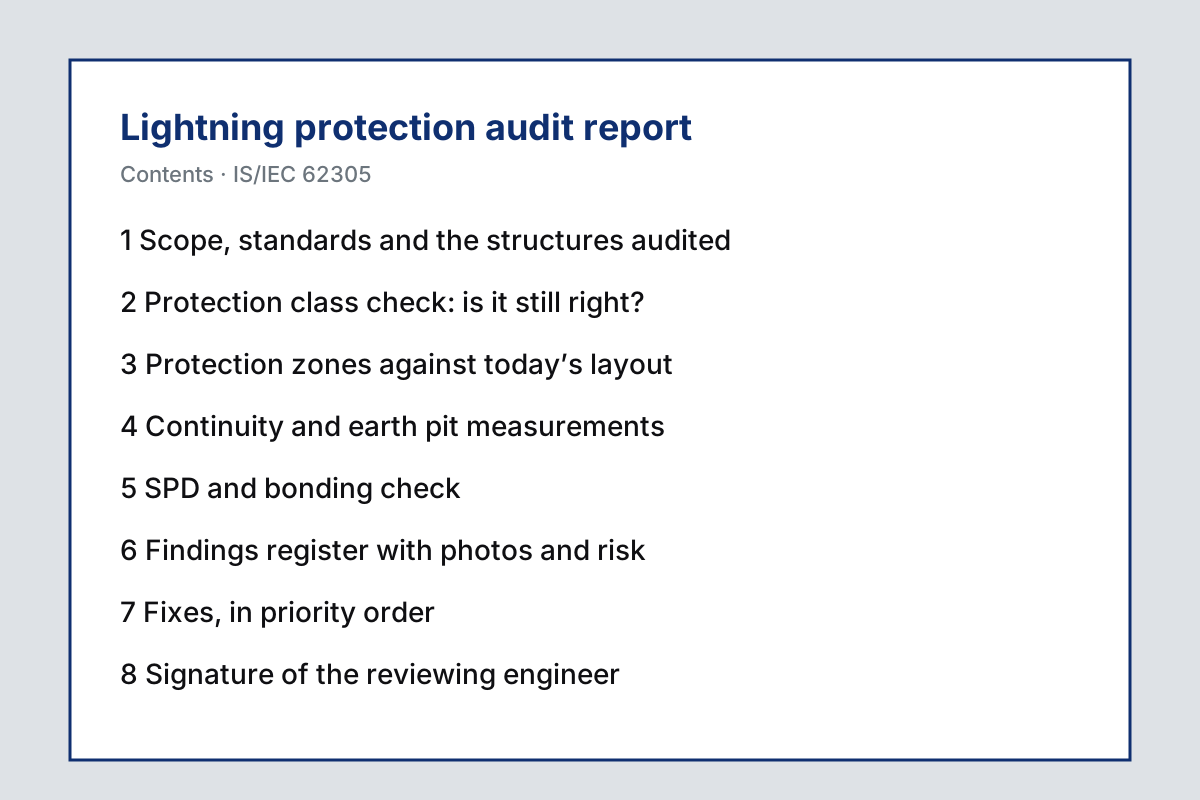
A lightning protection study report records what was checked, what was measured, what was found and what to fix: scope and standards, a check that the protection class is still right, the zones drawn on today’s layout, continuity and earth pit readings, the SPD and bonding check, a findings register with photos and a risk for each, and the fixes in priority order, signed by the reviewing engineer.
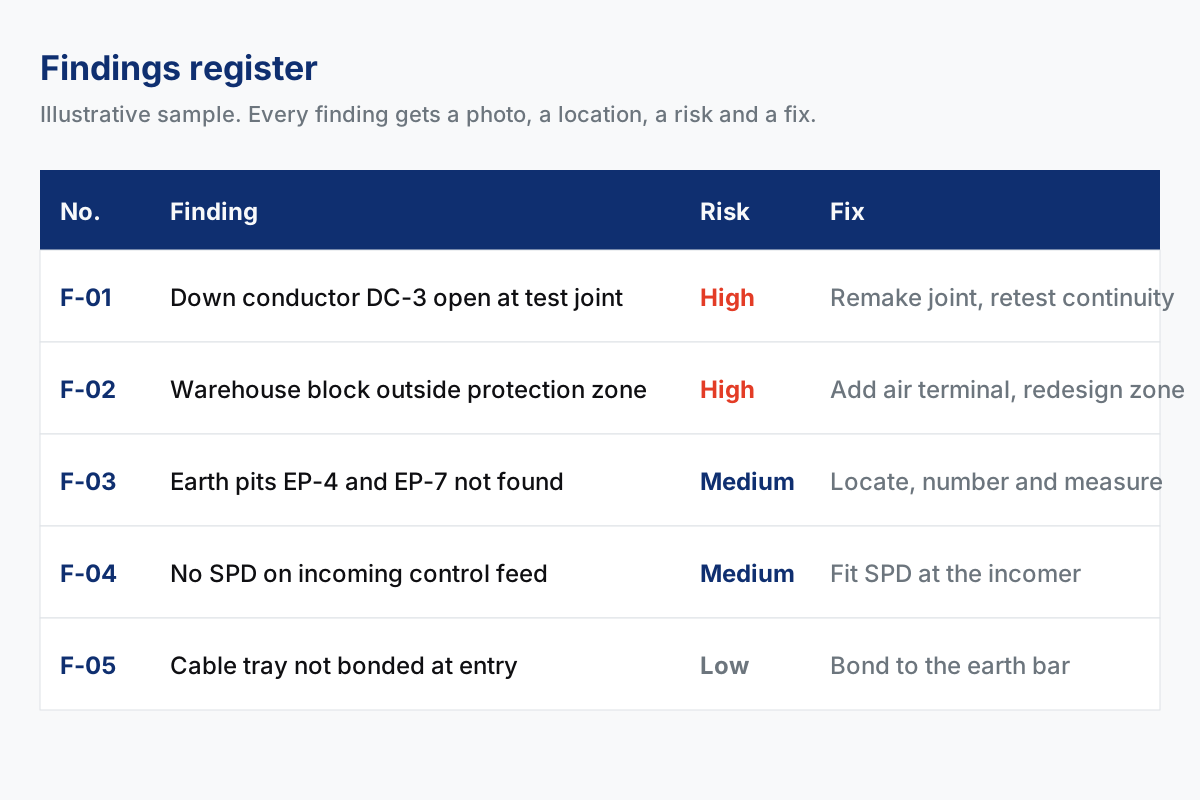
The findings register is the part your plant head will use. Each finding carries a number, a location, a photo, a risk rating and the fix, so it can be closed and shown closed at the next audit.
Lightning protection audit checklist: what will the auditor ask for?
Before the site visit, the auditor asks for six records. Plants that have them ready save a day on site; plants that do not get the gaps listed as findings.
| Record | Why it is needed |
|---|---|
| Lightning protection layout drawing | Shows what the system was designed to cover |
| Risk assessment and protection class | Sets the standard the system is checked against |
| Earth pit register and last readings | Lets the auditor find every pit and compare readings |
| Site plan showing changes since installation | New blocks, tanks and stacks are where gaps appear |
| Single-line diagram | Shows where services enter and where SPDs should sit |
| Previous audit or inspector report | Open findings are checked first |
Why audit earthing and lightning protection together?
Earthing and lightning protection are audited together because they share the same earth: a lightning system with good air terminals and a failed earth pit still drives the strike current into the plant, and an SPD with no low-impedance path to earth does not stop the surge.
One visit covers both. VB measures the earth pits that serve the lightning system and the bonding to the plant earth grid, and checks the SPDs on the incoming lines. If the wider earthing needs a design, see earthing design.
What do insurer risk surveys usually recommend on lightning protection?
Insurer risk surveys usually recommend the same four things: a documented risk assessment, a design drawing that shows what the system covers, current test records for the earth pits and conductors, and surge protection on the incoming power and control lines.
A survey recommendation is closed with evidence, not a reply. The audit report is that evidence: it shows each item checked, measured and either confirmed or fixed. Property insurers such as FM Global publish loss prevention guidance on lightning and surge protection that surveyors work from.
When does a plant need a lightning protection audit?
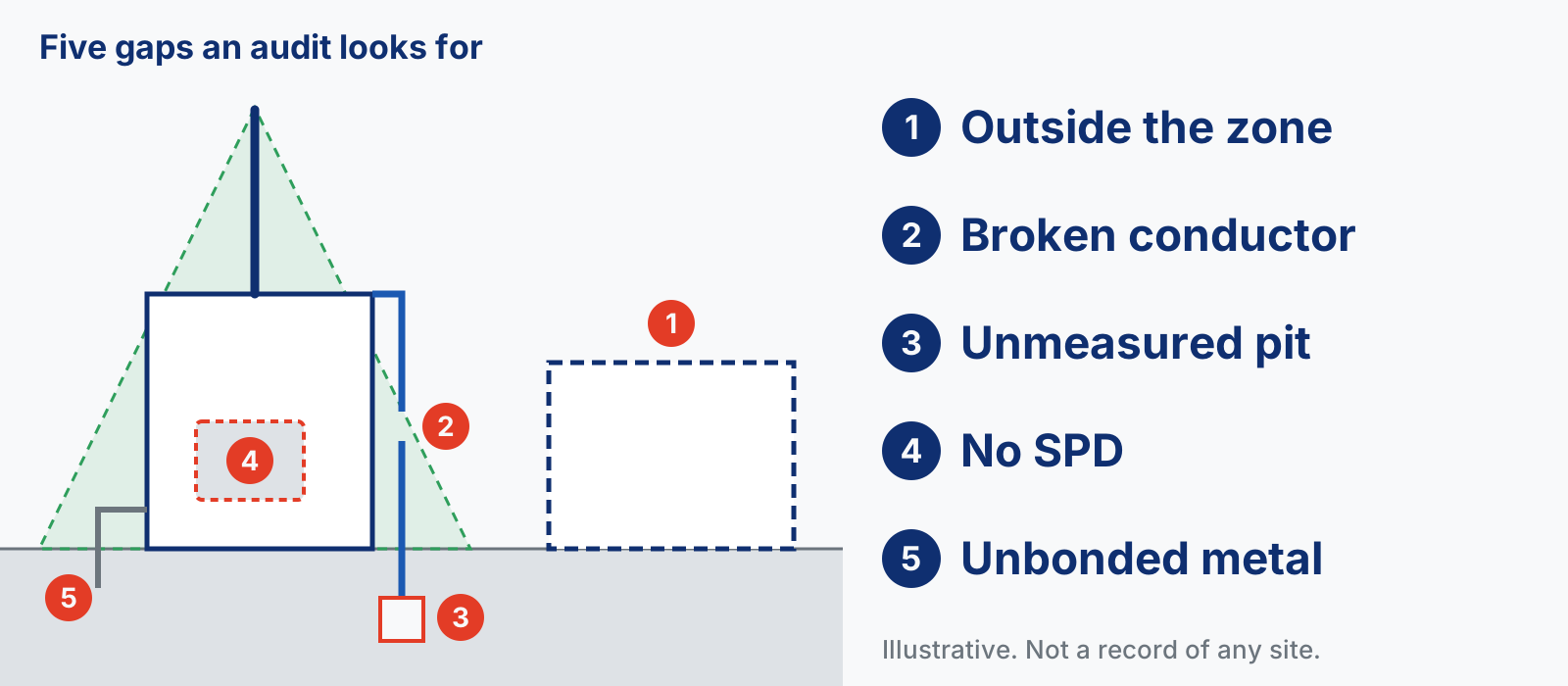
A plant needs a lightning protection audit when someone outside the plant asks for proof, or when the plant has changed since the system was installed. The audit looks for five gaps: a structure outside the protection zone, a broken down conductor, an earth pit nobody has measured, no SPD where services enter, and metal that is not bonded.
Which standards is a lightning protection audit checked against?
A lightning protection audit in India is checked against IS/IEC 62305 for the lightning system itself and IS 3043 for the earthing it connects to.
| Standard | What the audit checks against it |
|---|---|
| IS/IEC 62305-3 | Air terminals and protection zones, down conductors, test joints, earth termination, bonding and separation distances. |
| IS/IEC 62305-4 | Surge protective devices, bonding and shielding for the power, control and data systems inside. |
| IS/IEC 62305-2 | Whether the protection class the system was built to is still right for the plant today. |
| IS 3043 | Code of practice for earthing: the earth electrodes and the plant earth the lightning system joins. |
Not sure your plant needs lightning protection at all? See lightning risk assessment and the codes that apply in India.
What do you receive from a lightning protection audit?
Every audit delivers a signed report your inspector, insurer or parent company can check, and a findings register your maintenance team can close.
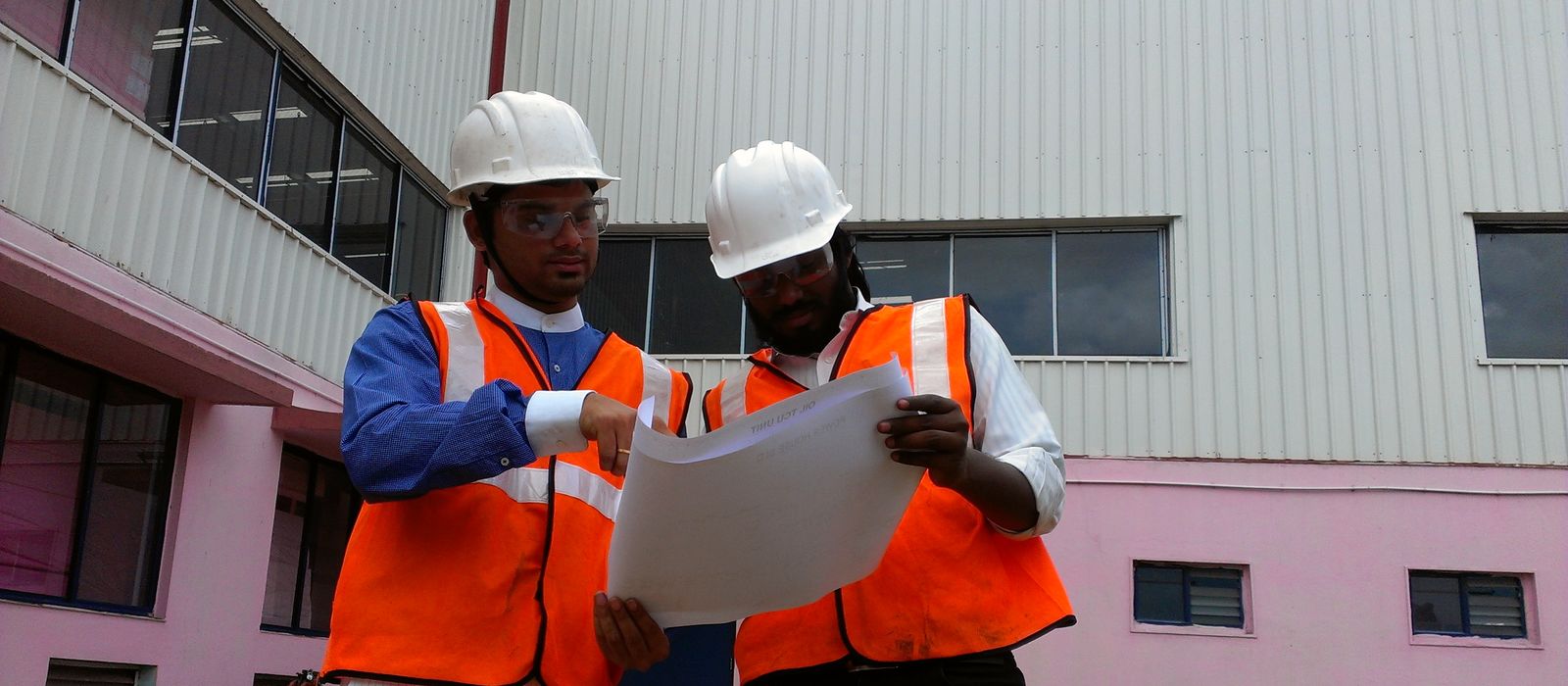
- Records review: drawings, risk assessment, earth pit register and past reports
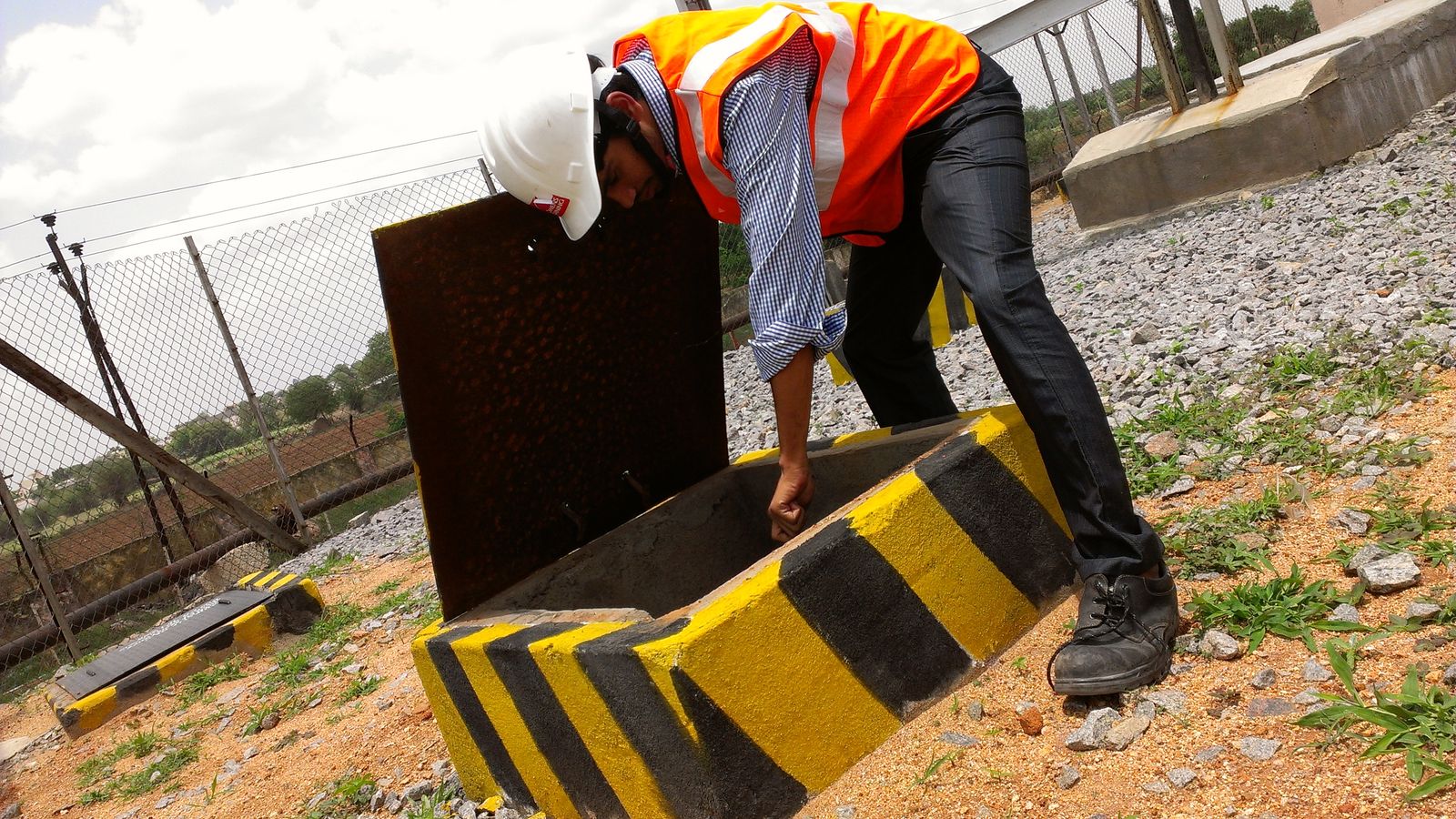
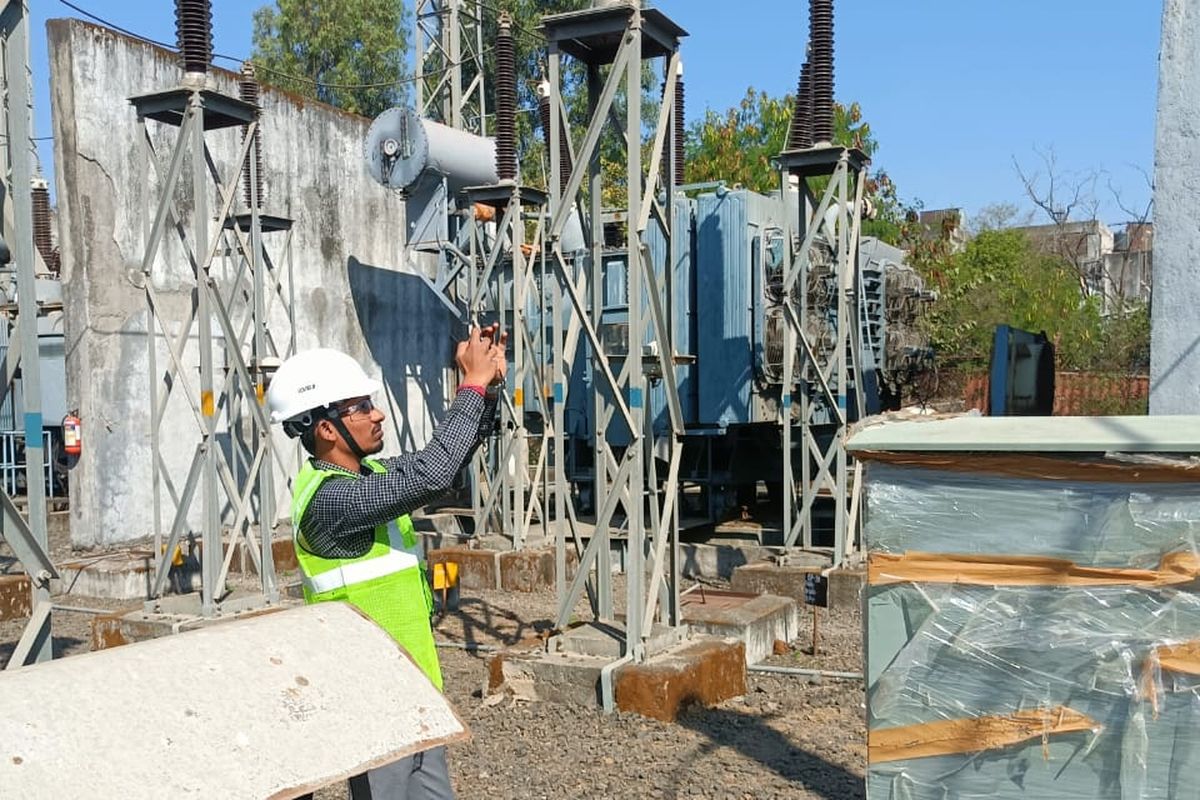
- Site walk-down of every structure, roof and earth pit, with photos
- Protection zones redrawn on today’s site plan, showing what is and is not covered
- Continuity readings for each down conductor and earth resistance for each pit
- SPD and bonding check at the points where services enter
- Findings register: number, location, photo, risk and fix for each gap
- Signed audit report, and a closing review once the fixes are done
Send what records you have: we tell you what the audit will need from your team.
How is a lightning protection audit priced?
A lightning protection audit is priced on three things: the number of structures to audit, the number of earth pits and test joints to measure, and whether any structure needs redesign once the gaps are found.
| Part of the work | How it is priced | What moves the price |
|---|---|---|
| Site audit and report | Per structure | Number of buildings, tanks and stacks; roof access; records available |
| Earth pit and joint measurements | Per pit and test joint | Number of pits and joints, whether they are numbered and accessible |
| Redesign of gaps | Per structure redesigned | How many structures the audit finds outside the zones |
Is your plant ready for the audit?
Three answers about your site. An engineer reads them, tells you what records to pull together and emails an audit quote.
Nothing is priced on screen. An engineer reads your answers first, then sends the quote with a list of records to prepare.
How does VB audit an existing lightning protection system?
A lightning protection audit runs in four steps: the records are reviewed, the site is walked and every part inspected, continuity and earth resistance are measured, and the findings are written up and signed.
Records
Drawings, risk assessment, pit register and past reports reviewed; gaps in the records listed.Walk-down
Every structure, roof, conductor, pit and SPD found, inspected and photographed.Measure
Down conductor continuity and earth resistance measured at each test joint and pit.Report
Zones redrawn on today’s layout, findings register built, report reviewed and signed.A system nobody has tested is a system nobody can vouch for. Joints corrode, conductors get cut during roof work and pits get buried under new paving. Nothing looks wrong until the strike finds the gap.
Which instruments does VB use in a lightning protection audit?
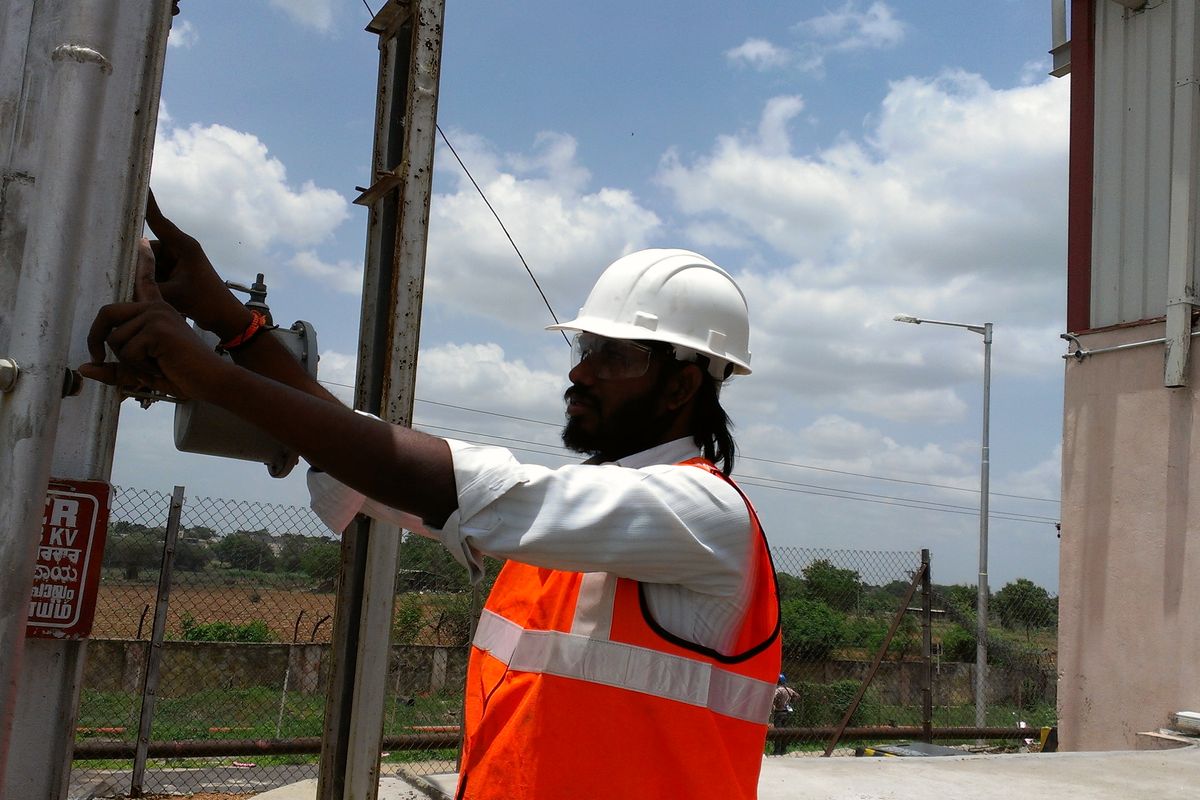
A lightning protection audit uses three measurements on site: continuity from each air terminal to its earth, earth resistance at each pit, and a check of each SPD at the point where services enter. Everything else is inspection, photographed and marked on the site plan.
| Stage | What we use | What you receive |
|---|---|---|
| Inspect | Site walk-down with photos, roof access where permitted, the layout drawing marked up as found | Condition of every part, located on the site plan |
| Continuity | Low-resistance ohmmeter across each down conductor and joint | A reading per conductor, pass or fail |
| Earth | Earth resistance tester at each pit, one test joint opened at a time | A reading per pit, with the pit numbered |
| Zones | Protection zones redrawn in AutoCAD on today’s site plan | What is covered and what is not, structure by structure |
Parent company has its own standard? Tell us which one in the form. We audit to IS/IEC 62305 and report against your group standard alongside it.
Product names are trademarks of their respective owners.
What does a lightning protection audit find at a pharma plant?
Illustrative example, modelled on a typical job and not a client record: a mid-size pharmaceutical formulation plant in western India preparing for a parent-company EHS audit.
The rods were installed with the original blocks, and nobody on site could find a drawing or a reading. The walk-down found a warehouse built later outside every zone, one down conductor cut during a roof repair, three earth pits paved over, and no SPD on the control feed into the building with the packaging line. The report ranked the gaps by risk; the plant fixed the conductor and pits first, redesigned the warehouse protection, and went into the parent audit with a closed findings register.
Audit coming up? Start with the records you have.
Who audits and signs your lightning protection?
Every proposal names the engineer who walks the site, the engineer who analyses the readings and the reviewer who signs the report, with CVs.
Site audit engineer
CV shared with the proposalLightning protection engineer
CV shared with the proposalVB Engineering reviewer
CV shared with the proposalLightning protection audit: questions plant teams ask
What is a lightning protection audit?
It is an engineering check of an installed lightning protection system against IS/IEC 62305 and the plant as it stands today. It covers air terminals and zones, down conductors, earth pits, bonding and SPDs, and ends in a signed report of findings and fixes.
What is included in a lightning protection study report?
Scope and standards, a check of the protection class, zones drawn on the current layout, continuity and earth resistance readings, the SPD and bonding check, a findings register with photos and risk, and the fixes in priority order, signed by the reviewing engineer.
How do you audit an existing lightning protection system?
In four steps: review the records, walk the site and inspect every part, measure continuity and earth resistance, then write up the findings. The zones are redrawn on today’s site plan so any structure outside them shows up.
What lightning protection recommendations do insurer risk surveys usually make?
Usually a documented risk assessment, a design drawing of what the system covers, current test records for earth pits and conductors, and surge protection on incoming lines. The audit report is the evidence that closes each one.
Can you audit a system another contractor installed?
Yes. Most audits are of systems VB did not design or install. Where there is no drawing, the walk-down records what exists and the report includes a marked-up layout of the system as found.
Do we need to shut the plant down for the audit?
Usually not. The walk-down and visual checks run alongside operations. Earth resistance tests open one test joint at a time, under your permit system, so the rest of the system stays connected.
Do you also check the earthing?
Yes, the earth pits that serve the lightning system are found, numbered and measured, and the bonding to the plant earth is checked. A full earthing design is a separate service.
What happens if the audit finds gaps?
Each gap goes into the findings register with its risk and fix. Simple fixes such as remaking a joint go to your maintenance team; structures outside the zones need a redesign, which VB can draw and sign.
Is an audit the same as the periodic test of the system?
No. An audit is a full engineering check against the standard and today’s layout, done when someone asks for proof or the plant changes. Periodic tests repeat the measurements on a fixed cycle between audits.
How do we prepare for a lightning protection audit?
Pull together the layout drawing, the risk assessment, the earth pit register and readings, a site plan showing changes since installation, the single-line diagram and any previous audit or inspector report. Missing records become findings, so gather what you can.
Where to go next
Get your lightning protection audited before the inspector, insurer or auditor arrives
Tell us who is asking, when it is due and how many structures you have. An engineer replies with an audit quote, a visit plan and the records to pull together.
- A list of the records to prepare
- A visit plan that fits your permits and shifts
- An audit quote and a report date before your deadline
Prefer to write? connect@groupvb.com · or WhatsApp us from the chat button
VB Group® · Sustainability A Certainty.
Four details. One audit quote.
Your name, work email and company, who is asking for the audit, and when it is due.