Petrochemical arc flash study · Saudi Arabia · refining · gas · 33 kV substations · turnaround-ready
Arc flash studies for Saudi petrochemical, refining and gas plants, built around your turnaround, not against it.
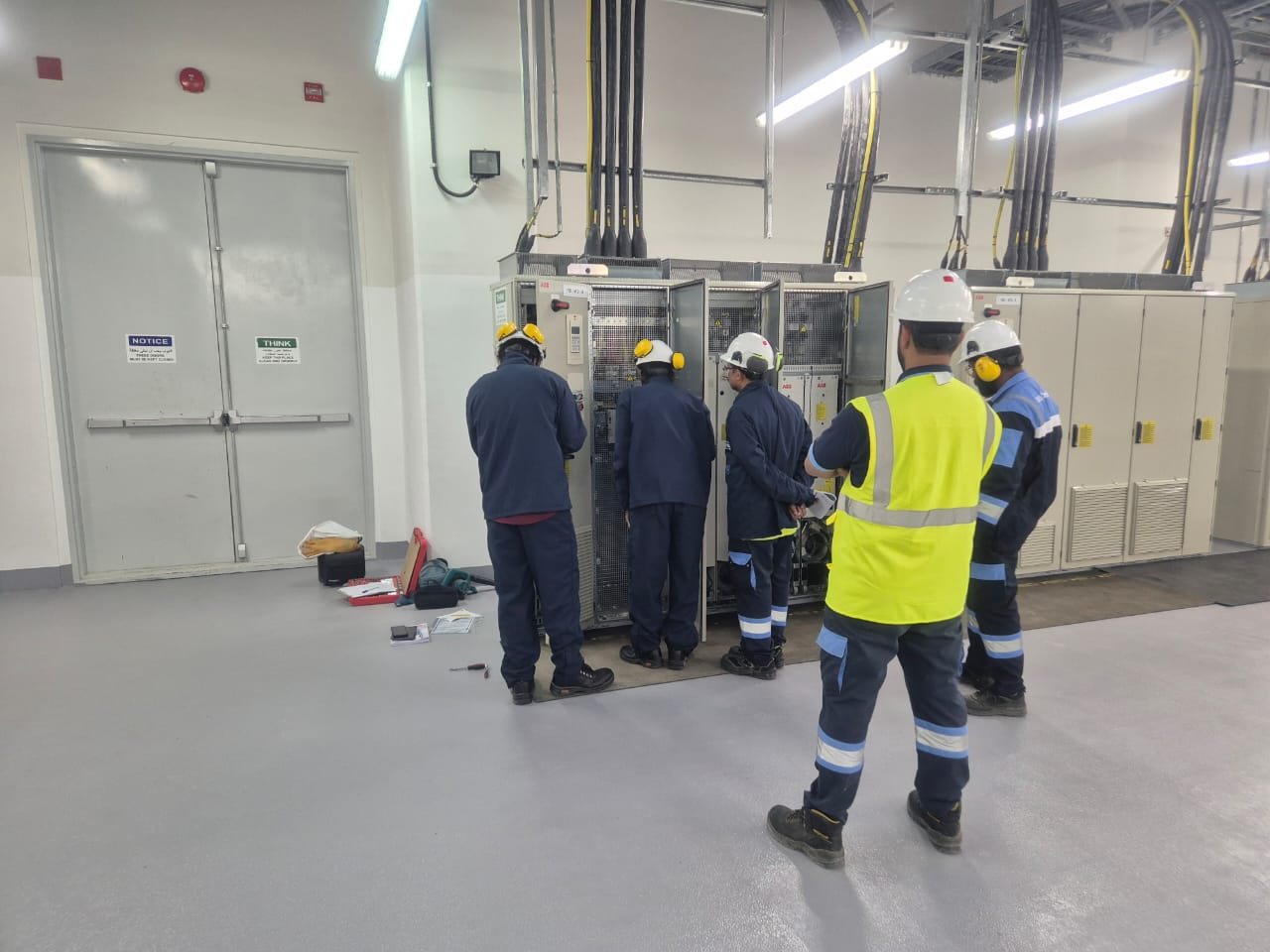
Jubail, Ras Tanura, Yanbu, Rabigh, Jazan: VB walks down every process substation while the plant runs, calculates every bus from the 33 kV intake to the last process MCC, and has Arabic-English labels ready to go on in your next turnaround window. Plan your study in 60 seconds and get an estimate in two working days.
No shutdown for the walkdown33 kV to 400 V in one modelLabels ready for turnaround dayArabic-English as standard
Turnaround arc flash planner · 60 seconds
| Plan | |
|---|---|
| Scope | |
| Hot spots | |
| Start by | |
| Labels | |
| Duration |
An instant plan from your answers, checked by a VB power systems engineer before anything is quoted. Bus counts and durations are bands from VB's project records for process plants. Submit and the scope, the turnaround-aligned plan and the estimate in SAR reach your inbox within two working days. No phone number asked.
Trusted by the World's Most Demanding Plants.







- 0per cm²: above this, VB marks the panel "no energised work" and shows how to bring it down
- 0typical Saudi process-plant distribution, modelled with every 400 V board below it
- 0process units stopped for a VB walkdown; labels go on in your outage window
- 0arc flash studies in VB's register since 2014
- 0languages on every label, from one calculation
40 cal/cm²: VB's energised-work threshold, consistent with owner practice in the Kingdom. Model range: IEEE 1584-2018, 208 V to 15 kV. Study counts: VB Engineering project register.
The petrochemical study
What does an arc flash study for a Saudi petrochemical plant cover?
An arc flash study for a Saudi petrochemical plant covers every point where a worker can open a door on live gear: the 33 kV main substation, each process substation, the process MCCs feeding pumps and compressors, the DCS and UPS rooms, utilities, and the tank farm and jetty. VB calculates incident energy at each one on IEEE 1584-2018 and labels it in Arabic and English.
| Plant area | Why it matters | What VB delivers there |
|---|---|---|
| 33 kV main substation and intake | Highest fault level in the plant; above the IEEE 1584 range | Named-method calculation, flagged per bus; protection review at the intake |
| Process substations, 13.8 kV and 6.6 kV | Large transformers and long incomer clearing times push energy high | Incident energy per switchboard, maintenance-mode options |
| Process MCCs (pumps, compressors, fans) | Where operators rack starters and test live most often | Bucket-level labels, PPE per task, ranked fixes |
| DCS, UPS and battery rooms | DC and inverter paths outside IEEE 1584 | DC buses on a named DC method in the same table |
| Utilities: cooling water, steam, air, desalination | Often added later and missing from the old single-line | Walked down, drawn in, calculated |
| Tank farm, jetty and loading | Remote boards, long cables, outdoor kiosks | Remote boards labelled and photographed in place |
Already have a plant-wide study and want to know if it still holds? See updating an arc flash study in Saudi Arabia. Working to an owner's specification? See Saudi Aramco arc flash requirements.
Where the energy hides
Why do petrochemical substations carry the highest arc flash energy in the plant?
Petrochemical substations carry the highest arc flash energy because they combine big transformers, high fault levels and slow incomer protection, and large compressor motors feed the fault as well. An arc at a main board can last a second or more before the upstream breaker clears it, and incident energy grows with every millisecond.
- Big transformers. Low impedance means high fault current on the secondary bus.
- Slow incomers. Time-graded protection buys selectivity at the cost of a long arc.
- Motor contribution. Compressors and large pumps keep feeding current into the fault.
- Old settings. Debottlenecking adds load and sources, but nobody revisits the relay curves.
How does VB bring the energy down?
Arc flash maintenance switches on incomers, zone-selective interlocking, bus differential protection, remote racking and, where it pays back, arc-resistant switchgear. Each option is ranked in the action register by energy saved, cost and outage needed, so the cheapest fixes go into the next turnaround.
No shutdown
How does VB study 33 kV process substations without a shutdown?
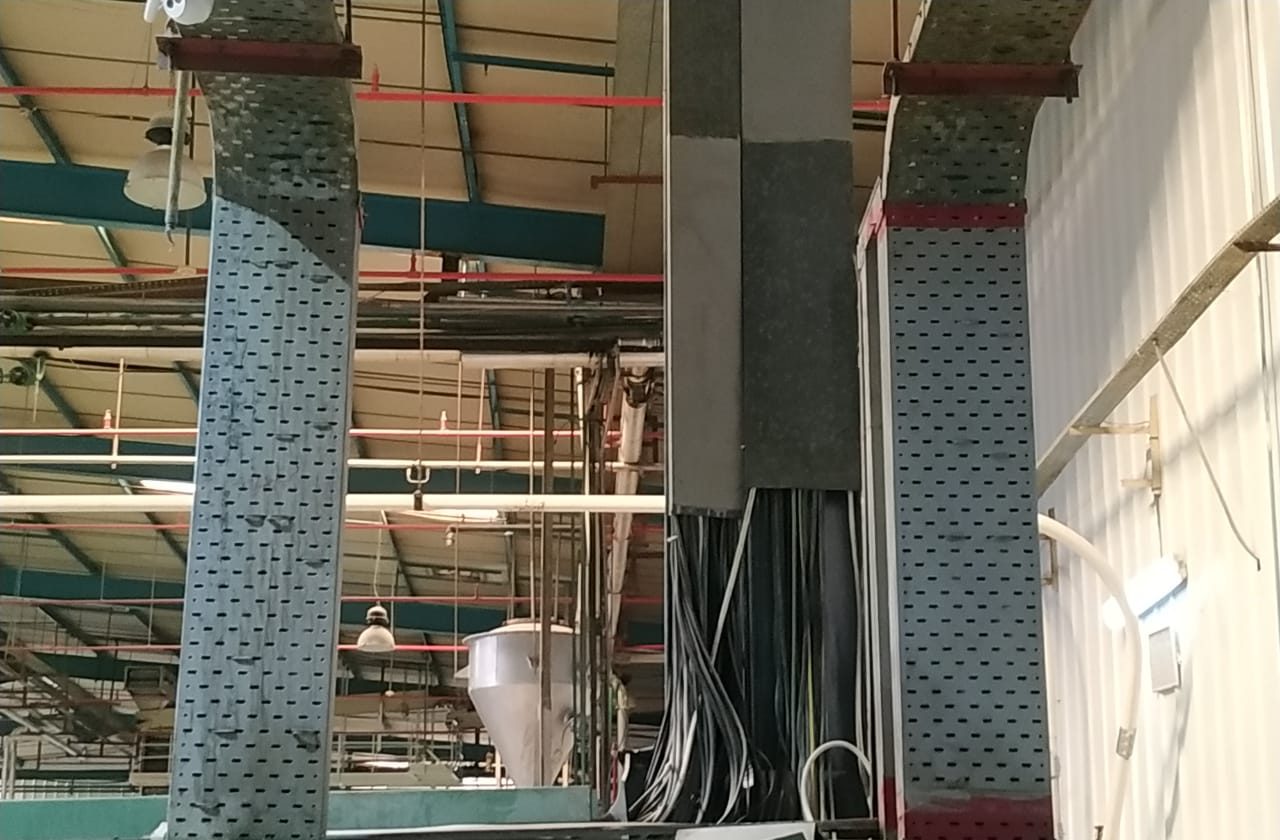
VB studies 33 kV process substations without a shutdown by splitting the work: the walkdown, data capture and modelling run while the plant operates, substation by substation, under your permit system. Only label installation and any relay setting changes need the gear isolated, and both are planned into your turnaround or a scheduled outage window.
- 1
Substation by substation
Nameplates, relay settings and enclosure data captured on site in ElecTwin, one substation at a time, without touching production.
- 2
Model and recommend
Every operating mode solved, including generator and tie-breaker scenarios, with fixes ranked for the coming turnaround.
- 3
Turnaround day
Labels printed in advance in Arabic and English, fixed in the outage window, photographed, and the settings changes handed to your contractor.
Site rules
What do HCIS rules mean for electrical work at a Saudi petrochemical site?
At sites regulated by the High Commission for Industrial Security (HCIS), electrical work runs under strict access, permit-to-work and safety directives. VB's survey teams work inside your permit system, site induction and gate-pass process, and the arc flash study gives your energised-work permit the numbers it needs: incident energy, boundary and PPE for the panel being opened.
| Site control | What the arc flash study adds |
|---|---|
| Permit to work for energised tasks | The incident energy, boundary and PPE for that exact panel |
| Contractor induction and access | Labels every contractor can read, in Arabic and English |
| Management of change | An arc flash impact line on every electrical change request |
| Insurer and owner audits | A dated study, matching labels and a closed action register |
Tool expertise
Which software do VB's arc flash teams work in?
VB has dedicated engineering teams with hands-on expertise in ETAP, SKM PowerTools, CYME, EasyPower, PSS®E and NEPLAN. Many Saudi refineries and petrochemical owners standardise on one of them, and VB builds your plant model in the one your electrical team already maintains.
A refining and petrochemical complex
How does VB take a Saudi refinery from 96 to 11 cal/cm² at its worst board?
At a large refining and petrochemical complex in Saudi Arabia, modelled with a 33 kV intake, 10 process substations and about 350 buses, VB walks down every substation while the plant runs and labels in two turnaround windows. Modelled result: worst-case incident energy cut from 96 to 11 cal/cm², 22 buses above 40 cal/cm² brought to 0, in 12 weeks.
The trigger
The insurer's post-turnaround survey listed the arc flash hazard as unquantified on the 13.8 kV process boards. The old study predated two debottlenecking projects, ignored compressor motor contribution and stopped at the main substation.
What the study found
| Finding | Where, and why it matters |
|---|---|
| 22 buses above 40 cal/cm² | Process substation main boards, where no live work is allowed |
| 9 miscoordinations | Incomers set to trip before feeders, risking a whole unit on one fault |
| 2 substations missing | Added in debottlenecking, never in the model |
| DC and UPS absent | DCS and substation battery chargers outside the old study |
What VB changed
Maintenance-mode switches on the process substation incomers, six relay re-gradings within existing protection, and remote racking at the two highest-energy boards. The settings went in during the first turnaround; VB re-ran the model and printed every Arabic-English label from the final run for the second.
| Measure | Before | After |
|---|---|---|
| Worst-case incident energy, cal/cm² | 96 | 11 |
| Buses above 40 cal/cm² | 22 | 0 |
| Relay miscoordinations | 9 | 0 |
| Substations in the model | 8 | 10 |
| Arabic-English labels on the gear | 0 | about 350 |
| Weeks, first walkdown to signed report | 12, across two turnaround windows | |
Saudi process plants
Where does VB run petrochemical arc flash studies in Saudi Arabia?
VB runs petrochemical arc flash studies wherever the Kingdom refines and processes: the Jubail and Ras Tanura complexes and the gas plants around Abqaiq in the Eastern Province, the Yanbu and Rabigh refining and petrochemical sites on the Red Sea coast, and the Jazan refinery and downstream industries in the south.
| Hub | Plants VB studies | What usually drives the study |
|---|---|---|
| Jubail Industrial City | Petrochemical complexes, chemicals, fertilisers, polymers | Owner specification, insurer survey, foreign JV partner standard |
| Ras Tanura, Dammam and Abqaiq | Refining, gas processing, terminals | Owner specification, five-year revalidation |
| Yanbu Industrial City and Rabigh | Refineries, petrochemicals, export terminals | Insurer survey, debottlenecking changes |
| Jazan | Refinery, power and downstream industry | Commissioning-era studies reaching review |
Free, in two working days
What do you get back from the turnaround planner?
The turnaround planner returns three things within two working days, free: a substation-by-substation scope for your plant, a schedule that finishes the walkdown and modelling before your next turnaround and puts the labels on during it, and an estimate in Saudi riyals or US dollars. Your planning team can slot it straight into the turnaround work list.
Substation-by-substation scope
Every substation, voltage level, MCC lineup and DC system, with the label count, ready for your electrical superintendent.
A turnaround-aligned schedule
Walkdown and model before the outage, labels and settings changes during it, signed report after it.
An estimate in SAR
Line by line, so procurement can raise the requisition before the turnaround scope freezes.
Before you ask
Questions Saudi refineries and petrochemical plants ask VB
What does an arc flash study for a petrochemical plant include?
Every point where live gear can be opened: the 33 kV main substation, each process substation, process MCCs, DCS and UPS rooms, utilities, and the tank farm and jetty. VB walks them down, models every operating mode, calculates incident energy on IEEE 1584-2018, coordinates the protection, ranks fixes and labels every panel in Arabic and English.
Can a petrochemical arc flash study be done without shutting the plant down?
Yes. The walkdown, data capture and modelling run while the plant operates, substation by substation, under your permit system. Only label installation and relay setting changes need the gear isolated, and VB plans both into your turnaround or a scheduled outage.
How do you reduce arc flash energy in a 33 kV or 13.8 kV substation?
The usual levers are maintenance-mode switches on incomers, zone-selective interlocking, bus differential protection, faster relay settings within the coordination margin, remote racking, and arc-resistant switchgear where it pays back. VB ranks each option in the action register by energy saved, cost and outage needed.
How high does arc flash energy get in Saudi refineries?
Main boards and transformer secondaries in process substations are where VB most often finds values above 40 cal/cm², the point at which no energised work should be allowed. Long incomer clearing times and large compressor motors are the usual causes, and both can be engineered down.
Does a hazardous area change the arc flash study?
The arc flash study still applies in a classified area; it answers a different question from the Ex area classification. Where switchgear or MCCs sit in or near a hazardous zone, VB makes sure labels and any boundary markings are suitable for the area and that the PPE on the label is compatible with the site's flame and static rules.
Does VB work under HCIS site rules?
Yes. At HCIS-regulated sites VB's teams complete the site induction and work inside your gate-pass, access and permit-to-work system. The study then feeds those permits with the incident energy, boundary and PPE for each panel.
How long does a refinery or petrochemical arc flash study take?
For a complex of around 300 to 400 buses, roughly 10 to 14 weeks from first walkdown to signed report, with labels installed in your outage windows. A single process unit or substation can be done in three to five weeks. Durations are bands from VB's project records.
Do you study tank farms, jetties and utilities too?
Yes. Remote boards at tank farms, loading jetties, cooling water, steam, air and desalination units are often missing from older single-lines. VB walks them down, draws them in and calculates them in the same model as the process units.
Does VB run petrochemical arc flash studies in Jubail, Yanbu and Ras Tanura?
Yes. VB runs arc flash studies across the Kingdom's process hubs: Jubail Industrial City, Ras Tanura, Dammam and Abqaiq in the Eastern Province, Yanbu Industrial City and Rabigh on the west coast, and Jazan in the south. Survey teams mobilise to each site.
What happens after I submit the turnaround planner?
Within two working days a VB power systems engineer emails your substation-by-substation scope, a schedule built around your next turnaround and the estimate in Saudi riyals or US dollars. No sales call.
Your next turnaround is the cheapest day to fix arc flash. Plan it now.
Sixty seconds on the planner, and a VB engineer sends a substation-by-substation scope, a turnaround-aligned schedule and an estimate in SAR within two working days. Jubail, Ras Tanura, Yanbu, Rabigh or Jazan. Free, by email.
Get price estimateTurnaround already scheduled? Email the dates and substation list to connect@groupvb.com with "KSA petrochemical arc flash" in the subject.