Arc flash study · Malaysia · OSHA 1994 · NFPA 70E 2027 · IEEE 1584-2018 · 11 kV to 33 kV
Arc flash studies in Malaysia that close your parent company's NFPA 70E audit, from Penang to Johor.
VB Engineering runs arc flash studies for semiconductor plants, data centres, petrochemical sites and factories across Malaysia, from Penang and Kulim to the Klang Valley, Johor, Kuantan and Bintulu. Every bus is calculated, every label is dated, and 22 kV and 33 kV gear is covered. Run the audit-readiness check and get a price estimate in two business days.
1,000+ studies21 countriesWorking since 201411 kV to 33 kV covered
Free audit-readiness check · 2 minutes
| Auditor asks for | |
|---|---|
| Labels | |
| Study age | |
| Voltage | |
| Scope | |
| Duration |
The check reads your answers against NFPA 70E 130.5 and the IEEE 1584-2018 range; it is a first read, not an engineering opinion. Durations are modelled from VB's project register by bus-count band. Send it and a VB engineer returns the written scope and price estimate in two business days. Short form, no phone number.
Trusted on plants that cannot stop










- 0upper limit of the IEEE 1584-2018 model; Malaysian networks run to 33 kV
- 0of global chip assembly, test and packaging done in Malaysia
- 0Malaysian data centre capacity projected by end-2026
- 0arc flash studies signed off
- 0countries where VB has labelled gear
Model range: IEEE 1584-2018, 208 V to 15 kV. Semiconductor share: MIDA, 11 September 2024. Data centre capacity: JLL projection reported by The Edge Malaysia, 2026. Study counts: VB Engineering project register.
How the free check works
- 1
Six answers, two minutes
Who is asking for the study, your highest voltage, what the labels say today, when the last study ran and roughly how many buses you have.
- 2
A practice engineer reads it
Your answers are read against NFPA 70E 130.5, IEEE 1584-2018 and the audit or insurer letter behind the request, then turned into a stage-by-stage scope.
- 3
Price estimate in two days
Deliverables, weeks per stage and a per-bus price estimate in ringgit or US dollars, in writing, ready for your plant manager or regional EHS lead.
The requirement
Is an arc flash study required in Malaysia?
Yes. Under OSHA 1994 Section 15 every Malaysian employer must protect workers from electrical hazards, and DOSH's HIRARC approach requires each hazard to be assessed and controlled. An arc flash study is how the arc flash hazard is assessed: it calculates the heat a fault would release at each panel and puts that value on the gear.
| Instrument | Where it bites | What it asks of the plant | Who will ask for it |
|---|---|---|---|
| Occupational Safety and Health Act 1994 (Act 514), amended 2022, in force 1 June 2024 | Section 15 | The employer's general duty to keep the workplace safe and without risk to health, electrical hazards included | DOSH inspectors, after an incident first |
| DOSH Guidelines for Hazard Identification, Risk Assessment and Risk Control (HIRARC) | Risk assessment | Each significant hazard identified, rated and controlled; an arc flash study is the electrical line of the register | DOSH; your internal OSH committee |
| Electricity Supply Act 1990 · Electricity Regulations 1994 | Competent persons, safe installations | Registered competent persons in charge of the installation, and installations kept safe | Suruhanjaya Tenaga (Energy Commission) |
| ST Guideline on Electrical Safety Management Plan and Programme, 2017 | Cl. 6.4.1 · 6.4.2 | Electrical hazards controlled by the hierarchy, from elimination to PPE; permit-to-work and lock-out for high-risk live work | Your competent person; the Energy Commission |
| NFPA 70E 2027 | 130.5 · 130.5(H) | An arc flash risk assessment before energised work, reviewed at least every five years, and the label on the gear | Your parent company's EHS audit; your insurer's risk engineer |
Malaysian plants are wired to IEC standards, MS IEC 60364 on the low-voltage side, and audited in NFPA 70E terms. VB writes the study in both: every result is to IEEE 1584-2018, and page one of the report maps it clause by clause to NFPA 70E, OSHA 1994 and the ST guideline, so the DOSH officer, the competent person and the corporate auditor all read the same document.
Audit finding, insurer letter or incident
Has your auditor or insurer asked for an arc flash study?
If your parent company's NFPA 70E audit, your insurer's survey or an incident report has asked for an arc flash study, the answer is one document: a dated study under five years old, matching labels on the gear, and closed recommendations. VB delivers all three in one report, typically in 5 to 7 weeks for a 100-bus site.
The HQ audit finding
American, European and Japanese groups run their Malaysian sites to the corporate electrical safety standard, which is NFPA 70E. The finding usually reads "no current arc flash study". VB's report is built to close it on one document.
The insurer's recommendation
After a property survey, the risk engineer lists arc flash as an open recommendation with a due date. VB returns the incident energy by bus, the mitigation it chose and a closing letter the underwriter can file.
The flash or the near miss
After an event, the first question from DOSH and from head office is the same: was this panel assessed, and when? VB scopes the affected switchroom first, then the rest of the site, so energised work can restart on facts.
What goes on a VB label in Malaysia
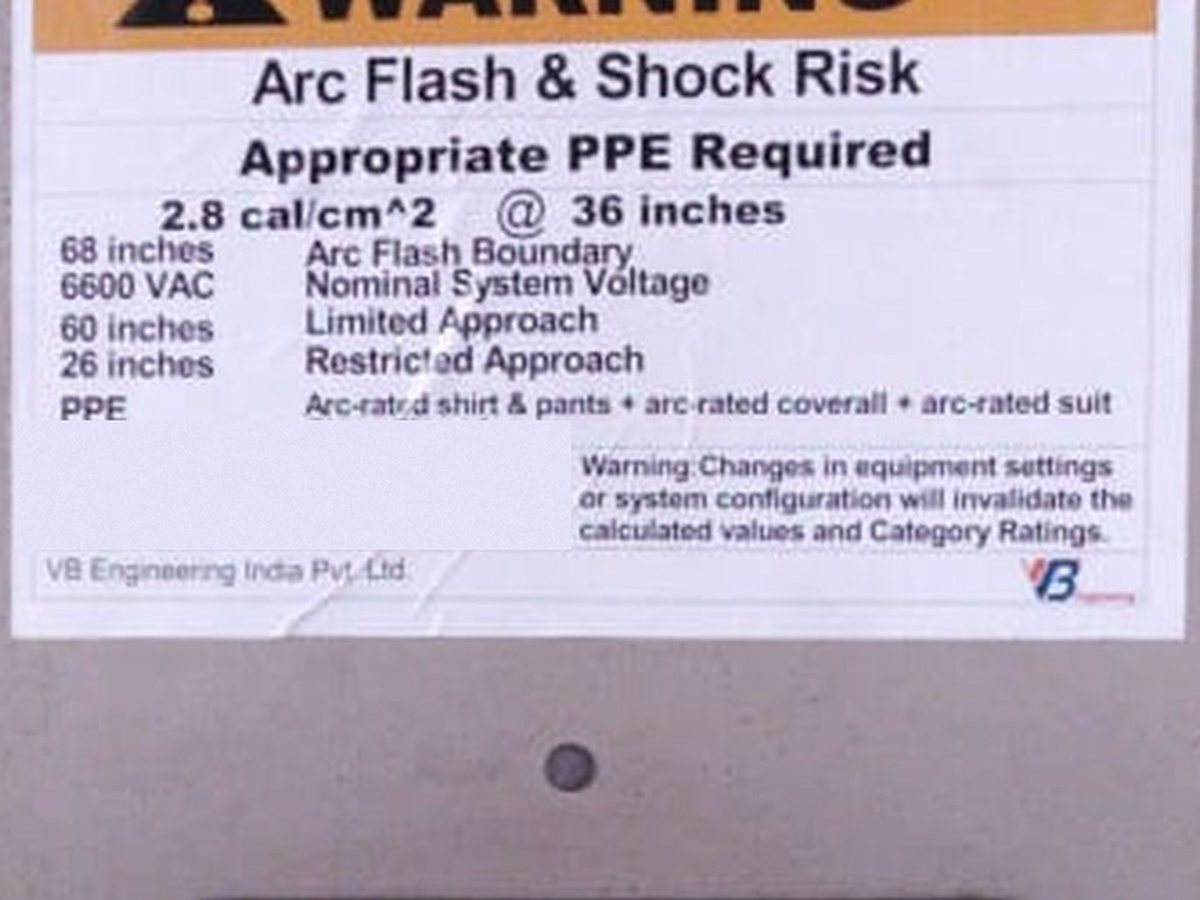
Each VB label carries the incident energy in cal/cm² at the working distance, the arc flash boundary, the nominal voltage, the limited and restricted approach distances, the PPE, the panel tag and the date the study was signed. It is one line of the study printed on the door. Change a transformer or a relay setting and that line is recalculated and the label replaced.
Where VB works in Malaysia
Where in Malaysia does VB run arc flash studies?
VB runs arc flash studies across Peninsular and East Malaysia, wherever plants work on live switchgear: the semiconductor belt of Penang and Kulim, the data centres of the Klang Valley and Johor, the petrochemical and gas sites of Pengerang, Kerteh, Kuantan and Bintulu, and manufacturing plants from Ipoh to Melaka. Site teams mobilise to each location for the walkdown.
| Region | Towns and parks | Facilities VB studies |
|---|---|---|
| Penang and Kedah | Bayan Lepas, Batu Kawan, Prai, Kulim Hi-Tech Park | Semiconductor fabs, assembly and test (OSAT), electronics and medical devices |
| Klang Valley | Kuala Lumpur, Cyberjaya, Shah Alam, Petaling Jaya, Klang | Data centres, pharmaceutical plants, food and consumer goods, commercial towers |
| Johor | Johor Bahru, Kulai, Sedenak, Iskandar Puteri, Pengerang | Hyperscale and colocation data centres, refining and petrochemicals |
| East coast | Kuantan, Gebeng, Kerteh, Kemaman | Petrochemical, gas processing and chemical plants |
| Sarawak and Sabah | Bintulu, Samalaju, Kuching, Kota Kinabalu | LNG and gas facilities, smelting and heavy industry, power plants |
| Perak, Negeri Sembilan and Melaka | Ipoh, Seremban, Nilai, Senawang, Melaka | Rubber glove, electronics, automotive parts and general manufacturing |
VB quotes in ringgit or US dollars and plans each walkdown inside your shutdown or maintenance window. Multi-site groups, for example a fab in Penang and a data hall in Johor, get one scope, one model standard and one report format across every site. VB also runs the sister programme in the Philippines.
The 22 kV and 33 kV question
What changes in an arc flash study at 22 kV and 33 kV?
Above 15 kV the method changes, because IEEE 1584-2018 is only validated from 208 V to 15 kV. Malaysian intakes and ring mains often run at 22 kV or 33 kV, so those buses need a recognised alternative method. VB names it beside each result, so no auditor mistakes it for an IEEE 1584 value.
| Question on site | Short answer | What VB puts in the report |
|---|---|---|
| Our 33 kV or 22 kV intake | Outside the IEEE 1584-2018 range | Calculated with a named alternative method, flagged row by row |
| Our switchgear is IAC rated to IEC 62271-200 | Covers doors closed and latched only | Open-door, racking and LV-compartment tasks still calculated and labelled |
| Our clothing is IEC 61482 Class 1 or Class 2 | Box-test class, not a cal/cm² rating | Compare the ATPV or ELIM from the IEC 61482-1-1 open-arc test with the label |
| Our wiring follows MS IEC 60364 | Installation standard, not a hazard assessment | The study sits on top of it and is mapped to NFPA 70E for the auditor |
What VB delivers
What does VB deliver in a Malaysian arc flash study?
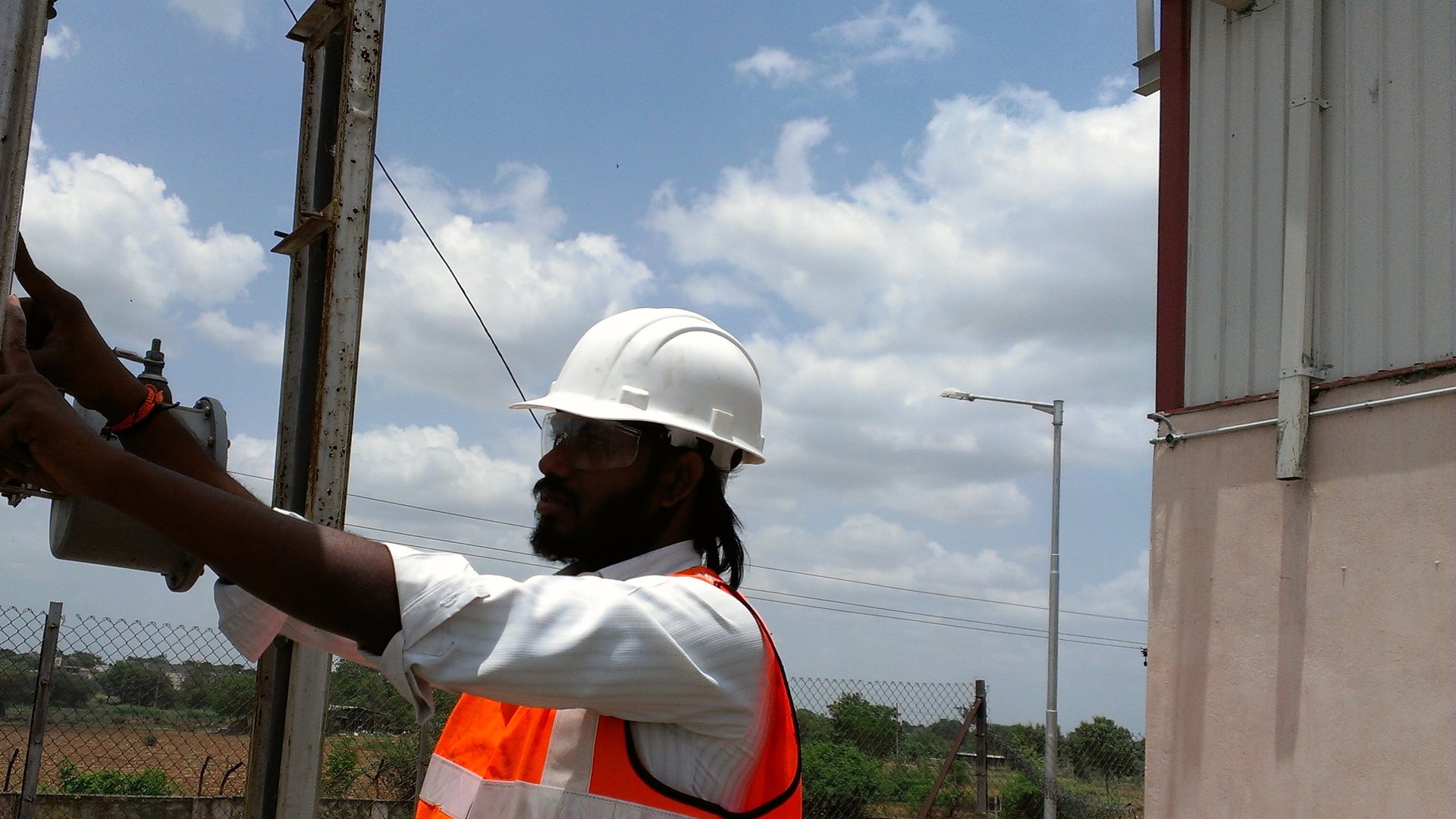
A VB arc flash study in Malaysia covers every bus from the TNB or utility intake to the last distribution board, AC and DC in one incident energy table, and ends with dated labels on the gear. The single-line diagram is checked on site first, and the engineer who built the model signs the report.
| Included | On request |
|---|---|
| Walkdown: each cubicle opened, nameplates, CT ratios and relay settings captured in ElecTwin, VB's field data app | Thermal imaging and partial-discharge surveys |
| Single-line diagram reconciled with the site, every deviation listed | A new single-line where none exists |
| Short-circuit, protection coordination and incident energy for every operating mode, generator and UPS bypass included | Relay setting changes applied on the gear |
| 22 kV and 33 kV buses on a named alternative method; UPS, battery and solar buses on a named DC method | Battery autonomy and capacity studies |
| Dated labels printed, installed by VB and photographed in place | Bilingual Bahasa Malaysia and English label artwork |
| Action register with owners and due dates, and a conformance matrix to NFPA 70E, OSHA 1994 and the ST guideline | Electrical safety training for your competent persons |
The method, stage by stage
- Data sheet · sent in week one so walkdown days are spent at the switchboards, not chasing drawings
- Walkdown · planned inside your shutdown or maintenance window, every panel read and photographed
- Model · built in ETAP or SKM PowerTools, two to three weeks, all operating modes
- Report · the IEEE 1584.1-2022 structure, signed by the modelling engineer, checked by an independent VB reviewer
- Labels · a crew fixes about 150 a day, each dated and photographed
- Total · about 4 weeks to 25 buses, 5 to 7 weeks to 100, 8 to 11 weeks to 300, from site access to labels
Tool expertise
Which software do VB's arc flash teams work in?
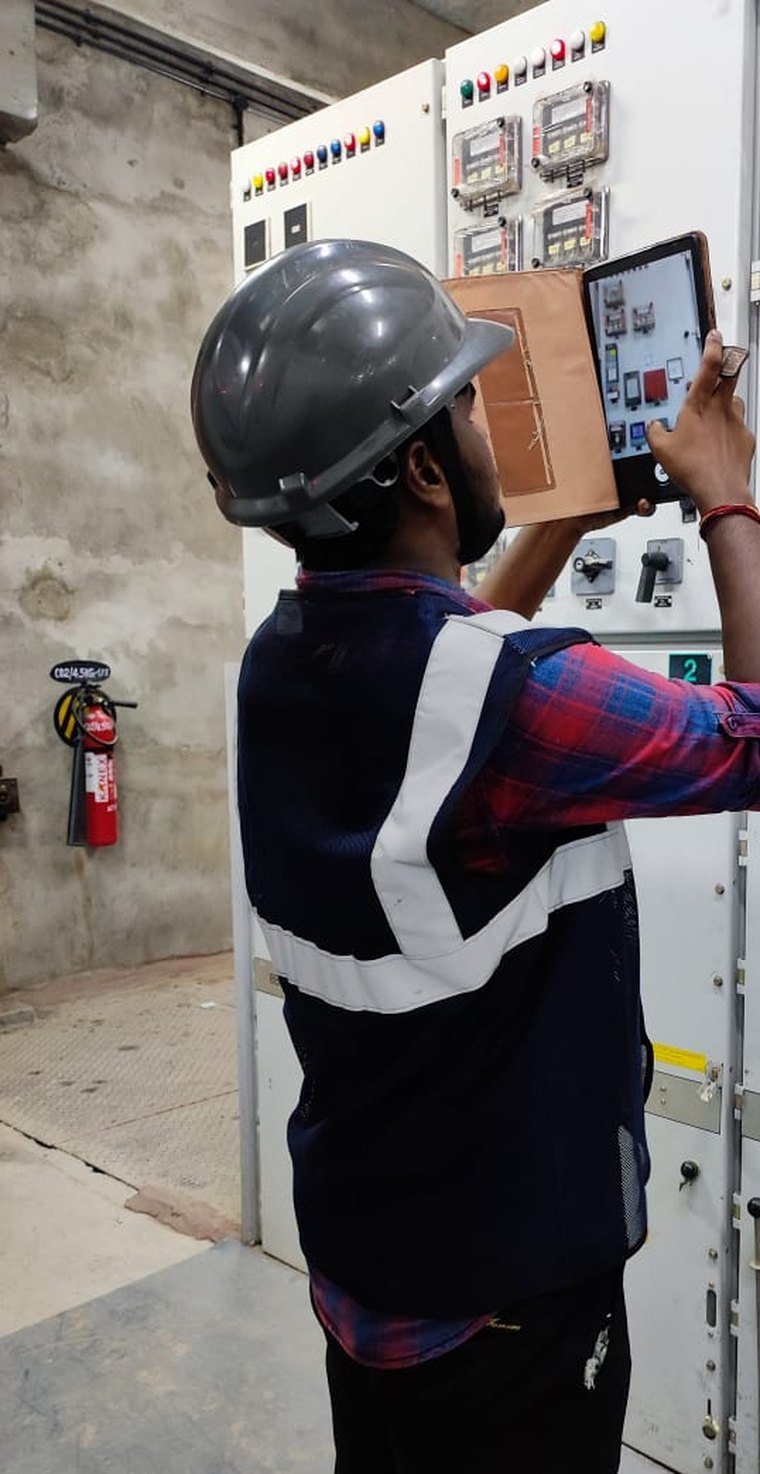
VB has dedicated engineering teams with hands-on expertise in ETAP, SKM PowerTools, CYME, EasyPower, PSS®E and NEPLAN. Your Malaysian study runs in whichever software your site or parent company already uses, so head office can open and audit the model.
Price
How much does an arc flash study cost in Malaysia?
An arc flash study in Malaysia is priced per bus and per voltage class, in ringgit or US dollars, with the walkdown, single-line drawing work and label installation as separate lines. A bus is any point the study calculates, such as a switchboard or MCC, so a 33 kV intake or battery room adds rows; floor area does not.
| Price driver | Why it moves the price | How VB shows it in your estimate |
|---|---|---|
| Number of buses | Each bus is walked down, modelled, calculated and labelled | A per-bus rate for each voltage class |
| 11 kV, 22 kV and 33 kV gear | More operating modes, utility relays and, above 15 kV, a second method | Medium voltage priced apart from 415 V |
| Single-line drawings | Outdated drawings are corrected on site; missing ones are drawn | Its own line, never folded into the study rate |
| UPS, battery and solar DC | DC buses need a method outside IEEE 1584 | Each DC bus named and priced per bus |
| Number of sites | Each site needs its own walkdown and label crew | Per site, so a group can phase Penang, Klang Valley and Johor separately |
Run the audit-readiness check above and the price estimate comes back with your written scope in two business days, free. For how VB builds an arc flash study price in detail, read what an arc flash study costs.
A petrochemical complex
How does VB close an insurer's arc flash recommendation at a Malaysian petrochemical complex?
At a large petrochemical complex in Malaysia, modelled with a 33 kV intake and 225 buses, VB runs one study across two turnarounds and closes the insurer's open recommendation in 11 weeks. Modelled result: 14 buses above 40 cal/cm² brought to 0, peak incident energy cut from 68 to 9.6 cal/cm², and 225 dated labels installed.
The trigger
The insurer's property survey listed "arc flash hazard not quantified" as an open recommendation with a six-month due date. The site's last study was more than eight years old, it stopped at 11 kV, and the labels on the switchgear showed hazard categories with no calculated values.
What the study found
| Finding | Where, and why it matters |
|---|---|
| 14 buses above 40 cal/cm² | 11 kV switchboards and transformer secondaries, where no arc-rated PPE allows live work |
| 3 buses above 15 kV | The 33 kV intake and ring main units, missing from the old study and outside IEEE 1584-2018 |
| 6 miscoordinations | Upstream relays set to trip before the feeder, so one fault would drop a whole process unit |
| 18 DC buses missing | Control-room UPS and substation battery chargers outside the old study |
| 22 single-line deviations | Feeders and panels added in later expansions, never drawn |
What VB changed
VB recommended maintenance-mode settings on the 11 kV incomers and re-graded six relays within the existing protection, then calculated the 33 kV buses on a named method. The site's contractor applied the settings in the second turnaround, VB re-ran the model and printed every label from the final run.
| Measure | Before | After |
|---|---|---|
| Highest incident energy, cal/cm² | 68 | 9.6 |
| Buses above 40 cal/cm² | 14 | 0 |
| Buses above 15 kV in the study | 0 | 3 |
| Relay miscoordinations | 6 | 0 |
| DC buses in the study | 0 | 18 |
| Dated labels on the gear | 0 | 225 |
| Weeks, site access to signed report | 11, across two turnarounds | |
The recommendation closes on one letter: a signed study with every bus up to 33 kV, a label schedule and an action register with owners and dates. A new set of generic stickers would have left the insurer's line open and the 33 kV gear unassessed.
Why plants choose VB
Why do Malaysian plants bring VB the study?
Fabs, data halls, refineries, smelters and factories in 21 countries, so the auditor's questions are familiar before the walkdown starts.
415 V, 11 kV, 22 kV, 33 kV and DC in the same incident energy table, with the method named on every row that leaves IEEE 1584.
Every model runs in professional power system software, the report follows IEEE 1584.1-2022, and the obligations come from NFPA 70E and OSHA 1994.
The engineer who built your model signs it and a second VB engineer who did not build it reviews it. Your auditor knows who to ask.
Walkdowns are scheduled inside your shutdown or maintenance windows; the study never asks a fab or a cracker to stop for it.
A Penang fab and a Johor data hall get the same model rules and report format, so regional EHS can compare them line by line.
Free, in two business days
What do you get back from the free audit-readiness check?
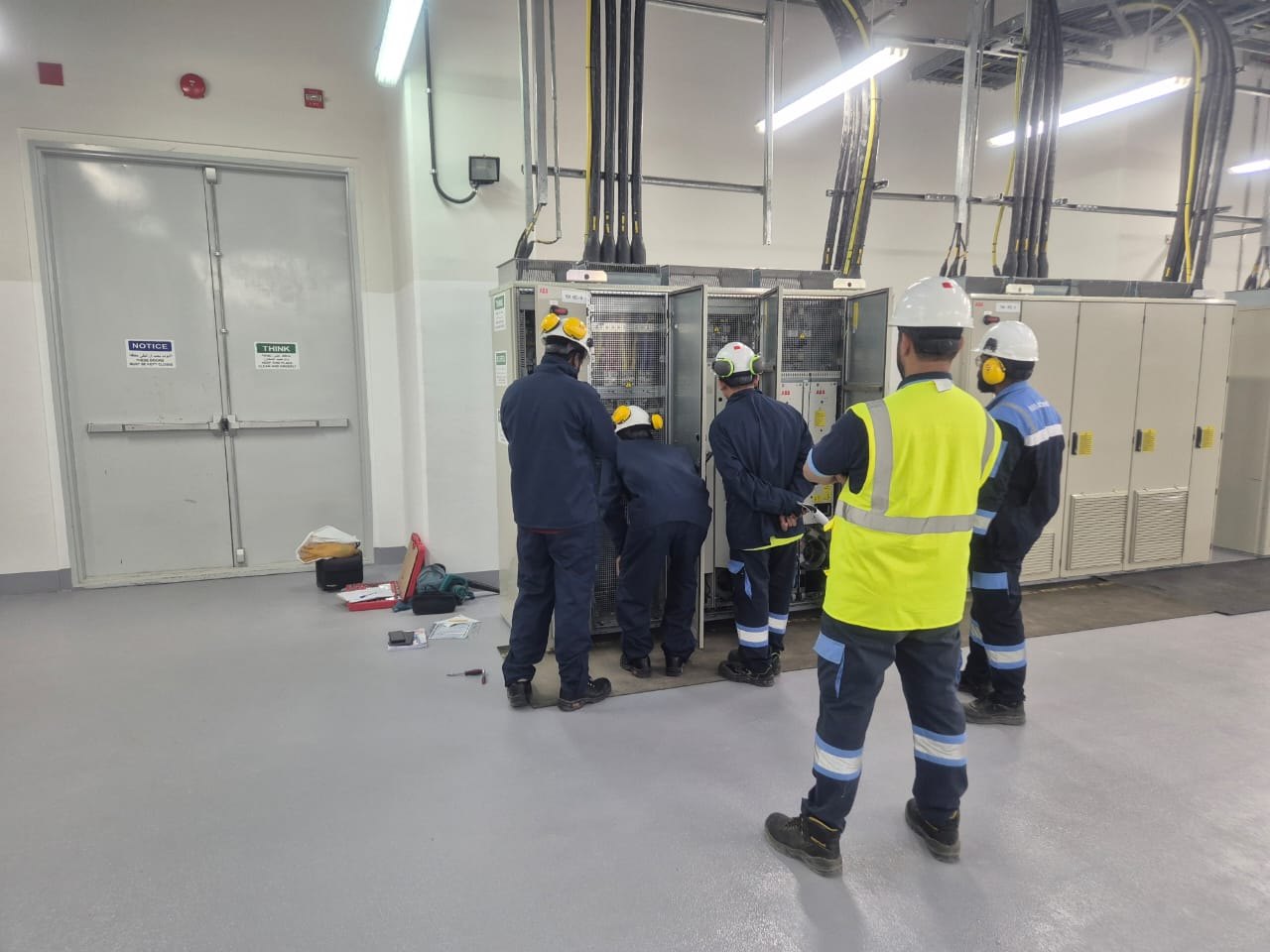
The free audit-readiness check returns four documents within two business days: a written scope for your site, a per-bus price estimate in ringgit or US dollars, a stage-by-stage timeline built around your next shutdown, and a one-page note you can send to your auditor or insurer showing the study is booked. There is no fee and no sales call.
Written scope and price estimate
Every voltage level, the DC buses and the label count, priced per bus, so you can take one number to your plant manager this week.
A timeline that fits your shutdown
Walkdown, model, report and labels laid out week by week against your next maintenance or turnaround window.
A note for your auditor or insurer
One page confirming the study scope and dates, so an open audit finding or survey recommendation shows a plan on file today.
Read more: how VB scopes an arc flash study · what an arc flash study costs · DC arc flash for UPS and battery rooms · arc flash studies in the Philippines.
Before you ask
Questions Malaysian plants ask VB
Is an arc flash study required in Malaysia?
Yes. Section 15 of the Occupational Safety and Health Act 1994 requires every Malaysian employer to protect workers from workplace hazards, electrical hazards included, and DOSH expects each significant hazard to be assessed and controlled under HIRARC. An arc flash study is how the arc flash hazard is assessed and controlled. Parent companies and insurers ask for it by name, to NFPA 70E.
Does DOSH or Suruhanjaya Tenaga require an arc flash study?
Both expect the arc flash hazard to be controlled. DOSH enforces the employer's duty in OSHA 1994 and the HIRARC risk-assessment approach. Suruhanjaya Tenaga, the Energy Commission, enforces the Electricity Supply Act 1990 and the Electricity Regulations 1994, and its Guideline on Electrical Safety Management Plan and Programme (2017) requires electrical hazards to be controlled by the hierarchy, from elimination down to PPE. A dated arc flash study is the evidence that this has been done.
Is Malaysia's OSHA 1994 the same as the US OSHA rule on arc flash?
They are different laws with the same aim. Search results for "is an arc flash study required by OSHA" usually describe the United States Occupational Safety and Health Administration. Malaysia's OSHA is the Occupational Safety and Health Act 1994, amended in 2022 with the amendments in force from 1 June 2024, and enforced by DOSH. One VB study meets the Malaysian duty and the NFPA 70E standard that multinational parents audit to.
Does IEEE 1584 cover 22 kV and 33 kV switchgear?
No. The IEEE 1584-2018 model is validated from 208 V to 15 kV. Malaysian distribution commonly runs at 11 kV, 22 kV and 33 kV, so 22 kV and 33 kV buses sit outside it. VB calculates those buses with a recognised alternative method, names the method beside each result and flags them in the report, so an auditor sees exactly which values came from which model.
Does internal-arc-classified switchgear remove the need for an arc flash study?
No. An IAC rating under IEC 62271-200 shows the switchgear protected people standing at the tested sides with the doors closed and latched. It says nothing about open-door work, racking a breaker, testing in the cable or LV compartment, or the panels downstream. Those tasks still need an incident energy value, a boundary and the right PPE, which is what the study gives.
How do NFPA 70E PPE categories map to IEC 61482 arc-rated clothing?
Not directly. NFPA 70E works in calories per square centimetre. IEC 61482-1-2 box-test garments are rated Class 1 (4 kA) or Class 2 (7 kA), which is not a cal/cm² figure. The open-arc test in IEC 61482-1-1 gives an ATPV or ELIM in cal/cm², and that is the number to compare with the incident energy on a VB label.
How much does an arc flash study cost in Malaysia?
It is priced per bus and per voltage class, quoted in ringgit or US dollars, with the site walkdown, any one-line drawing work and label installation priced as their own lines. Floor area and megawatts are poor guides because the bus count is the work. Use the audit-readiness check on this page and the price estimate comes back with the written scope in two business days.
How long does an arc flash study take?
About 4 weeks for up to 25 buses, 5 to 7 weeks for 26 to 100 buses, 8 to 11 weeks for 101 to 300 buses, and 12 weeks or more above that, from site access to labels on the gear. Buses above 15 kV and missing one-line drawings each add time. These durations are modelled from VB's project register by bus-count band.
Which companies do arc flash studies in Malaysia?
VB Engineering runs arc flash studies across Peninsular and East Malaysia: semiconductor and electronics plants in Penang and Kulim, data centres in the Klang Valley and Johor, petrochemical and gas sites on the east coast and in Sarawak, and manufacturing plants nationwide. Every study is calculated in ETAP or SKM PowerTools and signed by the engineer who ran it.
What does a parent company's NFPA 70E audit check at a Malaysian plant?
Four things, usually in this order: a dated arc flash risk assessment under NFPA 70E 130.5 that is less than five years old, labels on the gear that match it, an energised work permit and PPE programme that use the label values, and an action register showing the study's recommendations closed. A VB report opens with a conformance matrix that walks the auditor through all four.
What should a plant do after an arc flash incident or near miss?
Make the gear safe, report as DOSH requires, then ask whether the hazard at that panel was assessed and whether anything changed since. If the study is missing, older than five years or predates a new transformer or feeder, re-run it before the next energised task. VB can scope the affected area first and the rest of the site after.
What happens after I submit the form?
A VB engineer replies by email inside two business days with the site scope, the weeks each stage takes, the deliverables list and the price estimate built per bus. Nobody calls unless you ask. If your permit holder, insurer or parent company needs a Malaysian Professional Engineer's endorsement, say so on the form and it is written into the scope.
Your audit-readiness check and price estimate, back in two business days.
Six answers today. A VB engineer returns the written scope, the weeks per stage and a per-bus price estimate in ringgit or US dollars. Penang, the Klang Valley, Johor, the east coast or Sarawak: no charge, no call unless you want one.
Get price estimatePrefer email? Send the bus count to connect@groupvb.com with "Malaysia" in the subject line.