Converting old drawings to CAD? Check them against the plant first
12,000+ drawings delivered. Paper, PDF and old CAD sets converted for operating plants across India.
Trusted by the World’s Most Demanding Plants.




















































What is drawing digitisation?
Drawing digitisation is the conversion of paper, scanned or PDF engineering drawings into editable CAD files. A scanned P&ID is only a picture: nobody can edit a line, search a tag or link it to a maintenance system. Converted to CAD, the same sheet becomes a DWG or AutoCAD Plant 3D drawing. Converted to an intelligent P&ID, every valve, line and instrument also carries a tag in a database that other systems can read.
VB Engineering converts drawing sets for operating plants in India: P&IDs and PFDs first. Our CAD drawing services convert the rest of the set alongside them: 2D CAD drawings such as layouts, isometrics and single-line diagrams. What sets the work apart is the last step: the converted sheet is checked against the plant before it is issued, so the new file does not carry old mistakes forward with a new date.
Can AI read P&IDs?
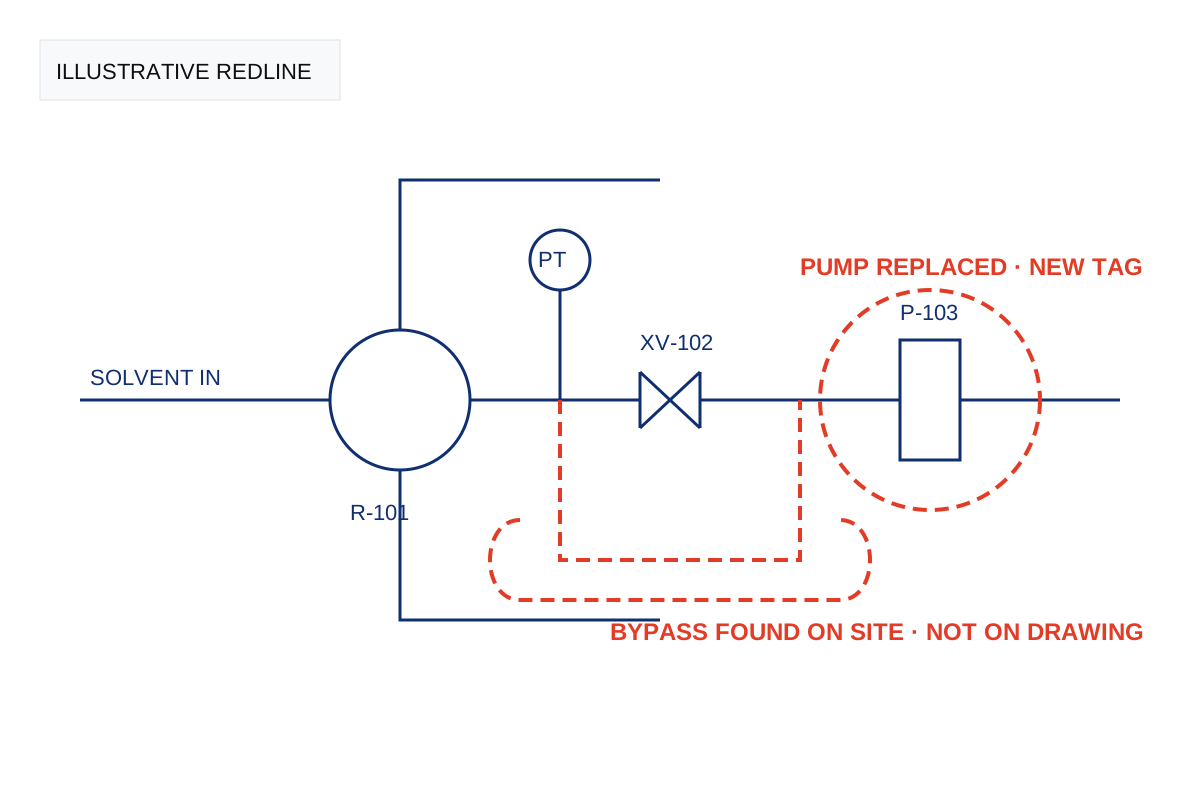
Yes, AI tools can read the symbols, lines and tags on a scanned P&ID and turn them into a draft CAD or intelligent drawing. What they cannot read is the plant. A tool reproduces exactly what the old sheet shows, including the bypass that was never drawn and the pump that was replaced years ago.
| Approach | What it checks | What it misses | When it is enough |
|---|---|---|---|
| AI conversion | Symbols and tags against the scanned sheet | Every change made in the plant since the sheet was drawn | A clean, recent drawing set nobody has modified |
| AI plus drafter review | The converted file against the source, sheet by sheet | Changes in the plant, still | Drawings for a records archive |
| Conversion plus site check | The converted file against the installed plant | Nothing in the walked areas; every difference is logged | Drawings that feed a HAZOP, an audit, a DCS migration or a digital twin |
The question to ask before you convert is not "how accurate is the tool?" but "accurate against what?" Accuracy against the source sheet can be very high. Accuracy against the plant stays unknown until someone walks the lines.
Scan to P&ID: paper scan or laser scan?
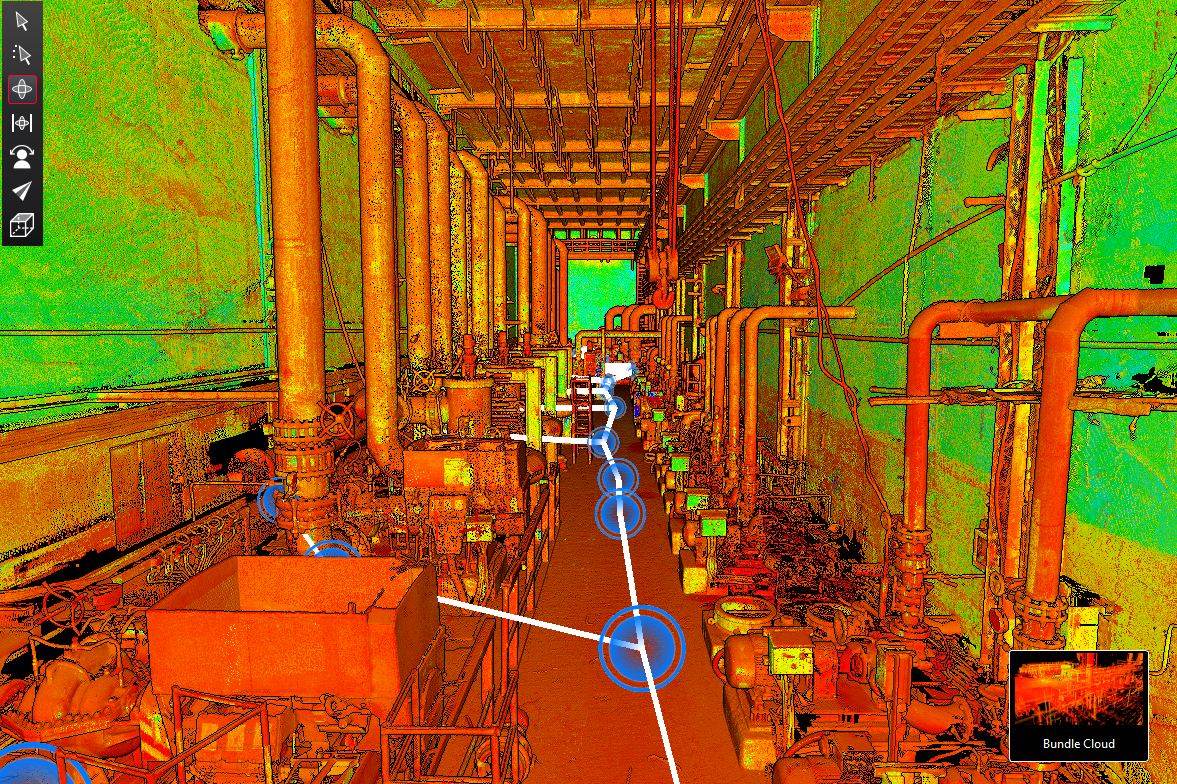
"Scan to P&ID" means two different jobs. A paper scan to P&ID converts a scanned drawing into CAD, which is what this page covers. A laser scan to P&ID captures the plant itself as a point cloud and draws or updates the P&ID from it, which is covered on our as-built P&ID page.
| Job | Input | Output |
|---|---|---|
| Paper or PDF scan to P&ID | Scanned sheets, PDFs, microfilm or old CAD files | DWG, AutoCAD Plant 3D or intelligent P&IDs that match the source |
| Laser scan to P&ID | A point cloud of the plant from a Leica RTC360 survey | P&IDs that match the installed plant |
| Both, together | The old sheets plus a site check or laser scan of the areas in scope | Converted P&IDs corrected to the plant, with a discrepancy log |
When do plants digitise their drawings?
Plants digitise when another project needs the drawings in a system: a DCS migration, a maintenance system, a digital twin, or a HAZOP or audit that cannot run on faded paper.
Which standards and formats do converted P&IDs follow?
Converted P&IDs follow ANSI/ISA-5.1-2024 symbols by default, keep your plant drafting standard where it differs, and can be exchanged between platforms in the DEXPI format.
| Standard or format | What it governs on your converted drawings |
|---|---|
| ANSI/ISA-5.1-2024 | Instrument symbols and tag identification, so every converted bubble and loop reads the same way. |
| ISO 10628-2 | Graphical symbols for process diagrams, used on plants built to European standards. |
| DEXPI | Data Exchange in the Process Industry: a neutral format for moving intelligent P&IDs between AutoCAD Plant 3D, AVEVA and Hexagon systems. |
| Your plant standard | Where the site follows DIN, JIS or its own conventions, converted sheets keep them, so old and new drawings read alike. |
Need the plant walked line by line first? See P&ID drafting and updation.
What does a drawing digitisation job deliver?
Every conversion delivers editable drawings in your format, the registers your engineers work from, and a record of what was checked.
- P&IDs and PFDs in DWG or AutoCAD Plant 3D, with PDFs for issue
- Intelligent P&IDs with a tag database on the platform your plant uses, on request
- Other 2D CAD drawings in the set: layouts, isometrics, single-line diagrams, fire escape plans
- Line list and equipment list built from the converted drawings
- Drawing register with revision status
- Discrepancy log where sheets were checked on site
Send three sample sheets and we tell you what a full conversion involves.
How is drawing conversion priced?
Drawing conversion is priced per drawing: a clean source converted to CAD costs least, an intelligent P&ID with a tag database costs more, and a site check adds the walk and correction of each sheet.
| Part of the work | How it is priced | What moves the price |
|---|---|---|
| Conversion to CAD | Per drawing, from scan, PDF or old CAD | Source legibility, symbols per sheet, target format |
| Conversion with site check | Per checked drawing: convert, walk, correct, issue | Plant access, how far the plant has drifted |
| Intelligent P&ID and tag database | Per drawing, plus the tag register | Number of tags, target platform |
Get a price estimate
Answer three questions about your drawing set. A drafting engineer benchmarks them against past conversions and replies with an estimate.
No figures on screen: a drafting engineer reviews your answers first. Three sample sheets can be converted first if you want proof.
How does a drawing conversion run?
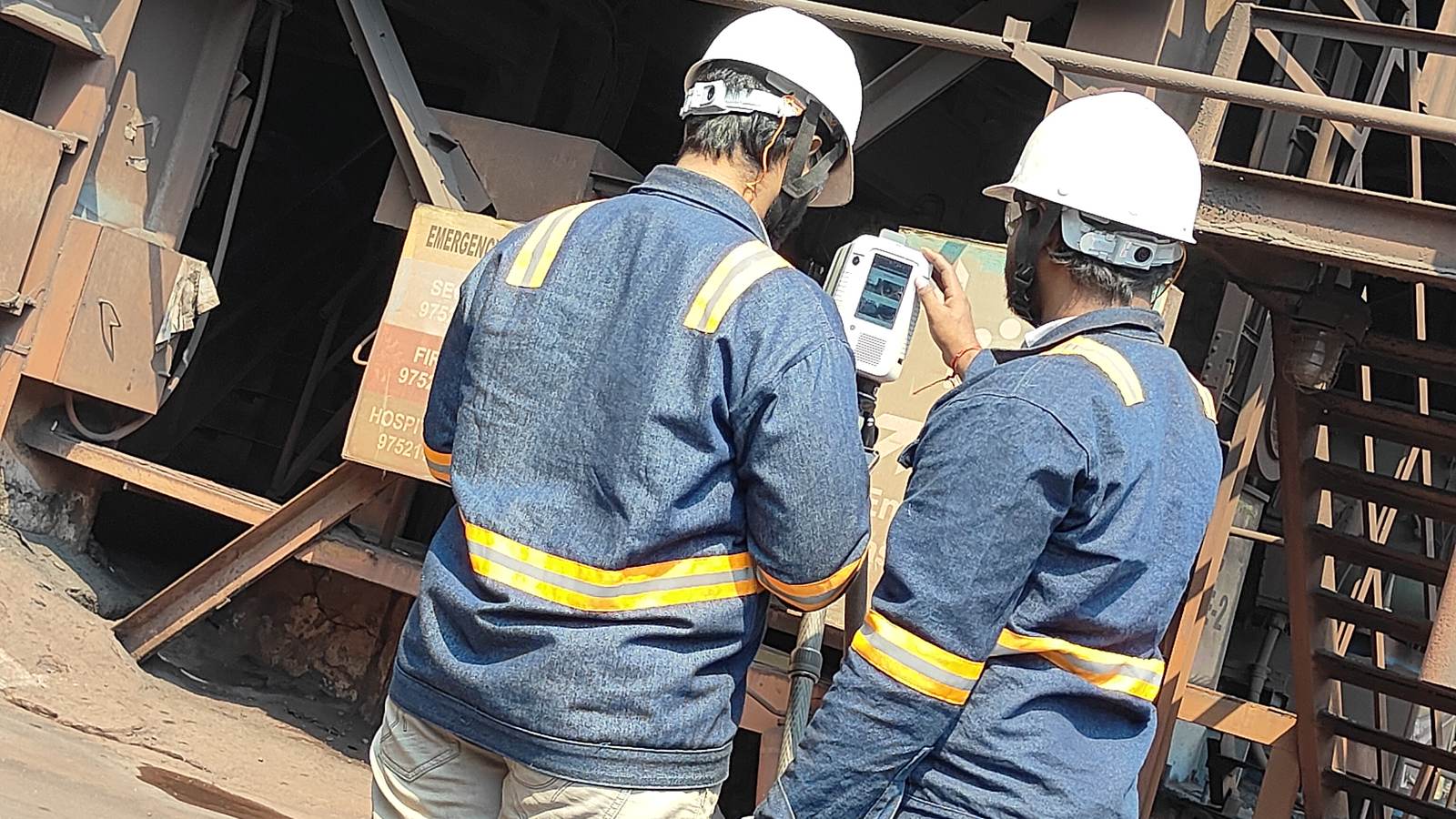
A conversion runs in four steps: the set is indexed, each sheet is converted, the result is checked against the source and, where it matters, against the plant, and the set is issued.
Index
Sheets sorted, numbered and matched to a drawing register.Convert
Each sheet redrawn in CAD or as an intelligent P&ID.Check
Checked against the source; walked on site where the plant has changed.Issue
Issued with the tag database, registers and discrepancy log.A converted drawing is only as true as the plant it shows. Conversion copies what the old sheet says. If the sheet missed a bypass or a replaced valve, the new file misses it too, now with a newer date and more authority.
Which scanners and software does VB use for P&ID and as-built work?
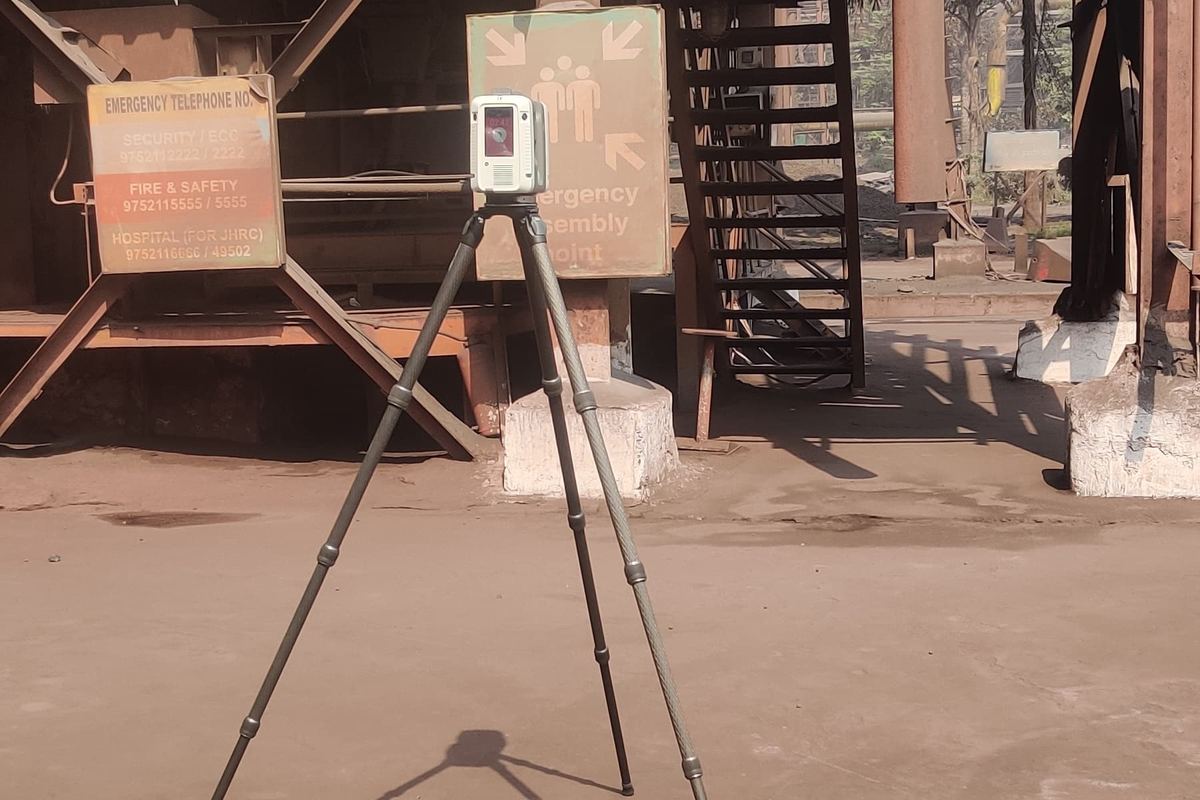
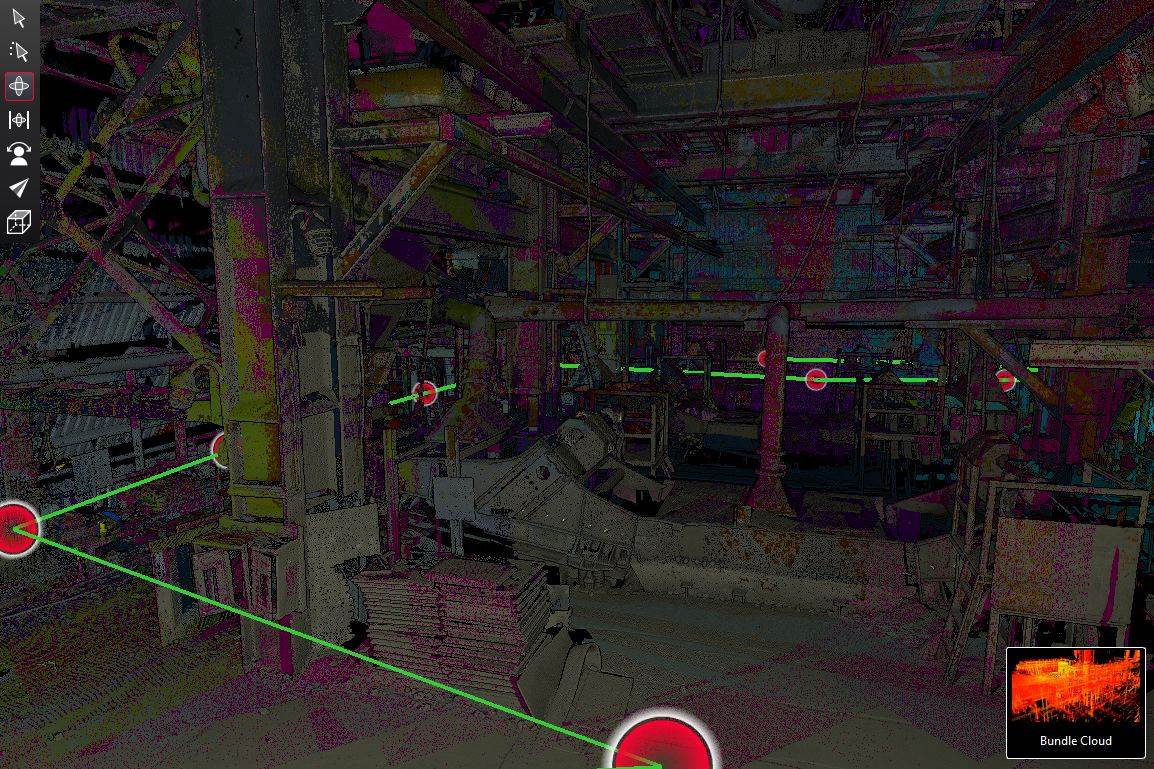
VB captures plants with the Leica RTC360 laser scanner, registers the scans in Leica Cyclone REGISTER 360 PLUS and Autodesk ReCap Pro, and draws P&IDs and 3D models in AutoCAD Plant 3D and Autodesk Revit. Your drawings come back in the format your engineers already open every day.
| Stage | Tools we work in | What you receive |
|---|---|---|
| Capture | Leica RTC360 laser scanner · FARO Focus and Trimble X7 where your site specifies them · field walkdown with redline markup | Coloured 3D scans of every area in scope, with photos |
| Register | Leica Cyclone REGISTER 360 PLUS · Autodesk ReCap Pro | One registered point cloud (E57, RCP or RCS) |
| Draw P&IDs | AutoCAD Plant 3D P&ID · AutoCAD P&ID · AVEVA and Hexagon Smart P&ID formats on request | Verified P&IDs in DWG and PDF, with the tag database |
| Model | AutoCAD Plant 3D · Autodesk Revit | 3D plant model, isometrics and general arrangement drawings |
| Review | Autodesk Navisworks | One federated model your team can walk through and mark up (NWD) |
Running a different platform? Tell us which one in the form. We deliver in the software and drawing standard your plant already uses.
Product names are trademarks of their respective owners.
What does converting an old drawing set look like?
A typical conversion starts with a box of sheets or a folder of PDFs, and ends with an editable, tagged set your engineers can revise themselves.
Old sets usually share the same problems: faded tags that read two ways, revisions marked by hand and never drawn in, and lines that were removed in the plant but are still on paper. Each one is flagged during conversion, and the sheets that feed a study or a system migration are walked so the issued file shows the plant, not the paper.
Want proof first? Start with three sample sheets.
Who converts, checks and approves your drawings?
Every proposal names the drafter who converts, the engineer who checks and the approver, with CVs.
Drafting lead
CV shared with the proposalChecking engineer
CV shared with the proposalVB Engineering approver
CV shared with the proposalDrawing digitisation: questions buyers ask
Can AI read P&IDs?
Yes. AI tools read symbols, lines and tags from a scanned P&ID and produce a draft CAD or intelligent drawing. They cannot tell whether a line still exists in the plant, so drawings that feed a HAZOP, an audit or a control system migration should also be checked on site.
Can scanned or PDF P&IDs be converted to intelligent P&IDs?
Yes. Each scanned or PDF sheet is rebuilt as objects, not lines, on the platform your plant uses (Plant 3D, AVEVA or Smart P&ID), and every valve, line and instrument gets a tag in the database.
How accurate is converting P&IDs to CAD?
Against the source sheet, each converted drawing is checked before issue. Against the plant, accuracy is unknown until the lines are walked, which is why a site check is offered for drawings that matter.
Can a free PDF to DWG converter do the job?
A converter turns lines into vectors but does not recognise a valve, a tag or a pipe run. You get a DWG that looks right and cannot be revised, searched or linked to a tag database.
Can AutoCAD do P&ID?
Yes. AutoCAD Plant 3D includes a P&ID module with ISA, PIP, ISO/DIN and JIS symbol libraries and a tag database. It is one of the formats we deliver converted drawings in.
What is an intelligent P&ID?
An intelligent P&ID is a drawing in which every component is an object with a tag and data, not just lines. Line lists, equipment lists and maintenance systems can be generated from it or linked to it.
Which drawings can you convert?
P&IDs and PFDs first, plus layouts, isometrics, single-line diagrams, general arrangement drawings and fire escape plans from paper, scans, PDFs or old CAD files.
How is a converted drawing checked?
A second engineer compares each converted sheet with its source, symbol by symbol and tag by tag. Where the drawing will be used for a study or a system migration, the lines are also walked on site and differences are logged.
What do you need from us to start?
The drawing count, three sample sheets and the format you want. For a site check, access to the areas in scope and a contact on shift.
How is drawing conversion priced?
Per drawing. Legible sources converted to CAD cost least; intelligent P&IDs and site checks add to the rate. The estimator above gives you an estimate by email with a written proposal.
Where to go next
Get a price estimate for your drawing conversion
Share the drawing count, the source (paper, PDF or old CAD) and the target format. A drafting engineer reviews it and replies with an estimate and a written proposal.
- Three sample sheets converted first, if you want proof
- A drawing register for the whole set
- An estimate for the full conversion
Prefer to write? connect@groupvb.com · or WhatsApp us from the chat button
VB Group® · Sustainability A Certainty.
Short form. Written proposal.
Your name, work email and company, the type of work, and whether the sheets need a site check.