Arc flash study · Taiwan · IEEE 1584-2018 · NFPA 70E · 380 V to 22.8 kV · 電弧閃絡風險評估
Arc flash study in Taiwan for fabs, data centres and electronics plants, ready for your parent company, insurer or customer audit
An arc flash study calculates the heat energy a fault can release at every panel, so each worker wears the right PPE and every panel carries a dated label. Taiwan's Ministry of Labor guidance adopts IEEE 1584 and NFPA 70E for this. VB models the system in ETAP or SKM, from the 22.8 kV intake to the last LV panel.
22.8 kV gear in scopeTraditional Chinese and English labelsVB crew on site in TaiwanStudies in 21 countries
Is your site audit-ready? Free check in 2 minutes
| Reviewer wants | |
|---|---|
| Labels | |
| Study date | |
| Voltage | |
| Scope | |
| Timeline |
The panel sets your six answers against NFPA 70E 130.5 and the 208 V to 15 kV range of IEEE 1584-2018. It is a screening result, not engineering advice. Week bands come from VB's project register. Press the button, fill the short form, and the scope and estimate reach you by email within two business days.
Trusted on plants that cannot stop










- 22.8 kVcommon Taiwanese plant distribution voltage, above the 15 kV top of IEEE 1584-2018
- 2 of 6firms in an ILOSH survey had assessed arc flash at all
- 2.4casualties per arc burn accident in Taiwan, more than double other electrical accidents
- 0VB arc flash studies delivered since 2014
- 0countries where VB labels are on the gear
IEEE 1584-2018 validated range: 208 V to 15 kV. Survey and voltage levels: ILOSH, Study on Prevention of Arc Flash Burns. Casualty rate: Ministry of Labor, 2 December 2016. VB figures: internal project register.
Three steps to a scope your manager can sign
- 1
Describe the site
Choose who raised the request, the highest voltage, the labels on the gear today and the age of the last study, then enter a rough bus count and whether UPS DC belongs in it.
- 2
An engineer reads it
A VB study engineer checks your answers, marks anything at 22.8 kV, and splits the work into walkdown, modelling, report and labelling.
- 3
Scope and estimate arrive by email
Two business days later you have the scope, a plan built around your shutdown window and an estimate per bus in NT dollars or US dollars.
HQ finding, insurer survey, customer audit or incident
Why are Taiwan plants asked for an arc flash study?
Taiwan plants are usually asked for an arc flash study by someone outside the site: a foreign parent running an NFPA 70E audit, a property insurer after a risk survey, or a customer auditing its supply chain. Taiwan's own research institute saw the same pattern. In its survey only 2 of 6 firms had assessed arc flash, one through a US consultant and one through its foreign parent's method.
Parent company audit
US, European and Japanese groups audit their Taiwan fabs, data halls and assembly plants to a corporate electrical safety standard built on NFPA 70E. The finding reads "arc flash hazard not quantified". VB's signed study and label schedule close it.
Insurer recommendation
After a property survey to FM Global data sheets or a similar insurer standard, "quantify arc flash hazard" lands on the recommendation list. VB calculates every bus and drafts the close-out letter the risk engineer files.
Customer supply-chain audit
Chip, server and electronics customers audit supplier sites, and electrical safety is on the list. A dated study, bilingual labels and an action register give the auditor evidence instead of a promise.
After an arc event
Once a flash or near miss is reported, inspectors and head office want to see that panel's assessment and the date it was made. VB models the affected substation first, so the line can restart, and widens the study to the whole site afterwards.
Labels your crew and your auditor can both read
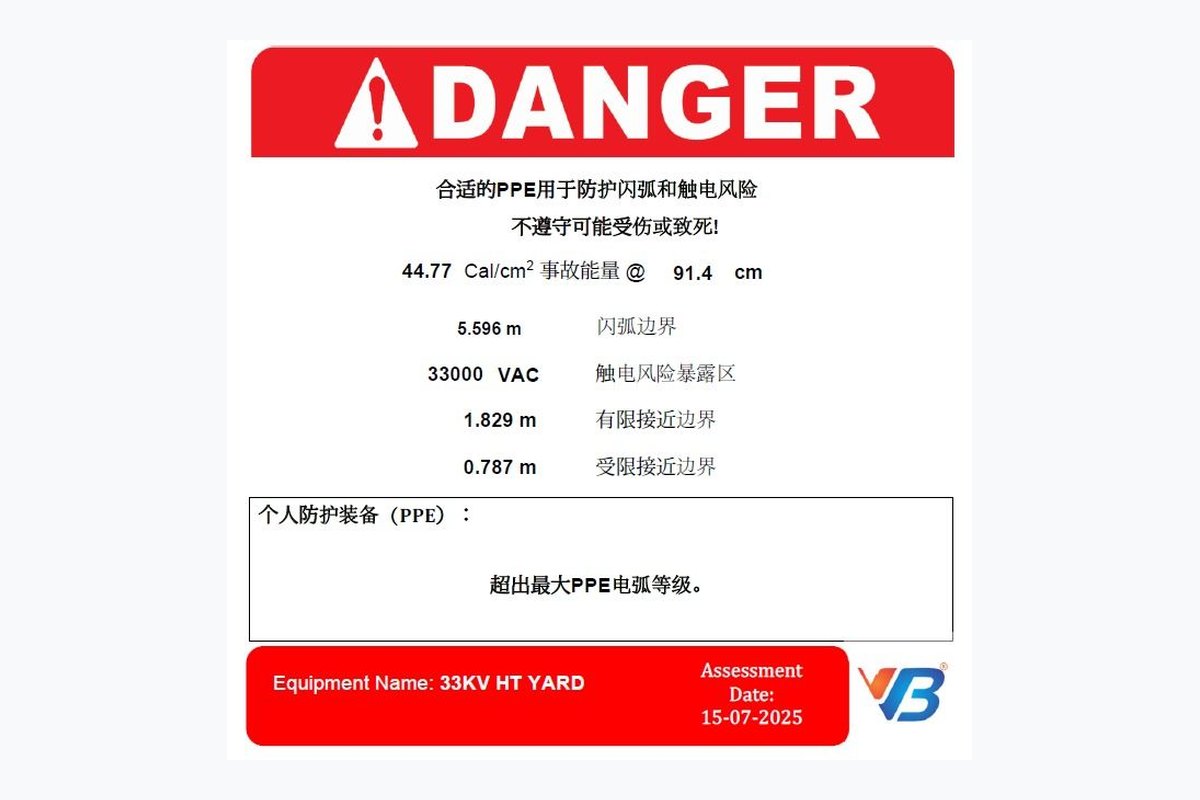
VB has delivered arc flash labels in Chinese, English and Arabic. Every label is printed from the signed study: incident energy at the working distance, arc flash boundary, system voltage, shock approach limits, required PPE, equipment tag and the assessment date. For Taiwan sites VB prints Traditional Chinese and English side by side, so the electrician on the floor and the visiting group auditor read the same numbers. The label shown here comes from a 33 kV yard, a voltage above the IEEE 1584 range that VB calculated, labelled and dated.
Taiwan's guidance
What does Taiwan's guidance say about arc flash?
Taiwan's Ministry of Labor tells employers to de-energise first and, where live work cannot be avoided, to analyse arc energy in advance, post warning labels and provide matching PPE. Its research institute (ILOSH) adopted IEEE 1584 for the calculation and NFPA 70E for PPE and labels, and the Ministry published an arc burn prevention guideline written for the electronics and technology industry.
| Document | What it asks of the plant | Who checks it |
|---|---|---|
| Ministry of Labor guideline on preventing arc burns in panel work, electronics and technology industry (電子科技業防止配電箱(盤)作業之電弧灼傷技術指引) | Assess arc burn hazards at distribution panels and protect the people who work on them | Labour inspectors; your safety and health office |
| Ministry of Labor notice, 2 December 2016 | De-energise first; for unavoidable live work, set a procedure, analyse arc energy, post warning labels and provide PPE | Labour inspectors |
| ILOSH study on preventing arc flash burns | Calculate arc energy with IEEE 1584 and choose PPE with NFPA 70E, at 22.8 kV, 11.4 kV, 3.3 kV and LV panels | Reference for enterprises and inspectors |
| Occupational Safety and Health Act and Occupational Safety and Health Facilities Rules | The employer's duty to prevent electrical hazards, with protective equipment for live-line work | Occupational Safety and Health Administration inspectors |
| NFPA 70E 130.5 | Assess arc flash risk before energised work, review the assessment at least every five years, label the equipment | Group EHS auditors; customer auditors |
| FM Global data sheets 5-19, 5-32, 7-7 | Loss prevention for switchgear, data centres and semiconductor fabs | Insurance risk engineers |
| SEMI S22 | Electrical design safety of the process tool itself | Tool suppliers and third-party evaluators |
A Taiwan plant is built to local codes and audited in NFPA 70E terms by its parent, its insurer and its customers. VB writes one report for all of them: results follow IEEE 1584-2018, and the first page maps the study to the Ministry of Labor guidance and to NFPA 70E, so the safety office, the facility engineer and the visiting auditor work from one document. SEMI S22 certifies the tool. The arc flash study covers the bus that feeds it, which is why fab EHS teams ask for both.
The 22.8 kV question
Does IEEE 1584 cover 22.8 kV systems?
No. The IEEE 1584-2018 model was validated only between 208 V and 15 kV, and the medium-voltage backbone of most Taiwanese plants runs at 22.8 kV. For those buses VB applies a recognised alternative calculation, writes its name in the result row and marks the row, so an auditor never mistakes it for an IEEE 1584 figure.
| Voltage level | Inside IEEE 1584-2018? | How the VB report treats it |
|---|---|---|
| 161 kV or 69 kV intake | No | Modelled as the source; utility protection settings drive every downstream result |
| 22.8 kV distribution | No, above 15 kV | Calculated on a named alternative method, flagged row by row |
| 11.4 kV distribution | Yes | IEEE 1584-2018, with every switching configuration |
| 480 V, 380 V and 220 V panels | Yes | IEEE 1584-2018 at the stated working distance |
| UPS and battery DC | No, IEEE 1584 is AC only | Named DC method, listed in the same table (see DC arc flash studies) |
Fabs, data centres and electronics plants
How does VB study a fab, a data centre or an electronics plant in Taiwan?
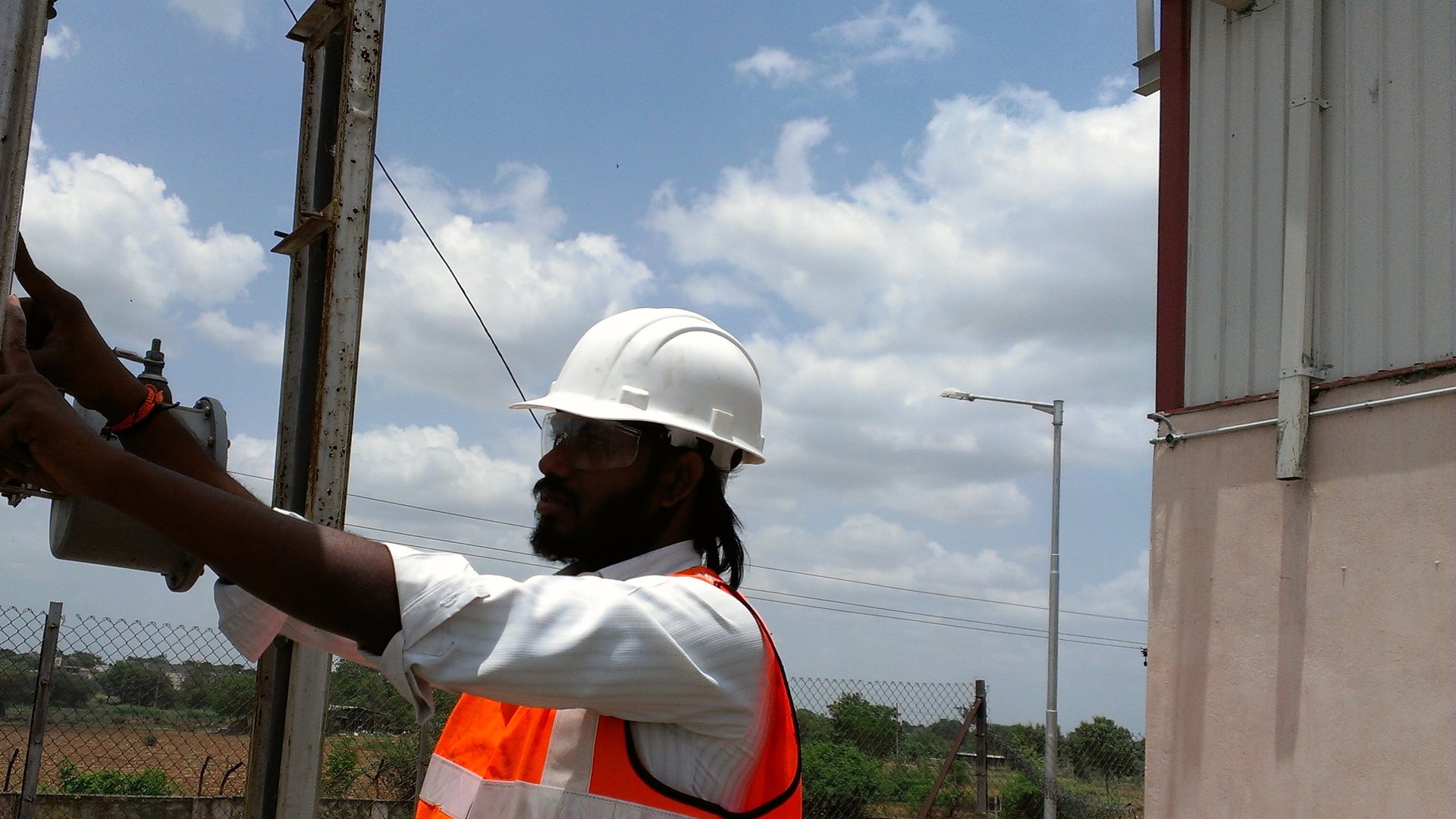
VB fits each Taiwan study to how the site runs. Fabs and OSAT plants are surveyed inside planned shutdown windows, data centres are modelled in every UPS and generator configuration, and electronics plants get a study packaged as customer audit evidence. VB's own walkdown crew travels to Hsinchu, Taoyuan, Taipei, Taichung, Tainan and Kaohsiung.
| Site type | Where in Taiwan | What the study focuses on |
|---|---|---|
| Semiconductor fabs and OSAT | Hsinchu, Zhunan, Taichung, Tainan, Kaohsiung | 22.8 kV rings, fab utility substations, tool UPS, surveys inside PM windows, the SEMI S22 boundary between tool and facility |
| Data centres | Taoyuan, Taipei, New Taipei, Changhua | UPS and battery DC buses, 2N and N+1 paths, generator and bypass modes, maintenance switching |
| Electronics, EMS and AI server plants | Taoyuan, Hsinchu, Taichung, Kaohsiung | Customer audit evidence pack, bilingual labels, fast turnaround on production lines |
A group with, say, a fab in Hsinchu and a packaging plant in Kaohsiung gets the same modelling rules and the same report layout at both, which lets group EHS compare sites like for like. VB runs the same programme for East Asian plants in South Korea, Malaysia and the Philippines.
What VB delivers
What does an arc flash study in Taiwan include?
A VB arc flash study in Taiwan runs from the Taipower supply point to the smallest distribution board. It includes a site walkdown, a corrected single-line diagram, short-circuit and protection coordination studies, incident energy for every bus in every operating mode, a PPE table, dated bilingual labels and a report signed by the engineer who built the model.
| Included | Add-ons |
|---|---|
| Walkdown of every panel, with ratings, CT ratios and relay settings captured in ElecTwin, VB's field data app | Infrared thermography of the same gear |
| Single-line diagram checked against what is installed, with a deviation list | New single-line drawings where none exist |
| Short-circuit study and protection coordination (保護協調), with setting recommendations | Support while your contractor applies new settings |
| Incident energy and arc flash boundary for every bus, 22.8 kV and DC included | Arc flash awareness sessions for electrical crews |
| Traditional Chinese and English labels printed from the study, with a photo record | Labels in further languages for multinational sites |
| Mitigation register with owners and dates, cross-referenced to Ministry of Labor guidance and NFPA 70E | Five-year review programme |
How long does an arc flash study take?
- Before the visit · VB sends a document request so time on site goes to open panels
- On site · VB's crew flies in and works inside your PM or shutdown window
- Model · built over two to three weeks in ETAP or SKM PowerTools, all operating modes
- Report · IEEE 1584.1-2022 layout, signed by its author and reviewed by a second VB engineer
- Labels · about 150 fixed per crew per day, each one photographed
- Overall · a 25-bus site takes about 4 weeks; 100 buses 5 to 7; 300 buses 8 to 11
Tool expertise
Which software does VB use for arc flash studies?
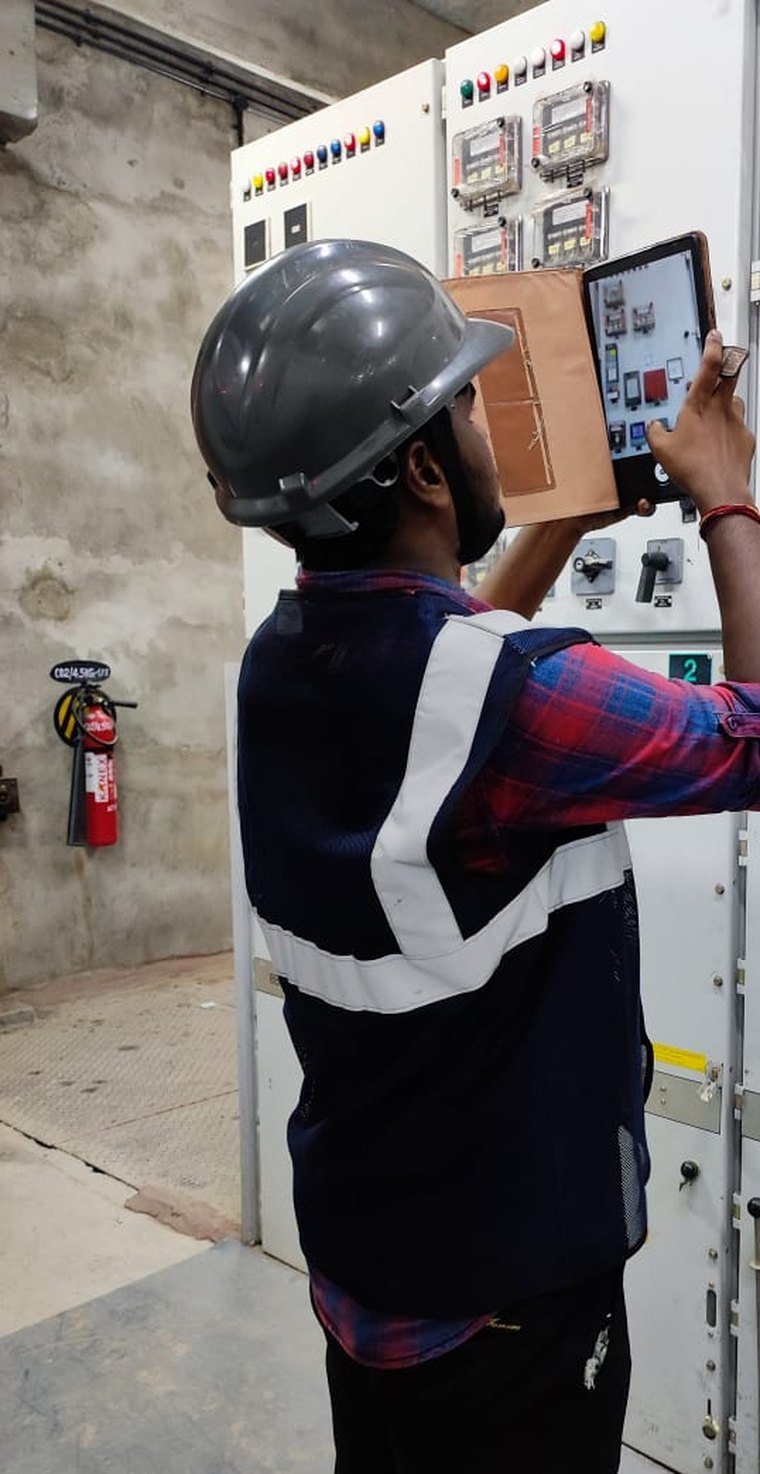
VB has dedicated teams on six platforms: ETAP, SKM PowerTools, CYME, EasyPower, PSS®E and NEPLAN. If your group engineers already hold a licence for one of them, VB delivers the model in that format and head office can open it directly.
Price
What drives the cost of an arc flash study in Taiwan?
An arc flash study in Taiwan is priced by bus count and voltage level, not by floor area or megawatts. Each switchboard, MCC or UPS output in the model is one bus. 22.8 kV gear, UPS and battery DC, missing drawings and the number of shutdown windows add effort. VB quotes in NT dollars or US dollars, with walkdown, drawings and labels on separate lines.
| Cost driver | Why it adds work | How the quote shows it |
|---|---|---|
| Number of buses | Each one is visited, entered, calculated and labelled | Per-bus rate, set by voltage |
| 22.8 kV and 11.4 kV gear | More switching cases, utility data and, above 15 kV, a second method | MV buses priced apart from LV |
| Drawings | Wrong single-lines are corrected on site; missing ones are drawn | Drawing line outside the study rate |
| UPS and battery DC | A separate DC method is applied | DC buses listed individually |
| Shutdown windows | Fabs and data halls open switchrooms only in planned windows | Walkdown visits priced per window |
| Labels | Count, size and language | Label printing and fixing as its own line |
The audit-readiness check at the top of this page is the fastest way to a number: six answers, and VB emails the scope and estimate inside two business days. VB's pricing method is explained in full on the arc flash study cost page.
A semiconductor packaging and test campus
How does VB close a customer audit finding at a Taiwan OSAT campus?
At a large semiconductor packaging and test campus in Taiwan, modelled with a 161 kV intake, a 22.8 kV ring and 300 buses, VB runs one study across two shutdown windows and closes a customer's supply-chain audit finding in 11 weeks. Modelled result: the 12 buses above 40 cal/cm² fall to none, the highest incident energy drops from 58 to 6.9 cal/cm², and 300 bilingual labels installed.
The trigger
A global chip customer's supplier audit listed "arc flash hazard not assessed, no incident energy on labels" with a 90-day close-out. All the campus held was a construction-era fault study and generic Chinese warning stickers.
What the study found
| What the model showed | Where, and why it matters |
|---|---|
| 12 buses above 40 cal/cm² | 480 V main switchboards behind large transformers, where no arc-rated PPE permits live work |
| 34 buses above 15 kV | 22.8 kV switchgear and ring main units, outside IEEE 1584-2018 and in no earlier study |
| 7 miscoordinations | Main breakers tripping before the faulted feeder, so one fault could stop a whole production block |
| 38 DC buses missing | Tool UPS, facility UPS and substation chargers absent from every earlier model |
What VB changed
The fix combined maintenance-mode switching on the 480 V incomers, zone-selective interlocking across two lineups and seven revised relay settings; the 22.8 kV buses were solved on a named method. With the settings applied in the second window, the model was solved again and all labels came from that final run.
| Measure | Before | After |
|---|---|---|
| Highest incident energy on site, cal/cm² | 58 | 6.9 |
| Buses where no PPE permits live work (>40 cal/cm²) | 12 | 0 |
| 22.8 kV buses in the study | 0 | 34 |
| Miscoordinations | 7 | 0 |
| Panels with a dated bilingual label | 0 | 300 |
| Elapsed weeks, first access to signed report | 11, across two shutdown windows | |
See it before you buy it
What does a VB arc flash report look like?
A VB arc flash report opens with a one-page summary for management, then gives an incident energy table for every bus, the PPE required at each panel, the label schedule, the protection setting changes and a mitigation register. Ask for a sample report through the form and VB emails an anonymised extract you can show your manager or auditor.
Sample report extract
Summary page, one bus table and one label, anonymised, so you know exactly what your auditor will receive.
Scope and estimate
Each voltage level, the DC systems and the number of labels priced separately, with dates fitted to your next shutdown.
Booking note for the reviewer
A one-page note of scope and dates, so the audit finding or insurer recommendation shows action already scheduled.
More on report content: what an arc flash report contains · arc flash study scope of work.
繁體中文
電弧閃絡風險評估常見問題
什麼是電弧閃絡風險評估?
電弧閃絡風險評估(亦稱電弧閃光分析,Arc Flash Study)是計算每一個配電盤發生故障時可能釋放的熱能(入射能量,單位 cal/cm²),據此訂出電弧閃絡邊界與作業人員應穿戴的防護具等級,並在每一個配電盤張貼標示評估日期的警告標籤。VB 以 ETAP 或 SKM 建立全廠模型,依 IEEE 1584 與 NFPA 70E 計算。
台灣有電弧閃絡的技術指引嗎?
有。勞動部發布《電子科技業防止配電箱(盤)作業之電弧灼傷技術指引》,勞動及職業安全衛生研究所的研究採用 IEEE 1584 計算電弧能量、NFPA 70E 選用防護具與警告標示。對無法停電的活線作業,勞動部建議雇主事先分析電弧能量、張貼警告標籤並提供相符的防護具。
22.8 kV 高壓設備可以用 IEEE 1584 計算嗎?
不能直接套用。IEEE 1584-2018 的驗證範圍為 208 V 至 15 kV,台灣工廠常見的 22.8 kV 配電系統超出此範圍。VB 對這些匯流排採用公認的替代計算方法,並在報告中逐列註明所用方法。
警告標籤可以中英雙語嗎?
可以。VB 已為客戶交付中文、英文及阿拉伯文的電弧閃絡標籤。台灣廠區可印製繁體中文與英文並列的標籤,數值完全一致,現場電工與總部稽核人員看到的是同一份簽署報告的數據。
電弧閃絡研究包含保護協調嗎?
包含。VB 的研究同時涵蓋短路分析與保護協調,因為斷路器與保護電驛的動作時間直接決定入射能量。發現協調不良時,報告會提出設定調整建議並重新計算。
Why plants choose VB
Why do Taiwan plants bring VB the study?
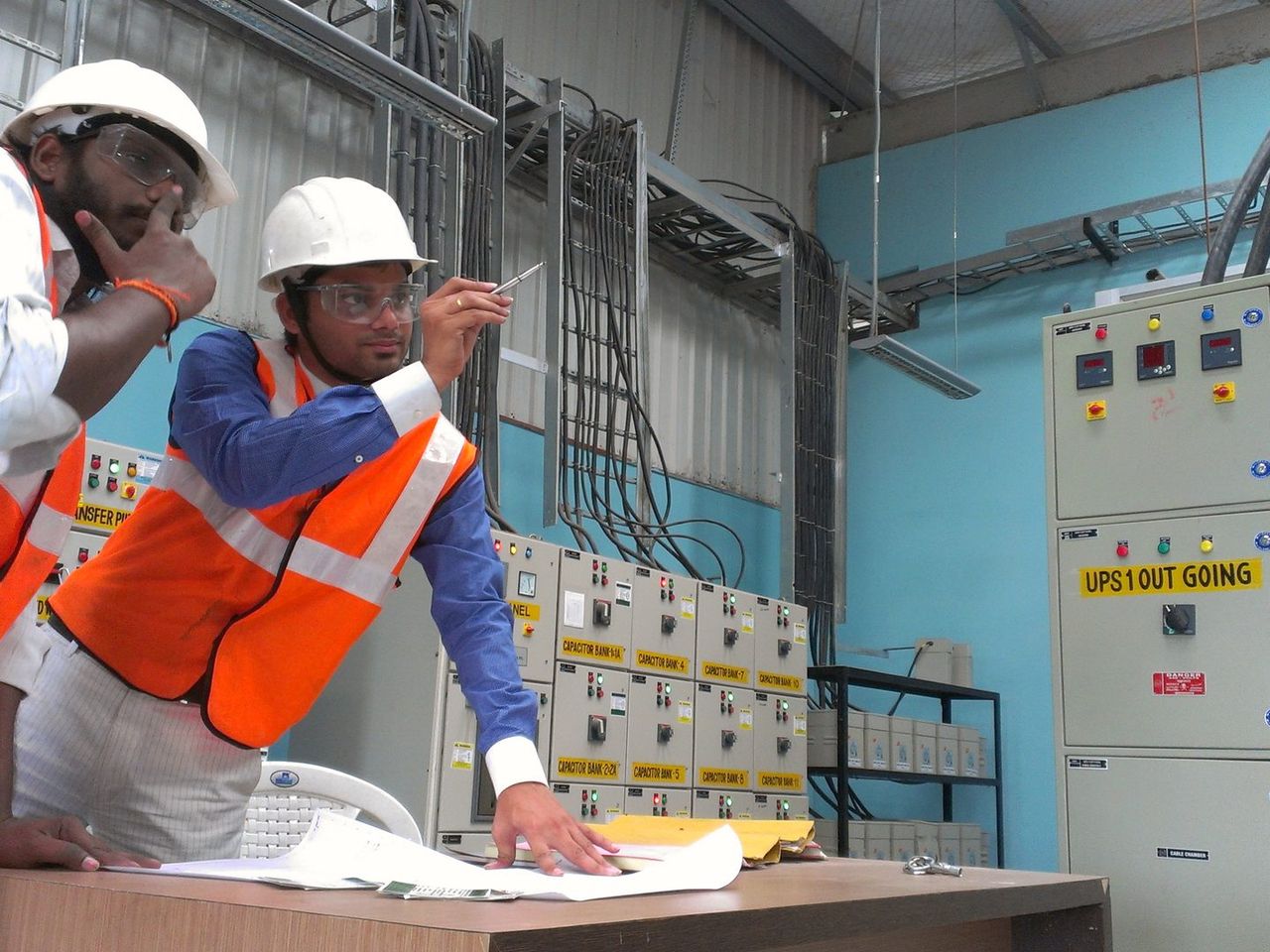
Fabs, data halls and process plants in 21 countries: whatever a Taiwan auditor asks, VB has answered it on another site.
Low voltage, 11.4 kV, 22.8 kV and battery DC in one table, with the method named on every row outside IEEE 1584.
Chinese, English and Arabic labels already delivered; Traditional Chinese and English side by side for Taiwan.
Your model's author signs the report; a second VB engineer reviews it before issue.
Site days are booked into planned shutdowns, never the other way round.
The same modelling rules and report layout at every site in your group, ready for side-by-side review.
Frequently asked questions
Questions Taiwan plants ask VB
Is an arc flash study required for a plant in Taiwan?
Yes, in practice. Taiwan's Ministry of Labor tells employers to analyse arc energy before unavoidable live work, post warning labels and provide matching PPE, and its research institute adopted IEEE 1584 and NFPA 70E to do it. Parent companies, insurers and customers then audit Taiwan sites against NFPA 70E 130.5. A signed, panel-by-panel arc flash study is the document that answers all of them.
Does Taiwan have its own standard for arc flash calculation?
Taiwan uses IEEE 1584 for the calculation and NFPA 70E for PPE and labels. The Ministry of Labor's research institute (ILOSH) adopted both in its arc flash research, and the Ministry published an arc burn prevention guideline for the electronics and technology industry. A VB report cites both standards and maps the results to the Ministry's guidance on its first page.
What does the Ministry of Labor guideline on arc burns in panel work cover?
The guideline, written for the electronics and technology industry, covers how arc burn hazards arise during work on distribution boxes and panels and how the people doing that work are protected, from hazard assessment to protective equipment. An arc flash study supplies the numbers the guideline depends on: incident energy, boundary distance and required PPE at each panel.
Does IEEE 1584 cover our 22.8 kV switchgear?
No. The IEEE 1584-2018 model covers 208 V to 15 kV only, so 22.8 kV switchgear and ring main units fall outside it. VB solves those buses with a recognised alternative calculation and marks each one in the results table with the method used. Buses at 11.4 kV, 480 V and 380 V remain within the IEEE 1584 range.
What will our parent company's NFPA 70E audit check?
A parent's NFPA 70E audit checks for an arc flash risk assessment under 130.5 that is less than five years old, labels on equipment that match it, PPE chosen from the calculated values, and a record of actions taken on high-energy buses. VB's report, label schedule and mitigation register are arranged in that order so the auditor can close the finding from one pack.
Our insurer recommended an arc flash study. What do we need to close it?
To close an insurer's arc flash recommendation you need incident energy calculated bus by bus, the mitigation chosen for the high-energy buses, and evidence that labels and settings are in place. VB adds a short close-out letter written for the insurer's risk engineer, referencing the study date and the actions completed.
A customer audit asked for arc flash evidence. What should we show?
Show the customer auditor three things: the signed arc flash study with its date, the label schedule with photos of installed labels, and the action register with owners and dates. VB prints labels in Traditional Chinese and English so both your crew and a foreign auditor read the same values.
Does SEMI S22 certification cover arc flash for the facility?
No. SEMI S22 covers the electrical design safety of the semiconductor tool itself. The facility buses that feed the tools, from the 22.8 kV ring to the tool UPS and distribution panels, need their own arc flash study. Fab EHS teams usually need both documents.
Can the study be done without stopping production in the fab?
Yes. VB plans the walkdown inside your preventive maintenance or shutdown windows and opens panels only when the site permits it. Modelling, reporting and most label preparation happen off site, so production keeps running. Large campuses usually need two or three windows.
How long does an arc flash study take?
From first site visit to labels on the panels, VB's project register shows about 4 weeks for sites up to 25 buses, 5 to 7 weeks up to 100 buses, 8 to 11 weeks up to 300, and 12 weeks or more for larger campuses. Time is added for 22.8 kV gear, absent drawings and walkdowns spread over several shutdowns.
How often should an arc flash study be updated?
Review the study at least every five years under NFPA 70E 130.5, and sooner whenever a transformer, cable, generator, UPS or relay setting changes. In a fab, each new tool-install phase is usually enough to trigger it. Because every VB label shows its study date, the next review goes on the calendar instead of surfacing as an audit finding.
Who provides arc flash studies in Taiwan, and does the engineer come to site?
VB Engineering provides arc flash studies across Taiwan, for fabs and OSAT plants in Hsinchu, Taichung, Tainan and Kaohsiung, data centres in Taoyuan and Taipei, and electronics plants nationwide. VB's own walkdown crew travels to the site, models are built in ETAP or SKM PowerTools, and the engineer who built the model signs the report.
Six answers today. A Taiwan arc flash scope by the end of the week.
Whether it is a fab, an OSAT plant, a data centre or an electronics line anywhere from Hsinchu to Kaohsiung, a VB engineer sends back the scope, the timeline and a NT dollar or US dollar estimate. No charge.
Get price estimatePrefer email? Write to connect@groupvb.com, put "Taiwan arc flash" in the subject and mention a rough bus count.