 VB Engineering
Arc flash risk assessment to NFPA 70E. See the scope, the proof and your cost band.
Field data, an ETAP or SKM model, incident energy to IEEE 1584-2018, labels installed and a report stamped by a PE licensed in your state. Every step below is shown with a photo of our own work.
Fixed-price written quote, firm for 60 days. Scope, assumptions and exclusions are stated before you sign, so the price you approve is the price you pay.
- 1,000+ studies delivered since 2014
- A PE licensed in your state signs and stamps the report
- Labels installed and photographed, not only printed
Your cost band, now
Answer two questions. No email needed to see the result.
Count each switchboard, panelboard, MCC, transformer and disconnect as one piece.
- Timeline
- ·
- Includes
- ·
Indicative, modeled: VB US pricing model, October 2026, AC systems, site access on agreed dates. Your written quote states scope and assumptions and is firm for 60 days.
Where should we send your quote?
An arc flash engineer reviews your answers and replies with a written scope and price.
Used only to prepare your quote or send the report. We reply by email.
Prefer to write? connect@groupvb.com
Trusted by the World’s Most Demanding Plants












What does an arc flash risk assessment require?
An arc flash risk assessment is the NFPA 70E 130.5 process that finds where an electrical arc could injure a worker, calculates the incident energy at each piece of equipment, and sets the boundary, PPE and label for it. It must be reviewed at least every five years and after any change to the system.
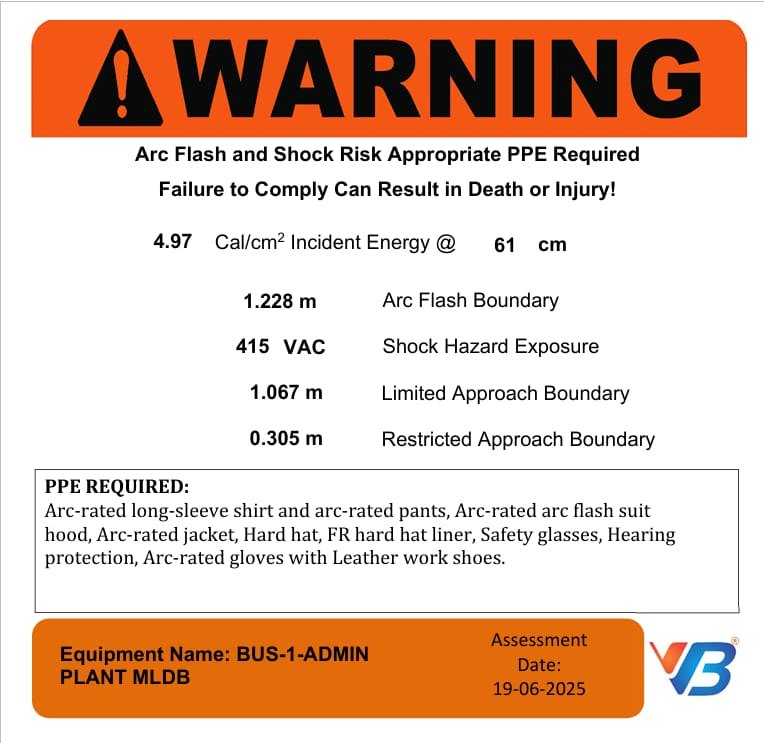
Stopped at 1.23 m. On this board the arc flash boundary sits outside the limited approach line, so no one crosses it without arc-rated PPE.
How close can your people stand?
Three lines on the floor, all taken from one VB label on a 415 V distribution board (4.97 cal/cm² at a 61 cm working distance). Every label we install carries all three.
| Boundary | Distance | Who may cross |
|---|---|---|
| 3Arc flash boundary | 1.228 m (4 ft 0 in) | Anyone inside wears arc-rated PPE for the label value.Where incident energy falls to 1.2 cal/cm² · NFPA 70E 130.5 |
| 2Limited approach | 1.067 m (3 ft 6 in) | Qualified persons, or others continuously escorted by one.Shock boundary, 151 V to 750 V · NFPA 70E 130.4 |
| 1Restricted approach | 0.305 m (1 ft 0 in) | Qualified persons only, with shock protection and a plan.Shock boundary, 151 V to 750 V · NFPA 70E 130.4 |
Distances from the published VB label shown on this page. Your boundaries come from your own study; they change with fault current and clearing time.
| Requirement | Clause | How VB meets it |
|---|---|---|
| Identify arc flash hazards and estimate their likelihood and severity | NFPA 70E 130.5 | Walkdown, model and incident energy at every bus in scope |
| Document the assessment and review it at least every five years | NFPA 70E 130.5 | PE-stamped report, with the next review date set |
| Assess shock risk and set approach boundaries | NFPA 70E 130.4 | Limited and restricted approach boundaries on every label |
| Label equipment with voltage, arc flash boundary and incident energy or PPE category | NFPA 70E 130.5(H) | Labels printed, installed and photographed |
| Show the date of the study on the label | NEC 2026 Art. 110.16(B) | Assessment date printed on every VB label |
| Select PPE for the hazard at each task | NFPA 70E 130.7 · OSHA 29 CFR 1910.335 | PPE requirement on every label, PPE supply on request |
| Assess workplace hazards that need PPE, in writing | OSHA 29 CFR 1910.132(d) | Report written to serve as the documented assessment |
| Do energized work only under a permit | NFPA 70E 130.2(B) | Energized electrical work permit template issued with the study |
What the assessment covers, task by task
Six tasks make up a complete arc flash safety assessment, from the walkdown to the stamped report. The full scope of work and data checklist is on its own page.
| Task | What we do | Standard | You receive |
|---|---|---|---|
| 1Field data and one-line | Walk down every bus in scope. Record nameplates, conductor sizes and lengths, and protective device settings. Correct the one-line to match what is installed. | NFPA 70E 130.5 | Verified one-line, data workbook, photographs |
| 2Load flow and short circuit | Build the model in ETAP or SKM from the utility fault level down. Run load flow where operating scenarios change the result, and calculate fault current at every bus. | IEEE 551 | Fault current table, load flow summary |
| 3Equipment duty check | Compare each breaker, fuse and bus rating with the fault current it could see. | NEC 110.9 · NEC 110.10 | List of overdutied equipment |
| 4Protective device coordination | Check that the device nearest a fault trips first, and find settings that lower incident energy without nuisance trips. | IEEE 242 | Time-current curves, settings recommendations |
| 5Incident energy, boundaries and labels | Calculate incident energy (heat at working distance, in cal/cm²), the arc flash boundary and the shock approach boundaries at every bus. Print and install the labels. | IEEE 1584-2018 · NFPA 70E 130.4, 130.5(H) | Incident energy table, installed labels |
| 6PE review and report | A Professional Engineer reviews the model and every assumption, then signs and stamps the report. | IEEE 1584.1 report structure | PE-stamped report, model file |
How the assessment runs, shown on our own sites
Six activities, each with a photograph of VB engineers doing it. Typical for one site of up to 100 buses.
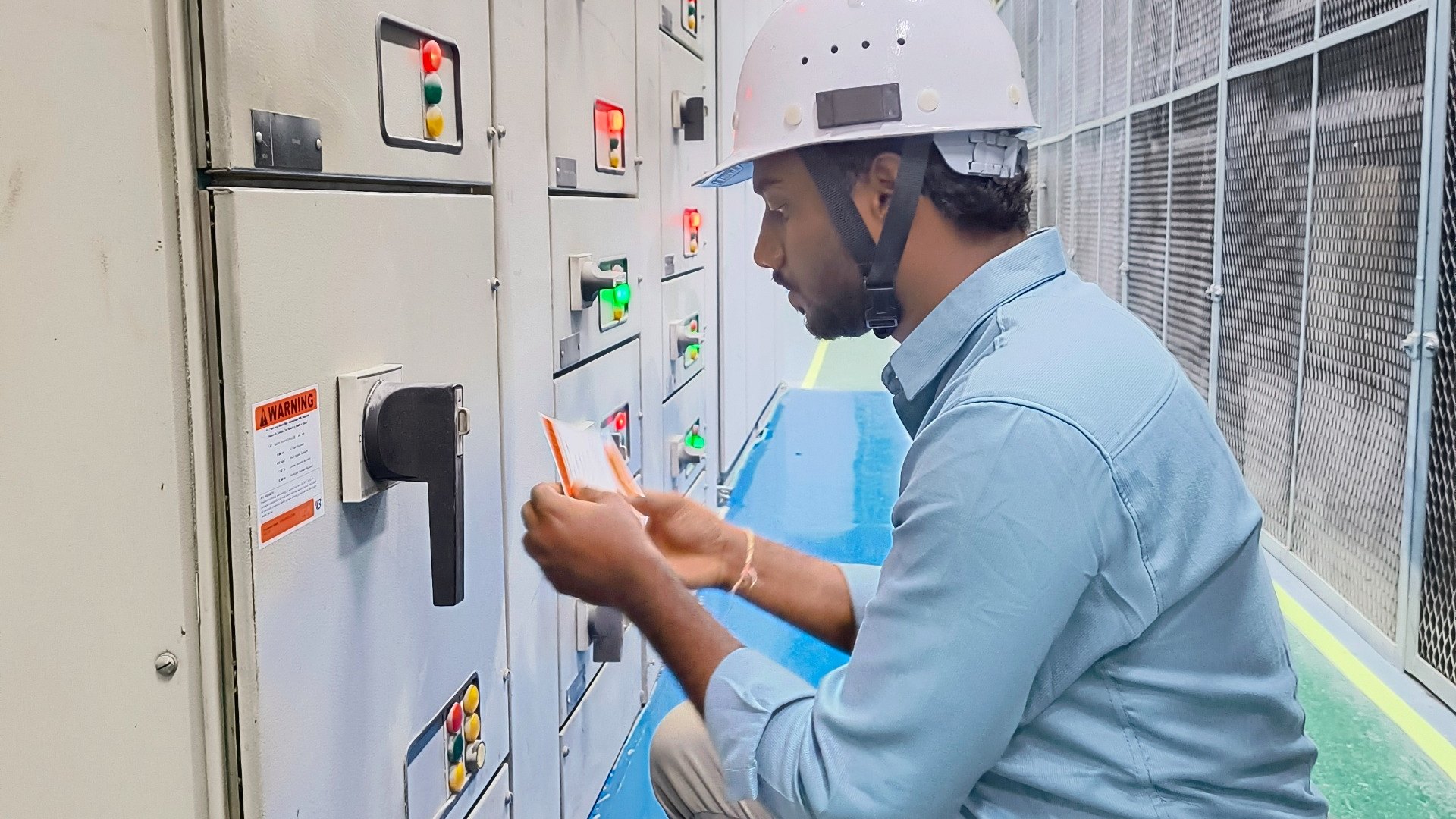
One-line read, price in writing
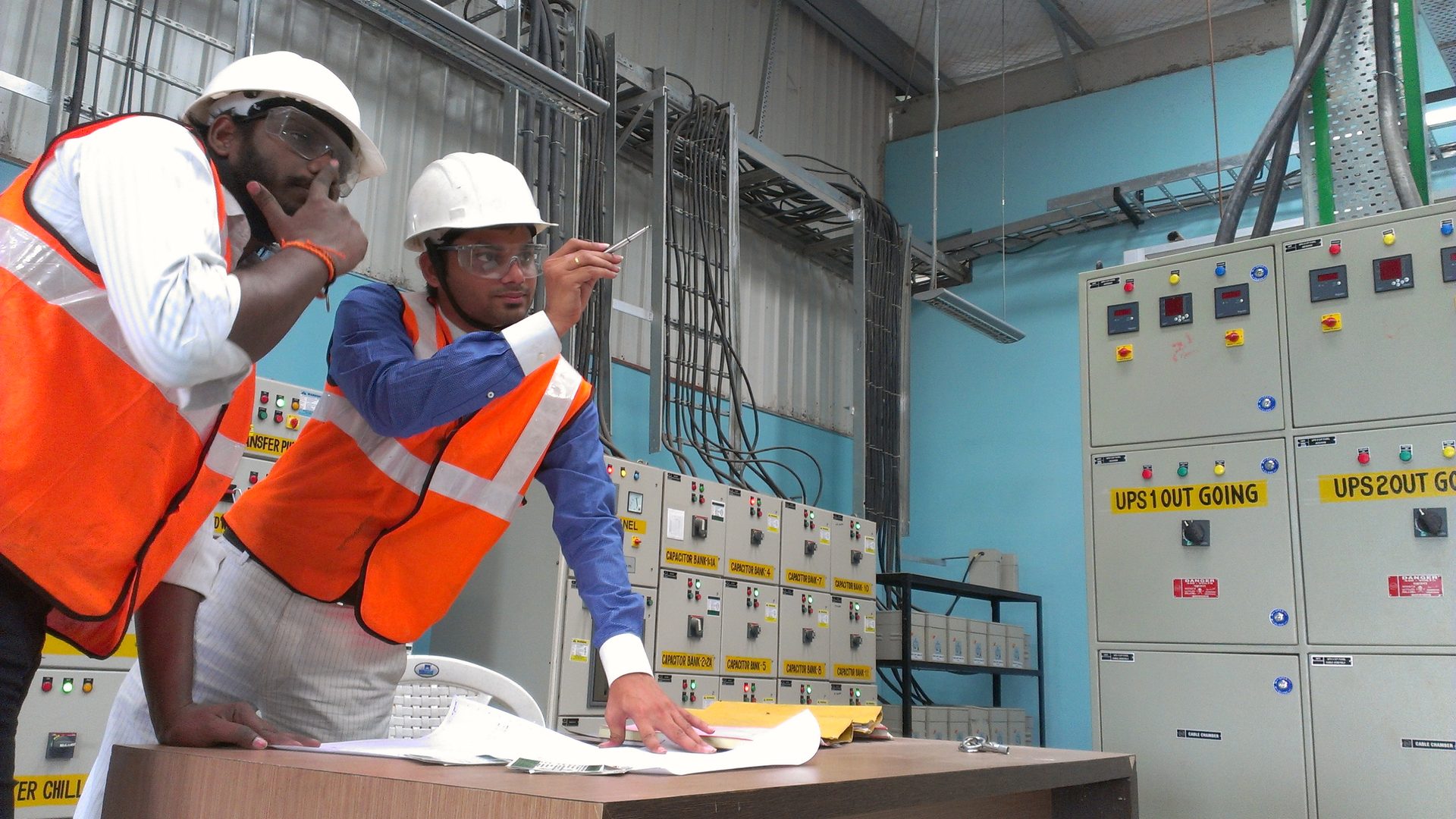
An arc flash engineer reads your one-line, your answers and any existing labels, then fixes scope, assumptions and price in writing.
VB engineer checking an LV lineup before scoping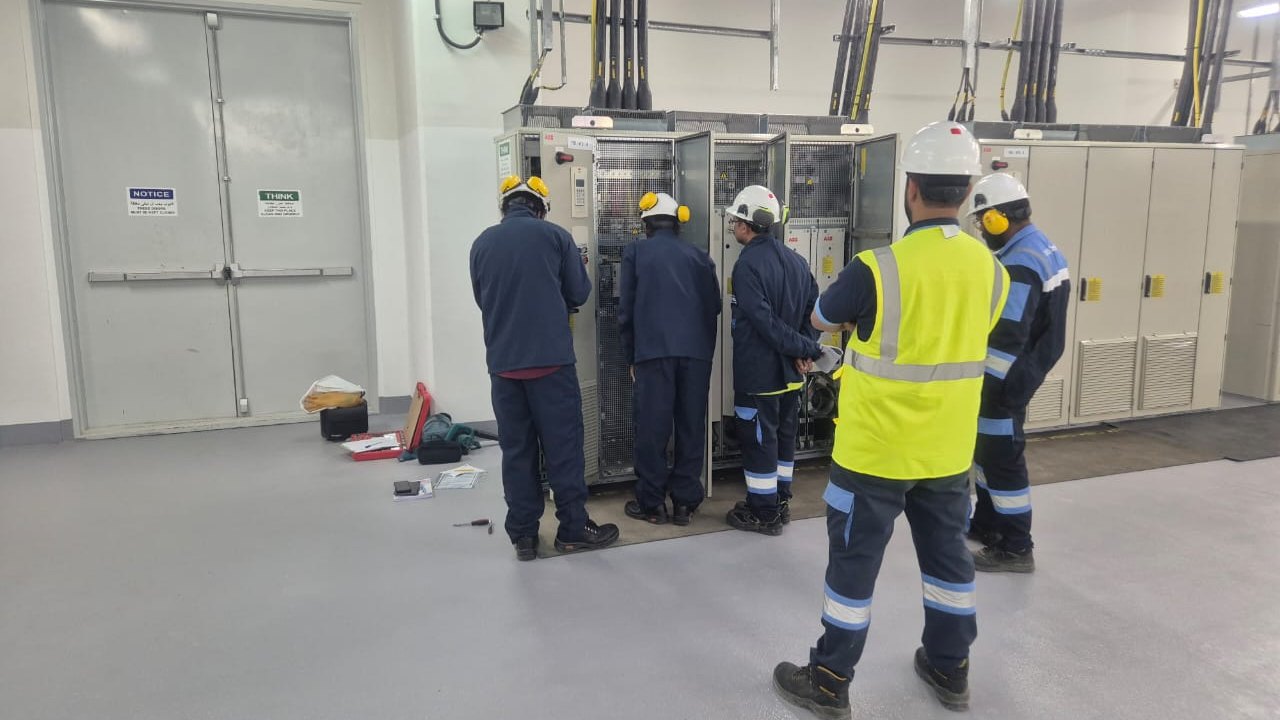
Walkdown of every bus
The arc flash survey covers every switchboard, MCC and panel in scope. The crew works in arc-rated clothing, under your permits.
VB survey crew in arc-rated coveralls on a switchgear lineup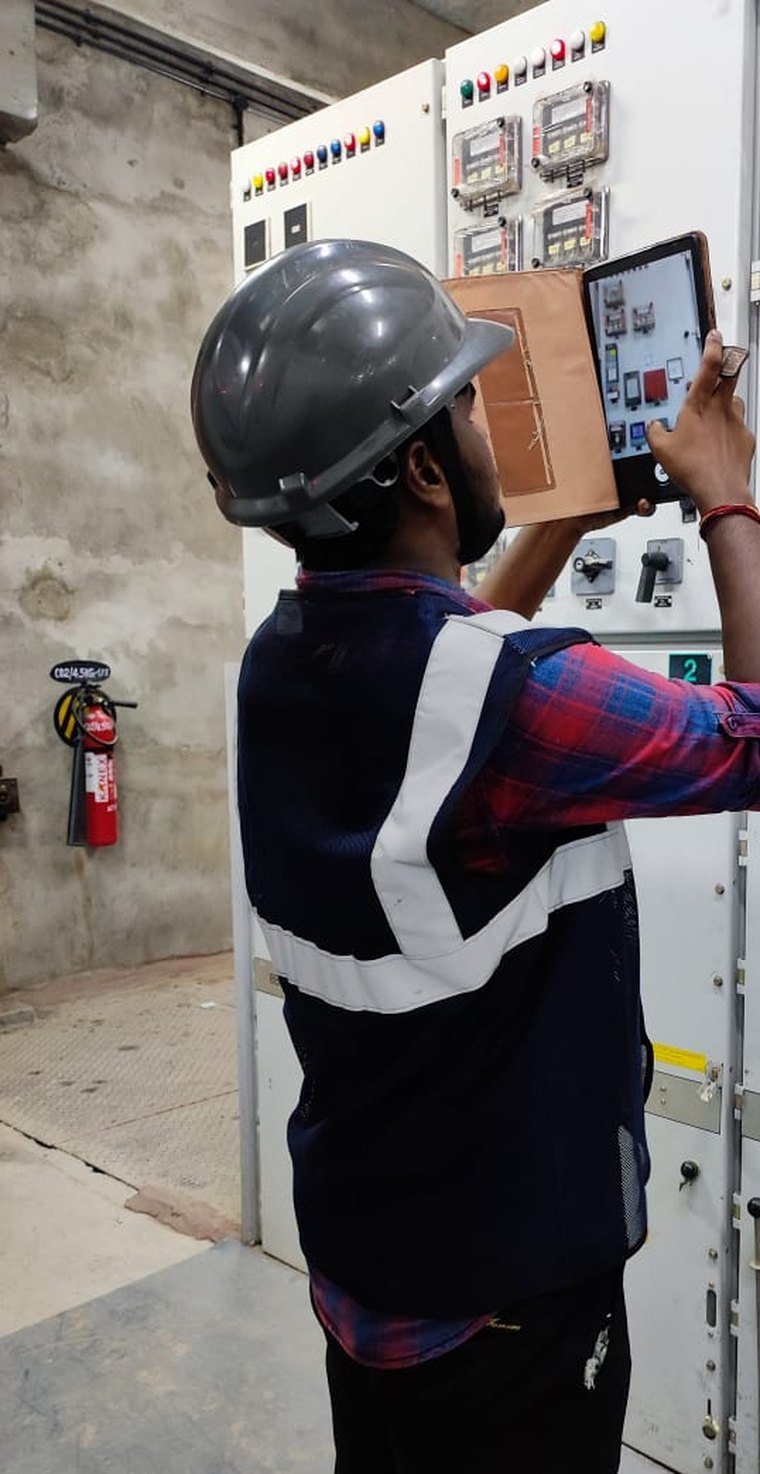
Nameplates and settings captured
Ratings, device settings and cable data are captured cubicle by cubicle on a tablet, with a photograph of each.
Asset data captured on a tablet, cubicle by cubicle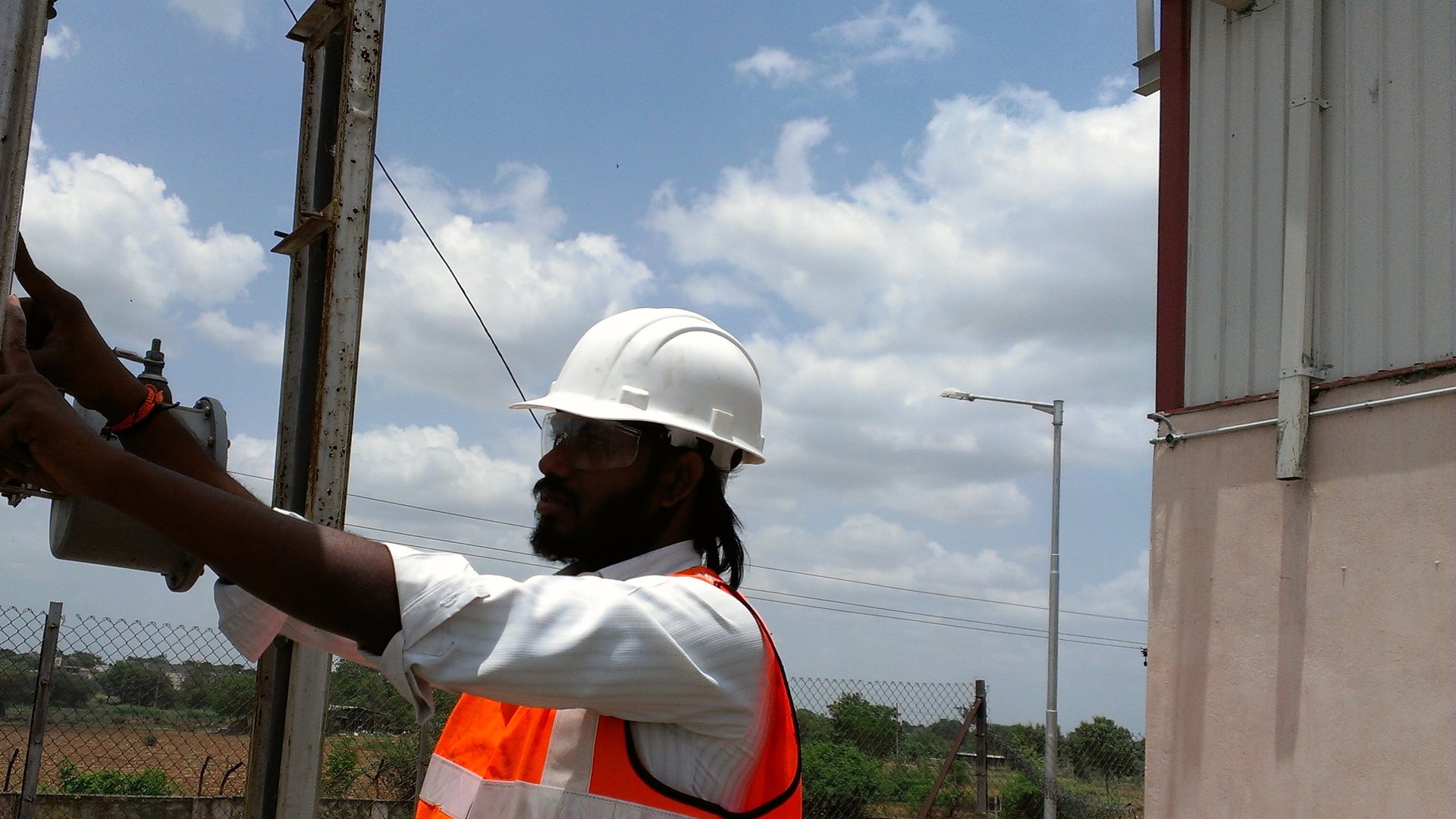
Source data checked, model built
Utility service and transformer data are checked at the source, then the network is modeled in ETAP or SKM for short circuit, coordination and incident energy.
Source data checked at an outdoor substation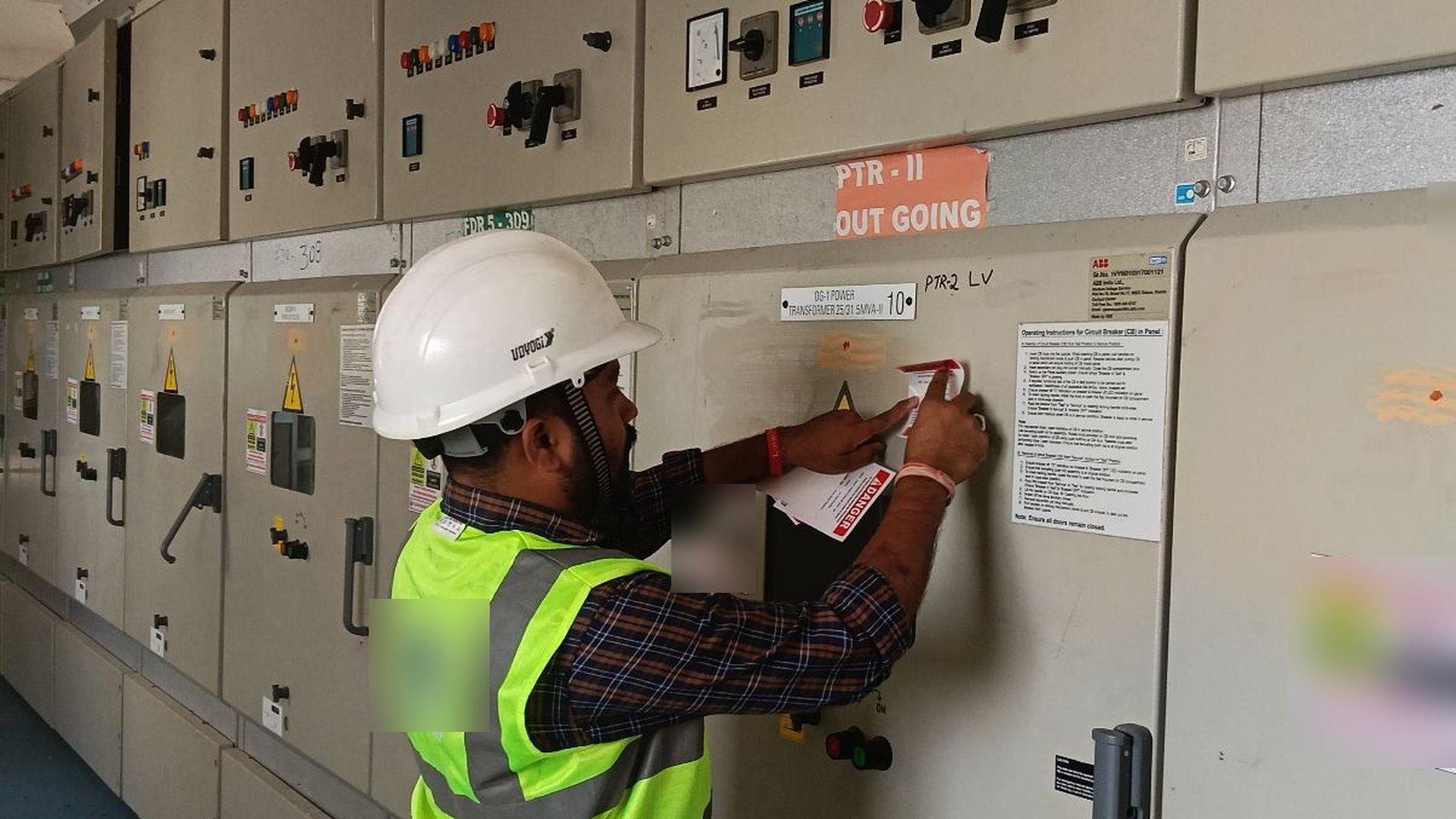
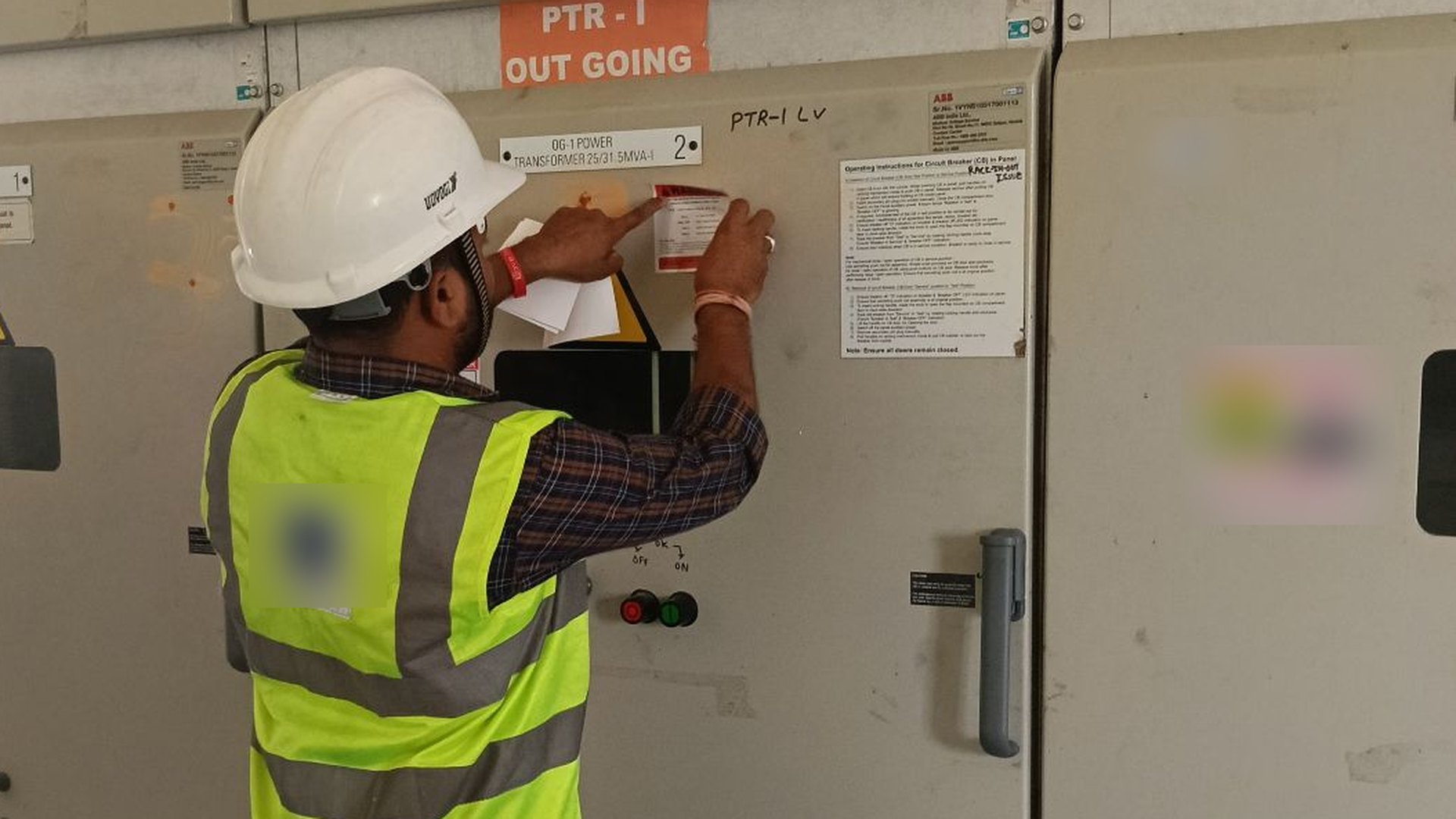
Labels installed at the equipment
Every label is applied at its own piece of equipment and checked against the label schedule.
Labels applied across a distribution lineup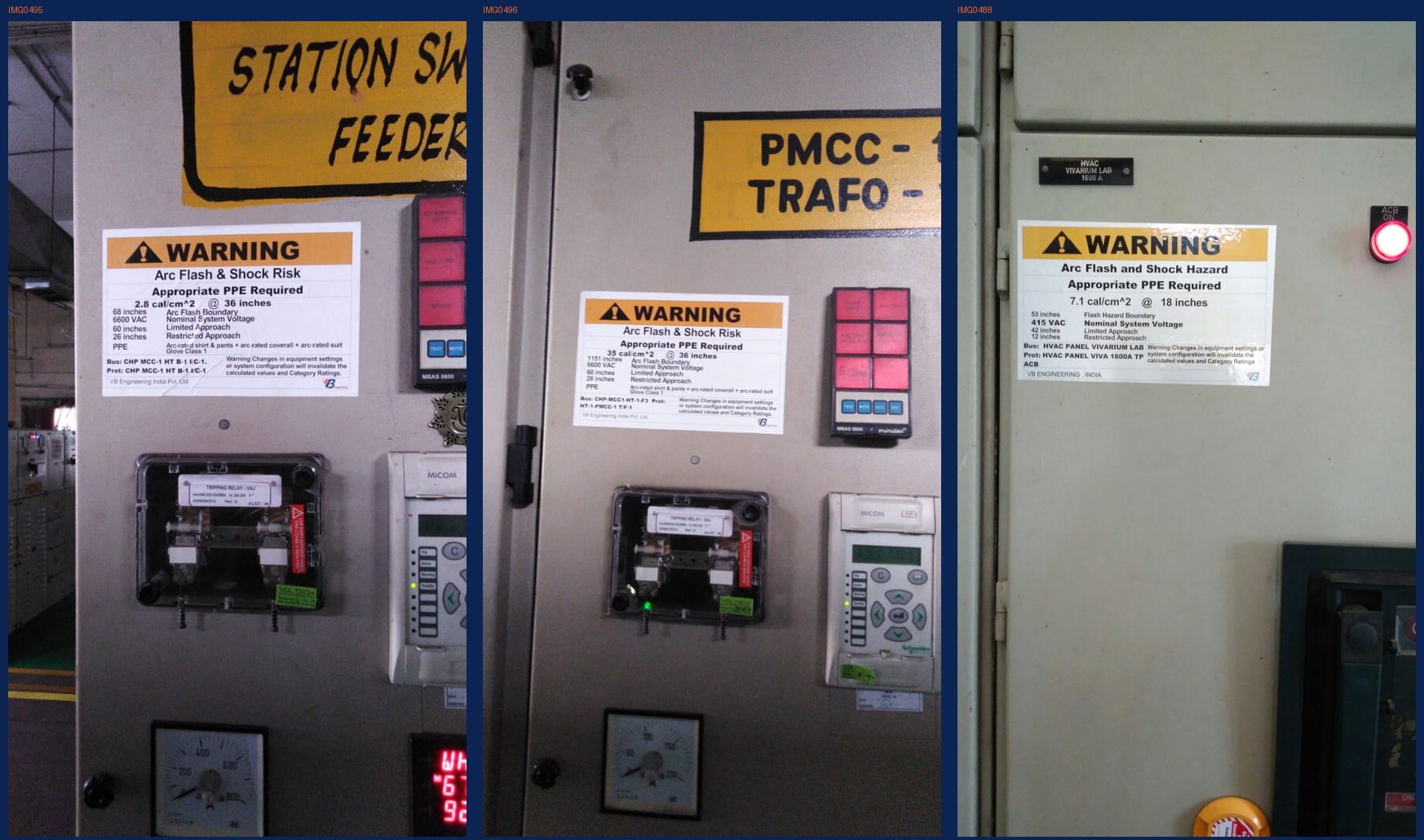
Labels photographed, report stamped
Every installed label goes into the label schedule with its photograph, and the PE stamps the report.
Installed VB labels on a lineup, photographed for the label scheduleOne site, up to 100 buses
Weeks from written approval. Walkdown dates follow your shutdown windows.
Seven kinds of data, and where to find them
Send what you have. Anything missing or out of date is collected during the arc flash survey and is already in the quote.
The software and formats behind the study
What you hold at the end
Everything an inspector, an insurer or your next engineer will ask for, in one set.
| Deliverable | What it gives you |
|---|---|
| PE-stamped report | Signed and stamped by a PE licensed in your state, with every assumption stated. |
| Incident energy table | Incident energy, arc flash boundary and PPE category basis for every bus. |
| Label schedule and photos | Every label listed by location, with a photograph of it installed. |
| Updated one-line | Your one-line corrected to the installed system, in PDF and CAD. |
| Conformance matrix | Each NFPA 70E and NEC requirement mapped to the page that meets it. |
| Settings recommendations | Device setting changes that lower incident energy, ranked by effect. |
| Model file | The ETAP or SKM file, yours to keep for the next review. |
- Conformance matrix and executive summarySec. 1-2
- Method and assumptions, IEEE 1584-2018Sec. 3
- One-line as found and field data packSec. 4-5
- Short-circuit study and equipment dutySec. 6
- Protective device coordinationSec. 7
- Incident energy table, bus by busSec. 8
- Label schedule with artworkSec. 9
- Action register and certificationSec. 10-11
Eleven sections, mapped to IEEE 1584.1-2022. See what each section must contain.
Everything else an arc flash program needs
Quoted with the assessment or on their own. Ask for any of them with your quote.
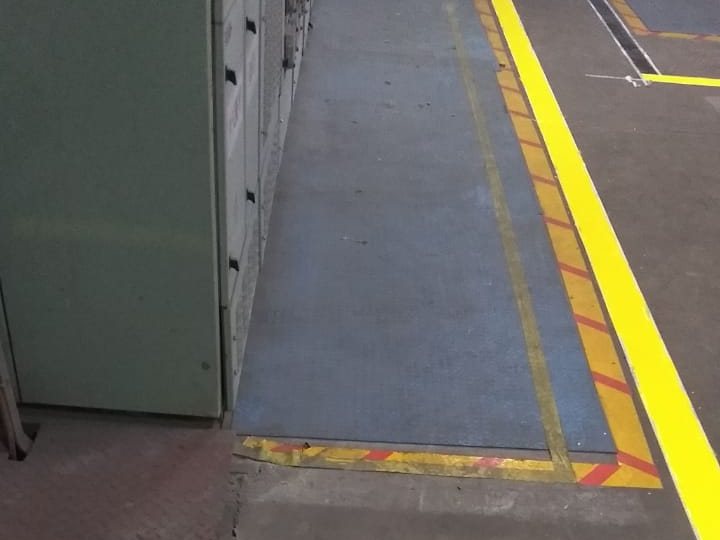
Approach boundaries on the floor
Boundaries marked in front of switchgear, so the limit is visible before a door opens.
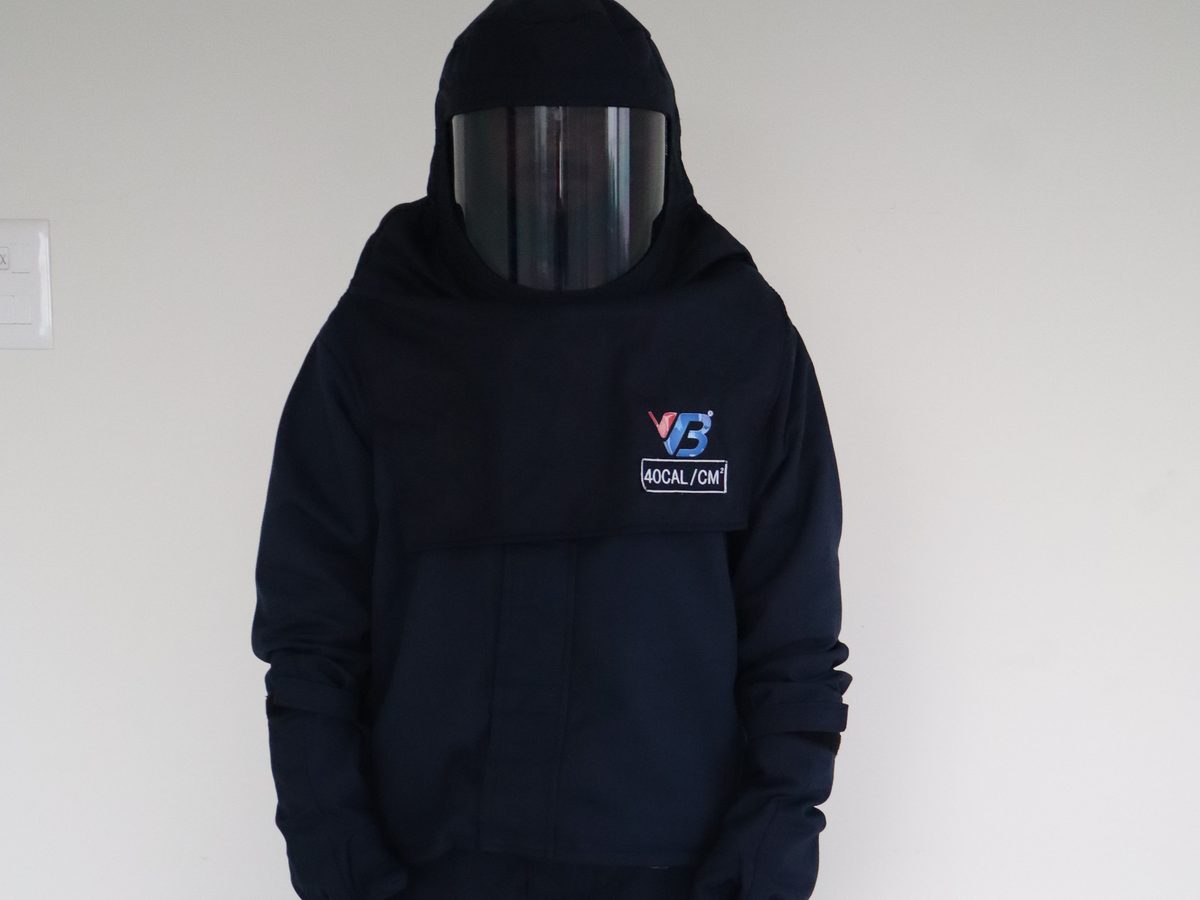
PPE selected and supplied
PPE matched to the incident energy on each label, up to 40 cal/cm² suits, supplied on request.
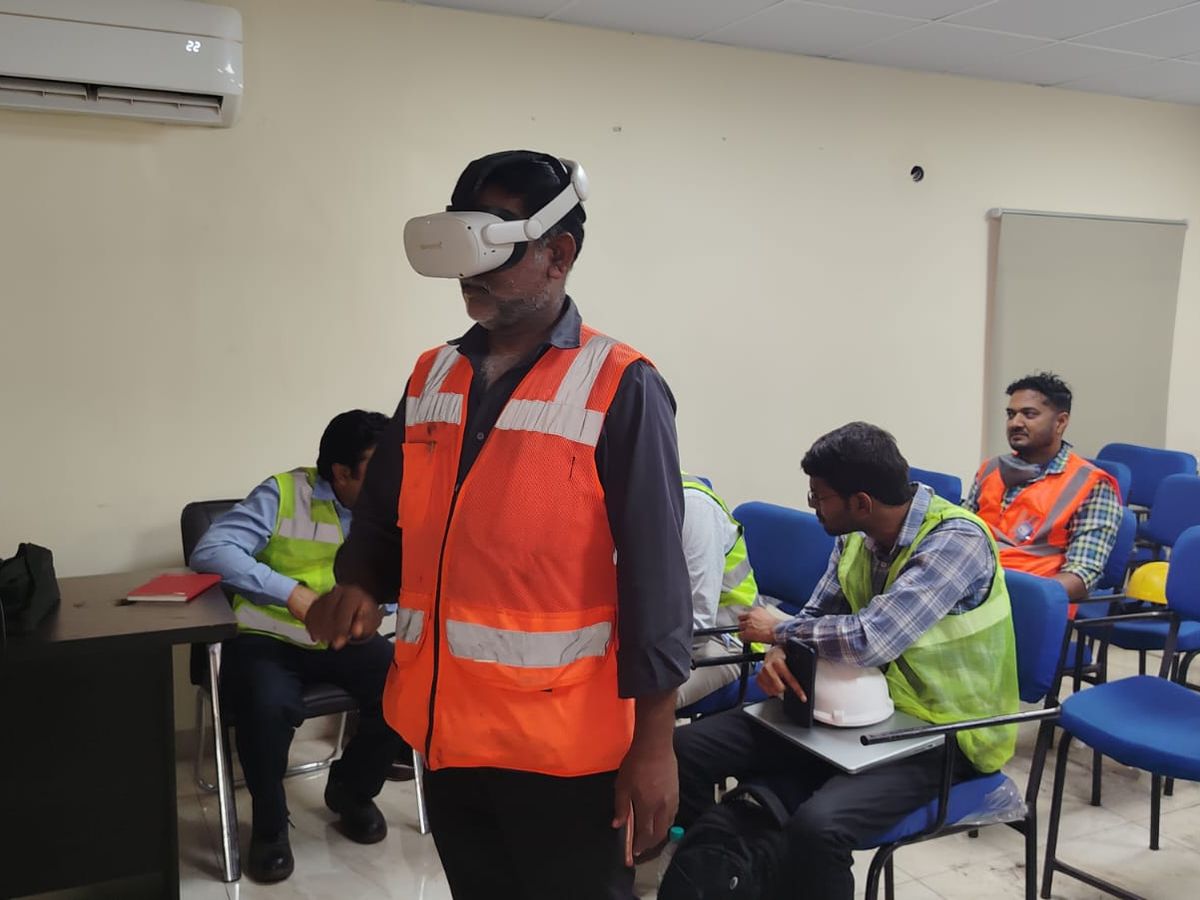
Qualified-person training
Classroom and Drona VR training on boundaries, labels and PPE, so your team can act on every label.
Permits and the five-year program
The paperwork that keeps the assessment in force.
- Energized electrical work permit template
- Five-year review and change-triggered updates
- Label and training dates on one calendar
Four roles, one accountable signature
Your quote names the engineer of record. Who signs an arc flash study explains the PE requirement.
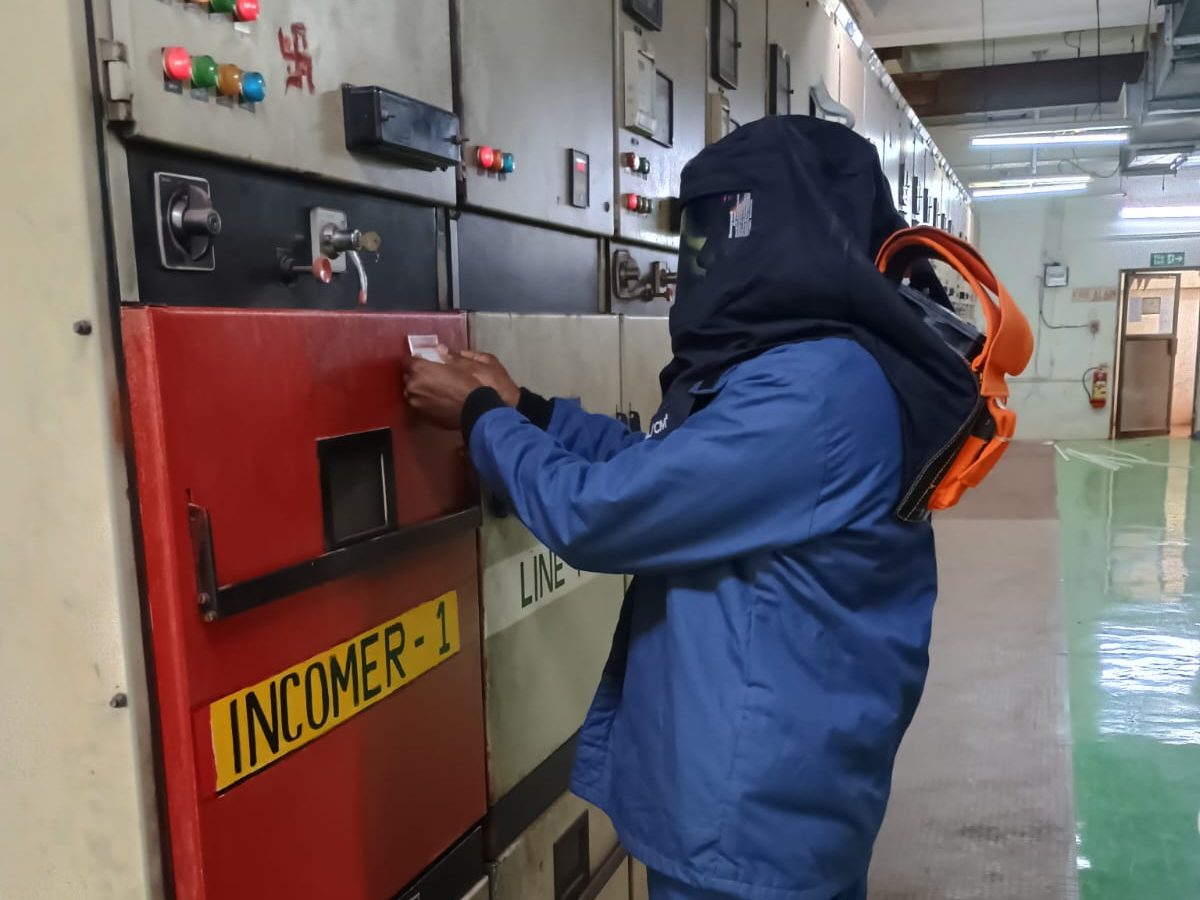
How we work around live equipment
- Your site safety plan, permits and lockout rules apply, and we sign in to them before work starts.
- Covers are opened only by qualified persons in arc-rated PPE selected for the task, per NFPA 70E.
- Walkdowns are booked around your shutdown windows and change freezes, not the other way round.
- Every reading is photographed, so each value in the model traces back to the equipment.
See your cost band first. The quote follows.
Signed engineering, priced before you commit
Studies delivered
Arc flash and power system studies since 2014, in 21 countries.
Signed in your state
A Professional Engineer licensed in the facility’s state signs and stamps every US study.
A model you keep
The model file is yours, so the five-year review starts from it, with us or anyone else.
The study is inside its interval. The labels are already wrong.
A scheduled reassessment walkdown finds the installed distribution has moved away from the modeled one-line. The date is not the problem. The change is. Modeled from findings that recur in reassessments, to show the method; it is not a single client record.
- Feeder arrangement changed after the previous study, unrecorded
- Labels showed a fault level no longer present
- Model rebuilt and labels re-issued with the new study date
Changed anything since your last study?
Three things set the price
The cost band above uses the same three inputs. Arc flash study cost sets out the rates and assumptions in full.
Quoted separately: equipment upgrades, setting changes made in the field, and DC systems, which IEEE 1584-2018 does not cover.
Your band takes 30 seconds.
What facility teams ask us first
Do you work in my state?
Yes. VB delivers arc flash studies across the US, and a Professional Engineer licensed in your facility’s state signs and stamps the study.
Who signs the study?
A PE licensed in the state where the facility is located reviews, signs and stamps the report. The name and license number are on your quote.
Does OSHA require an arc flash risk assessment?
OSHA 29 CFR 1910.132(d) requires employers to assess workplace hazards that call for PPE, and 1910.335 requires protective equipment for electrical hazards. OSHA treats NFPA 70E as the recognized industry practice for meeting those duties for arc flash.
What is an arc flash study, and is it the same as a risk assessment?
No. The study is the engineering: the model, fault currents and incident energy. The risk assessment under NFPA 70E 130.5 uses those results to set boundaries, PPE and labels. VB delivers both in one scope.
Is the band the price?
It is an indicative band from our US pricing model. Your written quote states the scope and assumptions and is firm for 60 days.
How often does the study need updating?
NFPA 70E requires a review at least every five years, and sooner after any change to the electrical system that affects the results.
Will you need a shutdown?
Usually not for data collection. Most readings are taken with covers closed or by qualified persons in arc-rated PPE. Where a cover must come off energized equipment, it is planned with you first.
What is arc flash testing, and is it part of the assessment?
No. Arc flash testing usually means testing PPE or equipment against a live arc in a high-power laboratory. An arc flash risk assessment is a site survey and a calculation, with no live arc. VB specifies PPE with a tested arc rating at least equal to the incident energy on each label.
Your cost band takes 30 seconds. Your quote takes one short form.
A written scope and price from an arc flash engineer, signed by a PE in your state.
Or write to connect@groupvb.com · US office · Katy, Texas