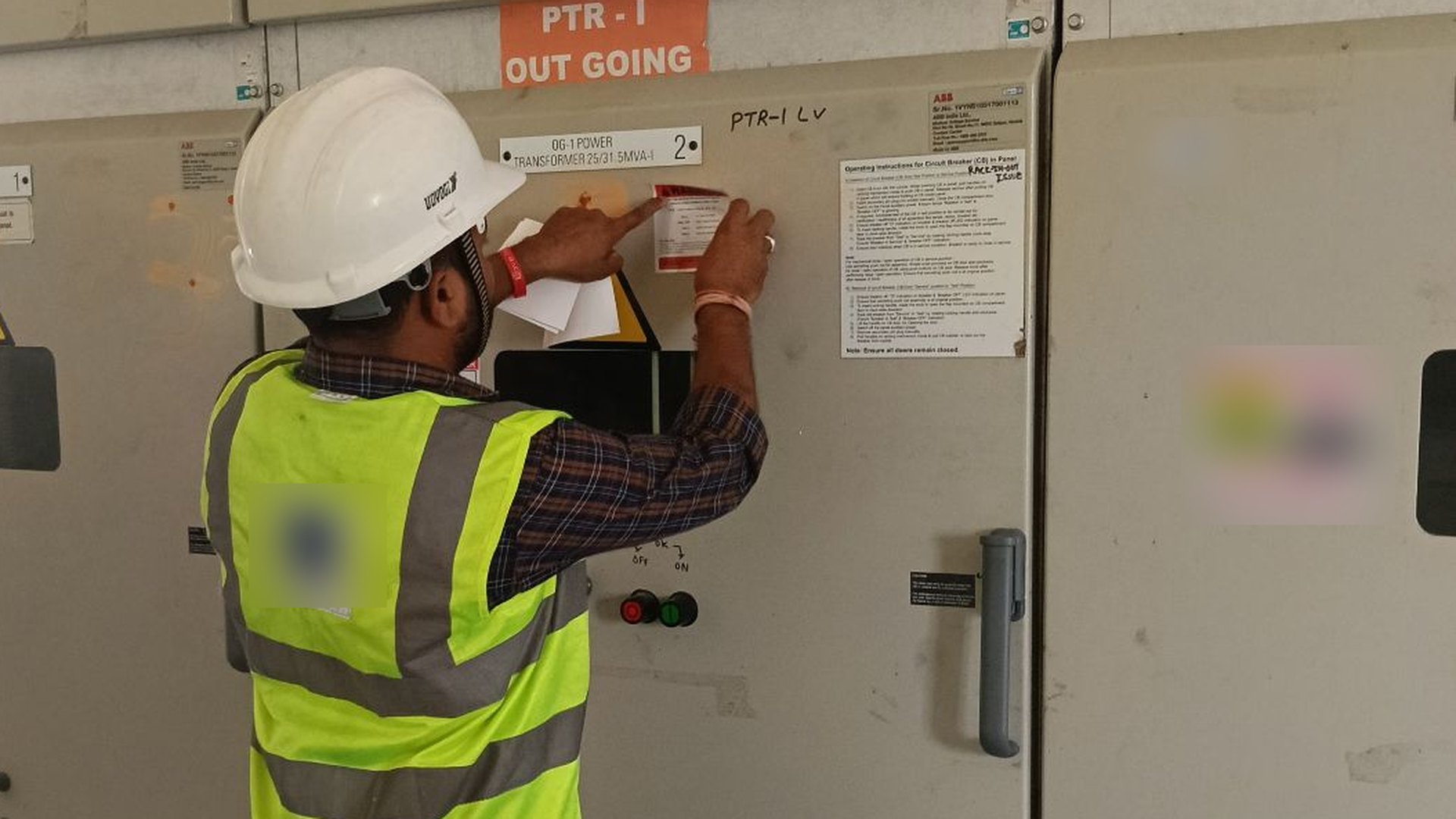
Arc flash study · Australia · AS/NZS 4836:2023 · IEEE 1584-2018 · 400 V to 33 kV
Arc flash study in Australia for every switchboard rated 800 A and above, priced per bus.
Australian data centres, battery and solar farms, water utilities and councils already run on VB arc flash studies. Our crew flies in, surveys inside your shutdown window, and leaves every board labelled with a dated, signed value, from the 33 kV intake to the last distribution board. Sydney, Melbourne, Brisbane, Perth, Adelaide and every site in between.
Delivered across AustraliaFrom A$210 per bus22 kV and 33 kV coveredSigned by a named engineer
Your arc flash price band in 30 seconds
| Indicative price | |
|---|---|
| 800 A rule | |
| Study age | |
| Voltage | |
| Delivery |
Indicative engineering price from VB's per-bus pricing model, in AUD, excluding GST, field data collection, label printing and fixing, floor marking and travel, which appear as separate lines. Press the button and a VB engineer emails a firm, line-by-line quote within two business days. No call unless you ask.
Trusted on plants that cannot stop










- 800 Athe switchboard rating above which AS/NZS 4836:2023 and Queensland's 2026 guide expect an arc flash study
- 40 cal/cm²Category 4 clothing, the default on a large board with no study
- A$210VB's indicative engineering rate per low-voltage bus
- 0arc flash studies delivered by VB since 2014
- 0countries with VB-labelled switchgear, Australia among them
Sources: WorkSafe Queensland, 2026 guide for safe working on energised equipment · Electrical Engineers' Association, AS/NZS 4836:2023 awareness, June 2025. Rates and counts: VB Engineering pricing model and project register.
The requirement
Is an arc flash study required in Australia?
Yes, for any site with switchboards rated 800 A or more. AS/NZS 4836:2023 clause 2.3.4 calls for an arc flash study on that equipment, Queensland's 2026 regulator guide says the same, and WHS Regulation 158 requires a recorded risk assessment before any energised work. One VB arc flash study answers all three, board by board.
An arc flash study calculates the heat an electrical arc would release at each switchboard, MCC and distribution board. That heat is the incident energy, measured in calories per square centimetre (cal/cm²). The arc flash boundary is where it falls to 1.2 cal/cm², the onset of a second-degree burn. Without a study, AS/NZS 4836:2023 points large boards to heavy Category 4 clothing on every live task. With a VB study, most tasks drop to Category 2, and your crews work faster and safer.
| Instrument | Clause | What it asks of the site |
|---|---|---|
| Work Health and Safety Regulations (NSW, Qld, SA, WA, Tas, ACT, NT, Commonwealth) | Reg 158 · Reg 161 | A recorded risk assessment before energised work, then a SWMS, tested PPE and a safety observer |
| AS/NZS 4836:2023, safe working on low-voltage installations | Cl. 2.3.4 · Section 12 · App. B | An arc flash study for equipment rated 800 A or more, arc-rated PPE Categories 1 to 5 (up to 75 cal/cm²), example labels |
| ESV and WorkSafe Victoria, Arc Flash Hazard Management guideline (2022) | Whole guideline | A study to IEEE 1584-2018 or ENA NENS 09 for HV, complex and 800 A-plus installations, with labelled switch rooms; ESV audits against it |
| Queensland Electrical Safety Regulation 2026, in force 1 September 2026 | s.14 · s.19 · s.22 | A recorded risk assessment, SWMS and safety observer for energised work; a study expected on boards above 800 A |
| AS/NZS 5139:2019, battery systems · ENA NENS 09-2014 | Cl. 3.2.4, 7.11 · PPE guideline | DC arc flash as a battery hazard with signage above 4 cal/cm²; the network method above 15 kV |
| IEEE 1584-2018 · NFPA 70E | Model · 130.5 | The incident energy method Australian guidelines accept, and the five-year review global operators audit to |
Audit, specification, live work or commissioning
What triggers an arc flash study at an Australian site?
Four events trigger most Australian arc flash studies: an audit finding, an asset owner's technical specification, a request for energised work under WHS Regulation 158, and the commissioning of a new switchboard, battery or solar plant. VB closes all four with one pack: a signed study, dated labels and a closed action register.
The audit finding
Energy Safe Victoria checks arc flash during audits and raises non-conformances for incomplete studies. VB's signed study and label schedule close the finding in one file.
The owner's specification
Water utilities, councils and network businesses name the software, working distance and target PPE category. VB builds to it and hands over the native model.
The energised work permit
Reg 158 wants a recorded risk assessment before live work. VB's calculated values replace the Category 4 default and get your crews back on the tools.
Commissioning and handover
Data halls, batteries and solar farms reach energisation with arc flash labels on the EPC handover list. VB works as the study subcontractor, inside your programme.
What goes on a VB label in Australia
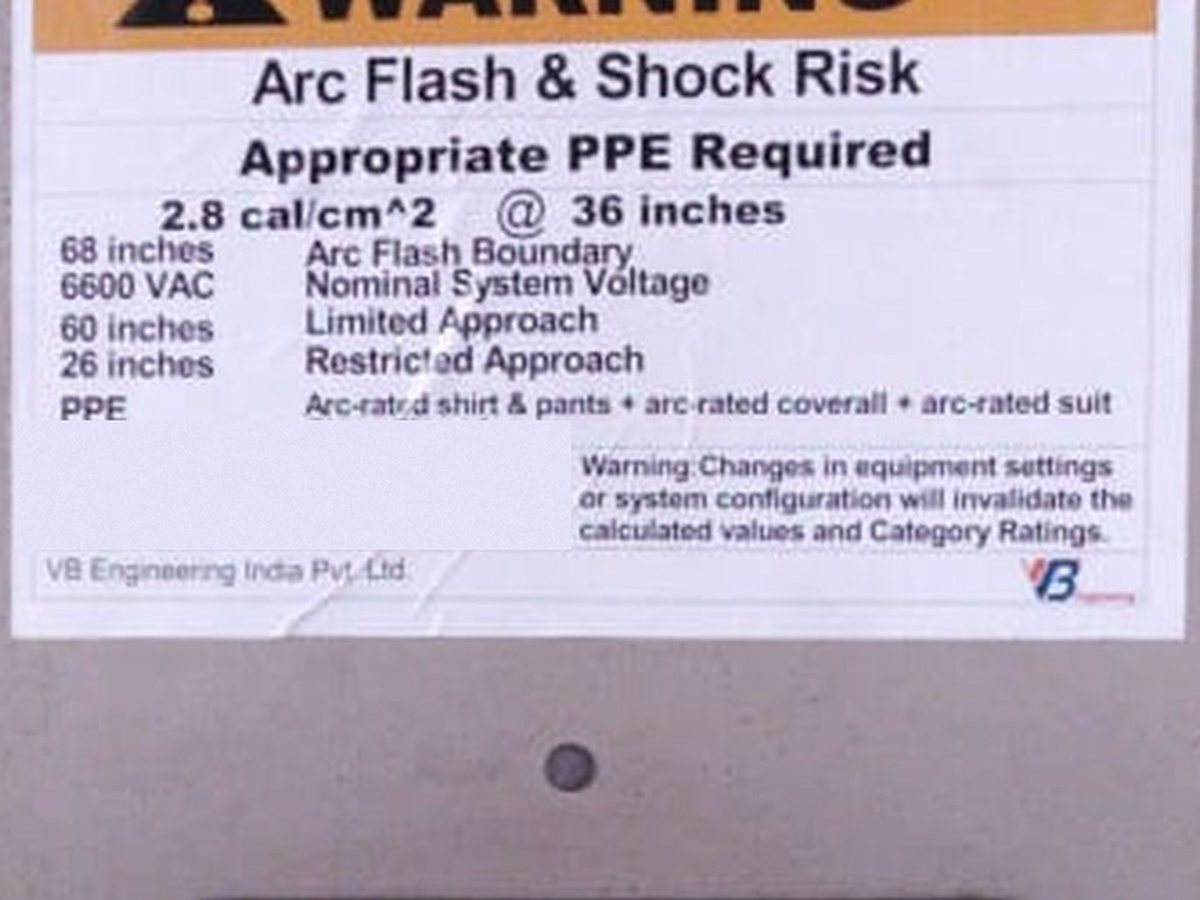
Incident energy at the working distance, arc flash boundary, nominal voltage, shock approach limits, arc-rated clothing and gloves, equipment designation and study date, all printed from the signed study in the AS/NZS 4836:2023 Appendix B layout. Change a transformer, cable or relay setting and VB reruns that part of the model and reissues the label.
Recent Australian work
Which Australian sites has VB delivered arc flash studies for?
VB has delivered arc flash studies for Australian data centres, grid-scale battery and solar farms, and water and wastewater plants for utilities and councils, directly for owners and as the study subcontractor to Australian EPCs and electrical contractors. Three recent projects show the pattern: dangerous boards brought down to Category 2, every board labelled, inside the client's programme.
A hyperscale data centre campus in New South Wales
350 buses across an 11 kV ring, generator plant and UPS DC. Twelve boards above 40 cal/cm² brought below 8 with maintenance-mode switching and re-graded protection. Every board labelled in 9 weeks, without a single unplanned outage.
A grid-scale battery and solar site in Queensland
225 buses on a 33 kV collector network, 96 DC buses and inverter blocks, studied before energisation as the EPC's subcontractor. Peak AC incident energy cut from 52 to 7.6 cal/cm². Detail below.
Water and wastewater plants for a Victorian utility
Six treatment and pumping sites, about 400 buses, built to the utility's arc flash specification in SKM PowerTools. One model standard across all six, native files handed over, labels installed site by site.
Battery and solar · Queensland
How did VB deliver an arc flash study for an Australian battery and solar site before energisation?
On a grid-scale battery and solar site in Queensland, VB studied 225 buses on a 33 kV collector network inside the commissioning programme and delivered in 11 weeks. Peak AC incident energy fell from 52 to 7.6 cal/cm², 9 boards above 40 cal/cm² came down to 0, and 96 DC buses and 48 buses above 15 kV were calculated for the first time.
The trigger
The owner's specification and the EPC handover list both required a dated arc flash study and installed labels before energisation. The design package held a short-circuit study, with no incident energy, no DC results and nothing for the 33 kV switchgear.
What VB found and fixed
Nine station and auxiliary boards sat above 40 cal/cm², where no clothing permits live work. Six relays tripped before the faulted feeder, so one fault could drop a whole inverter block. VB recommended maintenance-mode switching, faster instantaneous settings and six re-graded relays inside the existing protection, calculated the 33 kV buses on ENA NENS 09 and the battery strings on a named DC method, then printed every label from the final run.
| Indicator | Before | After |
|---|---|---|
| Peak AC incident energy, cal/cm² | 52 | 7.6 |
| Boards above 40 cal/cm² | 9 | 0 |
| Buses above 15 kV calculated | 0 | 48 |
| Battery and DC buses calculated | 0 | 96 |
| Protection miscoordinations | 6 | 0 |
| Boards with a dated VB label | 0 | 225 |
| Weeks, first access to signed report | 11, inside the commissioning programme | |
Working with VB in Australia
How does VB deliver arc flash studies on Australian sites?
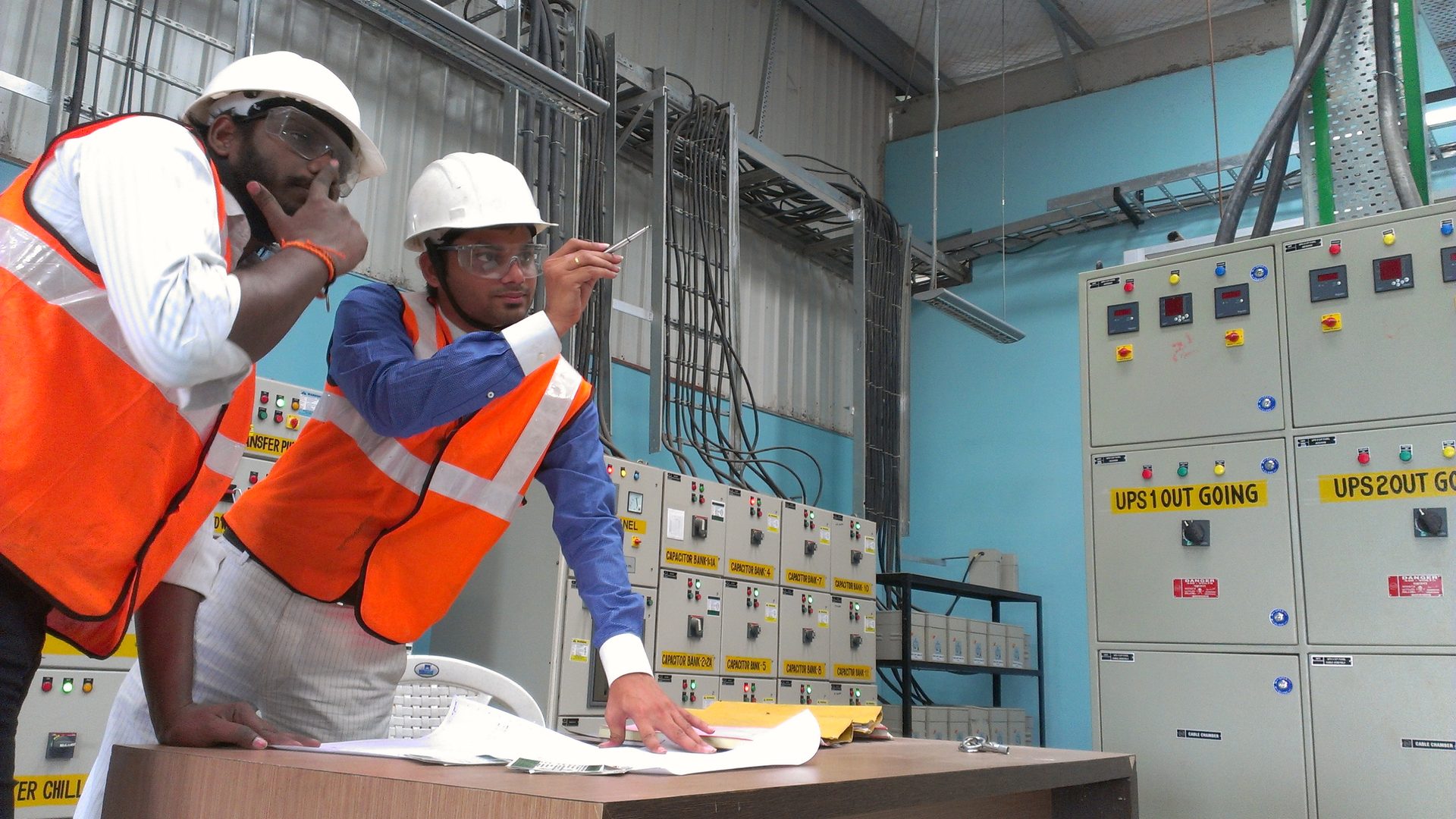
VB's survey crew flies in for your shutdown or maintenance window, opens and records every board, and flies out with the data. Modelling, report and label printing run in parallel, and the crew returns to fix labels. One mobilisation covers several sites in the same state, and travel appears on the quote as its own line.
- Replies in two business days, AEST · every enquiry from Sydney, Melbourne, Brisbane, Perth or Adelaide answered with a scope and quote inside two Australian business days
- Your software, your format · models in SKM PowerTools, ETAP, CYME, EasyPower, PSS®E or NEPLAN, native file handed over
- Australian references · reports in Australian English, cross-referenced to WHS reg 158, AS/NZS 4836:2023 and your state regulator
- Data captured once · ratings, CT ratios and settings recorded at the board in ElecTwin, VB's field data app
- Portfolio pricing · multi-site owners get one model standard, one report format and one rate card
| State | Cities and regions | Sites VB studies |
|---|---|---|
| New South Wales | Sydney, Western Sydney, Newcastle, Central-West Orana REZ | Data centres, BESS and solar, water and wastewater |
| Victoria | Melbourne, Geelong, Latrobe Valley, western Victoria | Data centres, pharmaceutical and food plants, BESS, water |
| Queensland | Brisbane, Gold Coast, Toowoomba, Gladstone, Townsville | Battery and solar farms, data centres, process plants, councils |
| WA and SA | Perth, Kwinana, Adelaide, Port Augusta | Process plants, water corporations, grid batteries |
| ACT, Tas, NT | Canberra, Hobart, Darwin | Government data centres, hospitals, water and power |
The 22 kV and 33 kV question
Does IEEE 1584 cover 22 kV and 33 kV switchgear?
No. IEEE 1584-2018 is validated from 208 V to 15 kV, and many Australian sites take supply or distribute at 22 kV or 33 kV. VB calculates those buses on ENA NENS 09 or the Lee method and names the method beside every result, so your 33 kV gear is covered and no auditor mistakes it for an IEEE 1584 value.
| What the site says | How the VB report handles it |
|---|---|
| "Our intake is 33 kV" | Every bus above 15 kV calculated on ENA NENS 09 or Lee, flagged in the table |
| "It's a battery and inverter site" | DC strings on a named DC method and AS/NZS 5139; inverter contribution from manufacturer data |
| "Our boards are Form 4" | Door-open, racking and testing tasks still get a calculated value and a label |
Price
How much does an arc flash study cost in Australia?
A VB arc flash study in Australia costs indicatively from A$7,000 for a site under 25 buses, A$7,000 to A$28,000 for 26 to 100 buses, and A$24,000 to A$100,000 for 101 to 300 buses, for the engineering. VB prices per bus by voltage class, from about A$210 per low-voltage bus, so you can check the quote against your single-line.
| Line | What counts | Indicative rate |
|---|---|---|
| Low-voltage bus, 1 kV and below | Switchboard section, MCC, distribution board | About A$210 |
| High-voltage bus, 1 kV to 15 kV | 11 kV switchgear cubicle, transformer primary, generator breaker | About A$390 |
| Bus above 15 kV | 22 kV and 33 kV switchgear, ring main units, intake bays | About A$600 |
| DC bus | Battery enclosure, UPS string, DC combiner | About A$270 |
| Field data collection by VB | Every bus opened and recorded on site | About A$70 per bus, plus travel |
| Labels printed and fixed | AS/NZS 4836:2023 Appendix B layout, photographed | About A$40 per label |
| Minimum project fee | Sites under about 25 buses | From A$7,000 |
Price follows bus count and voltage class, not floor area: a solar farm with 60 boards costs less than a data hall with 200. The full method is on the arc flash study cost page.
Why Australian sites choose VB
Why do Australian asset owners and EPCs bring VB the study?
Data centres, battery and solar farms, water utilities and councils, for owners and for EPCs.
Every voltage and every battery string in one table, each method named.
Per bus, by voltage class, line by line. No surprises at variation stage.
The engineer who built the model signs it; a second VB engineer checks it.
Surveys inside shutdown windows, so the data hall, plant or solar farm keeps running.
Questions your auditor will ask have been answered on 21 countries' worth of switchgear.
Before you ask
Questions Australian sites ask VB
Is an arc flash study required in Australia?
Yes, for switchboards rated 800 A or more. AS/NZS 4836:2023 clause 2.3.4 calls for an arc flash study on that equipment, Queensland's 2026 guide for safe working on energised equipment says the same, and WHS Regulation 158 requires a recorded risk assessment before energised work. A VB arc flash study supplies the incident energy that assessment needs, board by board.
What are the arc flash standards in Australia?
The WHS Regulations (regs 158 and 161), AS/NZS 4836:2023, the Energy Safe Victoria and WorkSafe Victoria Arc Flash Hazard Management guideline (2022), Queensland's Electrical Safety Regulation 2026, ENA NENS 09-2014 and AS/NZS 5139:2019 for batteries. Incident energy is calculated to IEEE 1584-2018, and global operators also audit to NFPA 70E.
What changed for arc flash in AS/NZS 4836:2023?
The 2023 edition added an arc flash study for equipment rated 800 A or more, moved PPE from "flame retardant" to "arc rated", added Category 5 up to 75 cal/cm², and gave example labels in Appendix B. Large boards without a study default to Category 4 clothing, so a VB study pays back on every live task.
Does IEEE 1584 cover 22 kV and 33 kV switchgear?
No. IEEE 1584-2018 was built on test data from 208 V to 15 kV. VB calculates 22 kV and 33 kV switchgear and ring main units on ENA NENS 09, the Australian network guideline, or the Lee method, and prints the method beside each result.
What does Energy Safe Victoria check about arc flash?
ESV includes arc flash in its audits of HV and complex installations. Its 2022 guideline with WorkSafe Victoria expects a study to IEEE 1584-2018 or ENA NENS 09, switch rooms labelled with incident energy, and controls for live work. VB's report is laid out so an ESV auditor finds each item in minutes.
How is arc flash assessed on a battery system?
AS/NZS 5139:2019 treats arc flash as a battery energy hazard, gives a DC energy equation in clause 3.2.4 and requires signage above 4 cal/cm² in clause 7.11. VB models battery strings, combiners and inverter inputs on a named DC method and lists them beside the AC buses in one table.
How much does an arc flash study cost in Australia?
Indicatively from A$7,000 under 25 buses, A$7,000 to A$28,000 for 26 to 100 buses, and A$24,000 to A$100,000 for 101 to 300 buses, for VB's engineering. Field data collection, labels and travel are separate lines. The free check on this page gives your band in 30 seconds and a firm quote within two business days.
How often should an arc flash study be updated in Australia?
At least every five years, and sooner after any change to a transformer, feeder, generator, UPS or protection setting. Energy Queensland's arc flash standard STNW3053 and NFPA 70E 130.5 both point to a five-year review. VB prints the study date on every label, so the next review is planned, not found at audit.
Who provides arc flash studies in Australia?
VB Engineering delivers arc flash studies across Australia: data centres in Sydney and Melbourne, battery and solar farms in Queensland, New South Wales, Victoria and South Australia, water utilities and councils, and process plants in Brisbane and Perth, for owners directly and as the study subcontractor to EPCs and electrical contractors.
Does VB do arc flash studies in Melbourne, Sydney and Brisbane?
Yes. VB runs arc flash studies and arc flash analysis in Melbourne for data centres, pharmaceutical plants and Victorian water utilities, in Sydney and Western Sydney for hyperscale and colocation data centres, and in Brisbane and across Queensland for battery and solar farms, councils and process plants. Perth, Adelaide, Canberra and regional sites are covered by the same fly-in crew.
How quickly can VB start on an Australian site?
The scope and quote arrive within two business days of the free check. A typical study takes about 4 weeks under 25 buses, 5 to 7 weeks near 100 buses and 8 to 11 weeks near 300, counted from first site access, with the crew's travel planned around your shutdown window.
Four answers. Your price band now. A firm Australian quote in two business days.
Data centre, battery or solar farm, water plant or process site, from Sydney to Perth: a VB study engineer replies with the scope, the schedule and a line-by-line AUD quote. Free, by email.
Get price estimateRather write? Email connect@groupvb.com with your approximate bus count and "Australia arc flash" in the subject.