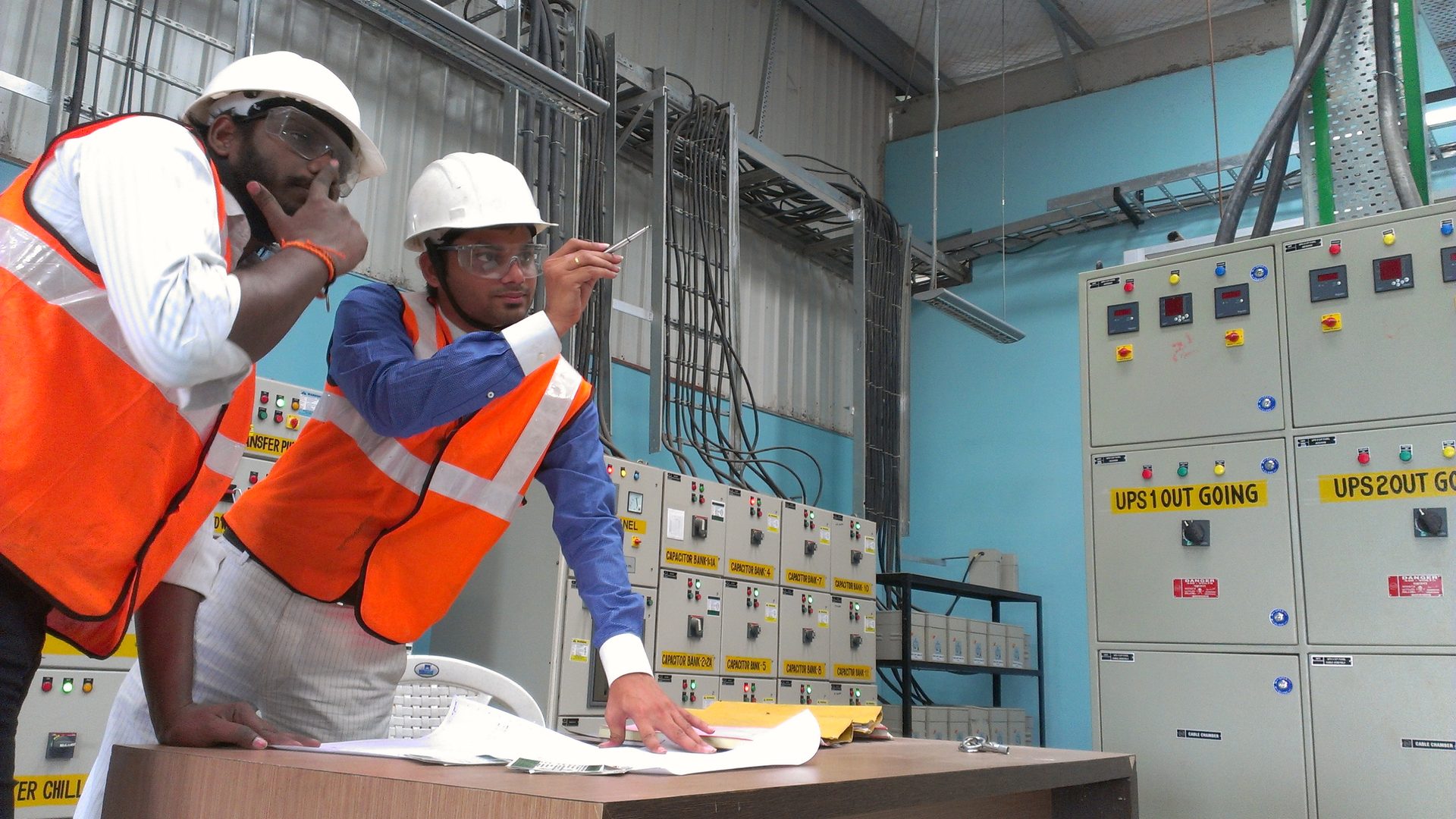
Power system study cost · scope of work · report · India and GCC
Adding load, connecting to the grid or answering an audit? See what sets the cost of a power system study, what it covers and what you receive.
A power system study is scoped by the size of the electrical network and the studies selected, not by the plant's floor area. Load flow and short circuit are the base; motor starting, harmonics, protection coordination and transient stability add to it. Most industrial studies take 3 to 6 weeks from complete data to the signed report.
Every study named in the scopeModelled in ETAP or SKMModel files handed overIndia and GCC plants
Your study scope, now
| Network | |
|---|---|
| Studies | |
| Duration | |
| Before we start | |
| Price | Sent by a VB engineer after your enquiry, with the scope and assumptions |
Durations are VB planning figures, October 2026, modelled (category 3). For the price, send your enquiry: a VB engineer checks the bus count against your single line diagram and replies with a fixed price and scope. Short form, no phone call unless you ask.
Trusted by the World's Most Demanding Plants.











- 0studies delivered by VB engineering teams
- 0countries
- 0power system tools VB teams work in
- 0weeks for a typical base study, data in hand (modelled)
- 0VB working in plants since
Study and country counts and year founded: VB Engineering project register. Tools: ETAP, SKM PowerTools, CYME, EasyPower, PSS®E, NEPLAN. Duration: VB planning model, October 2026, modelled (category 3).
How it works
- 1
Count your buses
Every panel or switchboard bus on your single line diagram, LV and MV counted separately.
- 2
Pick the studies
Load flow and short circuit always; motor starting, harmonics and coordination when your trigger needs them.
- 3
Send your enquiry
A VB engineer checks the count against your SLD and replies with the price and scope.
When the study is due
When does a plant need a power system study now?
A plant needs a power system study whenever the network changes or someone asks for proof it is safe. Four moments trigger almost every study VB delivers: new load or new sources, a grid or utility connection, trips and equipment failures, and an audit, insurer, parent company or EPC specification that asks for the study report.
New load, a DG, UPS, solar plant or BESS
Yes, a new study is due when you add a DG, UPS, solar plant, BESS, a large motor or a new block. Fault levels rise, voltage drops change and the existing transformer may not carry the new load; a transformer sizing and loading study answers that last question.
Grid or utility connection
Utilities ask for load flow, short circuit and protection data before they connect a new plant, a captive generator or a solar and BESS installation. Inverter-based plants go further, into a renewable integration impact study.
Trips, failures and power quality
Nuisance trips, capacitor banks that fail early, drives that fault and voltage dips when a large motor starts are network problems. The study finds the cause before another part is replaced.
Audit, insurer, parent or EPC spec
Insurers, multinational parents and EPC specifications ask for a current study: short circuit ratings checked against equipment, protection settings documented and the arc flash study built on the same model.
The standards
Which standards does a power system study follow?
An industrial power system study follows the IEEE 3002 series of recommended practices for each analysis and IEC 60909 or ANSI/IEEE C37 for short-circuit duty. Harmonics are checked against IEEE 519-2022. Grid-connected plants add the utility's connection requirements; in India, renewable parks submit the study list issued by CTUIL (Rev 0, 9 March 2025).
| Study | Standard or reference | What it settles |
|---|---|---|
| Load flow | IEEE 3002.2 | Bus voltages, feeder and transformer loading in every operating case |
| Short circuit | IEC 60909-0 or ANSI/IEEE C37, IEEE 3002.3 | Fault current at every bus against breaker and busbar ratings |
| Motor starting | IEEE 3002.7-2018 | Voltage dip and acceleration time when a large motor starts |
| Harmonics and power quality | IEEE 519-2022 | Voltage and current distortion at the point of connection, filter sizing |
| Protection coordination | IEC 60255, IEEE C37.112, IEEE 242 | Relay and breaker settings so only the faulted section trips |
| Renewable connection, India | CTUIL list of studies, Rev 0, 9 Mar 2025 | RMS and EMT models and plant-level tests for final connection data |
Scope of work
What does a power system study scope of work include?
A power system study scope of work lists each study by name, the data VB needs for it and the output you receive. A complete scope names the operating cases to run, the software, who collects field data, the review rounds and who signs the report. A scope that says only "power system study" cannot be compared or checked.
| Study | What VB needs from the plant | What you receive | Standard or add-on |
|---|---|---|---|
| Load flow | SLD, transformer and cable data, load list by operating case | Bus voltage and loading tables, overloaded items flagged | Standard |
| Short circuit | Utility fault level, generator and motor data | Fault current per bus against equipment ratings, under-rated items listed | Standard |
| Motor starting | Motor data sheets and starting method | Voltage dip and acceleration time per large motor, starter advice | Add-on |
| Harmonics and power quality | Drive and rectifier list, capacitor banks, measured data if any | THD at each bus against IEEE 519, filter or detuning advice | Add-on |
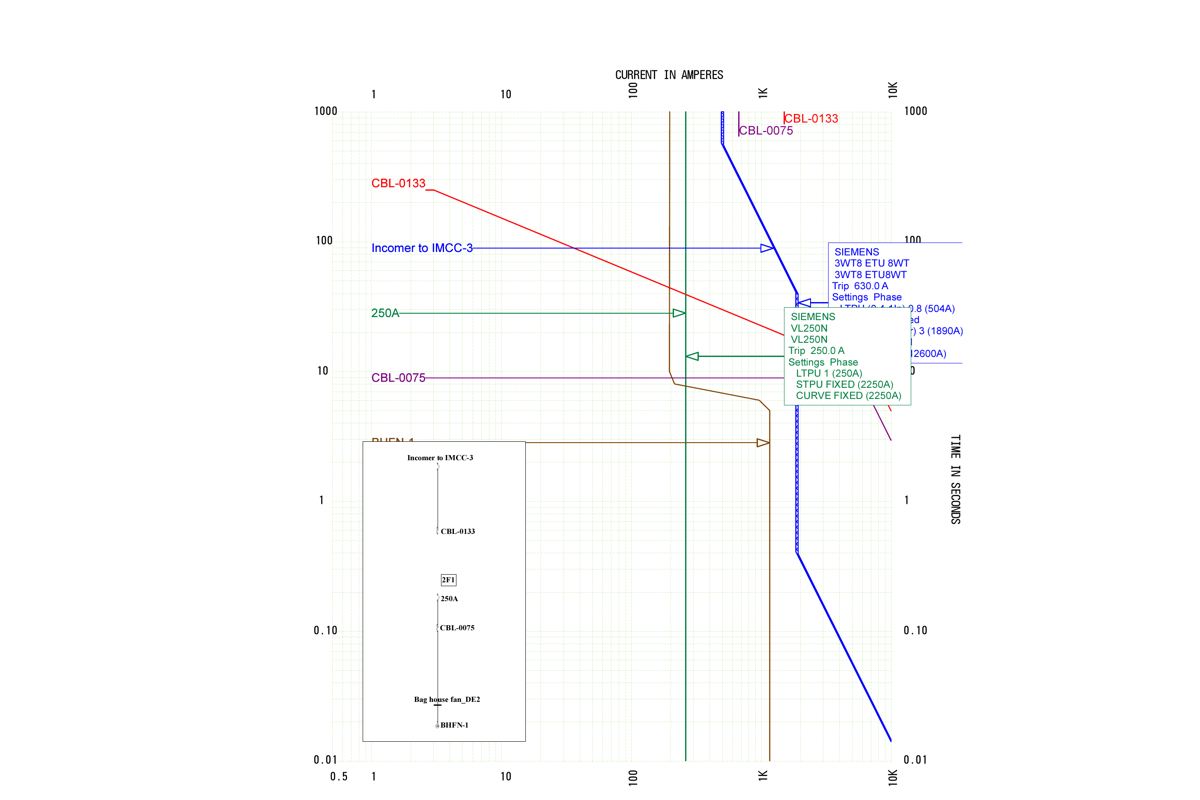
| Protection coordination | Relay and breaker types and present settings | Time-current curves and a settings table to apply | Add-on |
| Transient stability | Generator, governor and exciter data | Stability margins, load-shedding scheme check | Quoted after SLD review |
| Arc flash study | Same model plus protective device settings | Incident energy per bus and labels, scoped on the same model | Add-on |
Before the study starts
What data does the plant collect before the study starts?
The plant needs a single line diagram and the nameplate data of everything on it before a power system study can start. Missing data is the most common reason a study runs late: VB builds the model only from data that is checked against the site, never from assumptions that are not listed in the report.
- Single line diagram · current, with every incomer, bus coupler and feeder
- Utility fault level · minimum and maximum, from the utility or the connection agreement
- Transformers and generators · rating, impedance, vector group, tap range
- Cables and busducts · size, length and type per feeder
- Motors and drives · rating, starting method, drive type
- Protection · relay and breaker models and present settings
When the SLD is outdated, VB's field team records the data on site in ElecTwin®, priced separately from the study.

The price
How much does a power system study cost in India and the GCC?
The cost of a power system study depends on the number of buses in the network, the studies selected, the operating cases to run and whether field data has to be collected. Load flow and short circuit are the base; motor starting, harmonics and coordination add to it. VB quotes a fixed price for each plant after an engineer reviews the single line diagram.
| What sets the price | Why it matters | What to send with your enquiry |
|---|---|---|
| Number of buses | Each LV and MV bus is modelled, run and checked in every case | Single line diagram or a bus count |
| Studies selected | Each add-on study needs its own data, runs and report section | The studies you need, or your trigger |
| Operating cases | Generators on or off, grid off, bus coupler closed: each is a full run | How the plant is normally run |
| State of the data | An outdated SLD has to be reconciled on site first | The date of your last SLD revision |
| Dynamic studies | Transient stability and grid compliance need machine and control data | Generator, inverter and utility details |
What makes a power system study cost more, or less?
The network has to be walked and recorded before the model can be built.
Every extra case is another full run and review.
Transient stability and grid compliance need machine and control data and are scoped after review.
The model is built in days, not weeks.
Load flow, short circuit, coordination and arc flash share the same model and the same data.
VB works in the tool your group already uses, so the model is handed over ready to maintain.
Field data collection, when needed, is quoted as its own line so the engineering price can be compared directly.
Method and duration
How long does a power system study take?
A base load flow and short circuit study takes about 3 weeks once complete data is in hand; adding motor starting, harmonics and coordination brings most industrial studies to 4 to 6 weeks. Field data collection, when needed, runs before the clock starts. Durations are VB's modelled planning figures, October 2026.
- 1
Data review
Week 1 · SLD and nameplates checked, gaps listed.
- 2
Model build
Week 1-2 · network built in ETAP or SKM and validated.
- 3
Studies run
Week 2-4 · every operating case run and checked.
- 4
Review
Week 3-5 · findings reviewed with your engineers.
- 5
Signed report
Week 3-6 · report, model files and settings issued.
Modelled (category 3): VB planning figures, October 2026, for a plant of about 150 buses or fewer with complete data.
What you receive
What is in a power system study report?
A power system study report contains the input data and assumptions, the results of every study and operating case, a list of non-compliant equipment with recommendations, and the protection settings to apply. VB also hands over the software model, so the next study or plant change starts from your own file.
| Report section | What it shows |
|---|---|
| Data and assumptions | Every input, its source and any assumption, listed |
| Results by study | Load flow, short circuit and each add-on, per operating case |
| Findings and actions | Overloaded or under-rated equipment, with the fix and its priority |
| Settings | Relay and breaker settings table, when coordination is in scope |
| Model files | The ETAP or SKM project, yours to keep |
Before you sign
How do you compare two power system study quotes?
Compare two power system study quotes line by line, not by the total. The lower quote often leaves out field data collection, operating cases, the software model or the settings table. Ask each bidder the same six questions below; a quote that cannot answer them in writing is not comparable.
| Question to ask | Why it matters | VB's answer |
|---|---|---|
| Is each study listed by name? | "Power system study" alone can mean two studies or seven | Every study named in the scope |
| How many operating cases? | Fault levels and loading change with generators and couplers | Cases agreed before the model is built |
| Who collects field data? | The biggest hidden cost in a low quote | Priced as its own line |
| Which software, and do we get the model? | Without the model, every change starts from zero | ETAP or SKM model handed over |
| Is a settings table included? | Findings without settings cannot be applied | Included when coordination is in scope |
| Who signs, and how many review rounds? | Accountability for the results | Named engineer, review rounds stated |
A study, planned
What does a power system study look like for a plant adding a new block?
A modelled mid-size API pharma plant in South India adds a production block with a new transformer and two 160 kW motors: 60 LV buses and 6 MV buses. The plant asks for load flow, short circuit and motor starting before it buys the switchgear.
| Finding | Modelled result | Action |
|---|---|---|
| Existing transformer loading with the new block | 92% of rating at peak | New block fed from its own transformer |
| Fault level at the main PCC | Rises from 38 kA to 46 kA | Two 36 kA feeder breakers replaced |
| Voltage dip, 160 kW motor started direct on line | 14% at the MCC | Soft starter, dip brought to 7% |
| Programme | 4 weeks from complete data | Signed report, settings and model handed over |
Modelled, illustrative (category 3): VB power system study planning model, October 2026, for a plant of this shape; not a record of any one project.
Tool expertise
Which software do VB's power system teams work in?
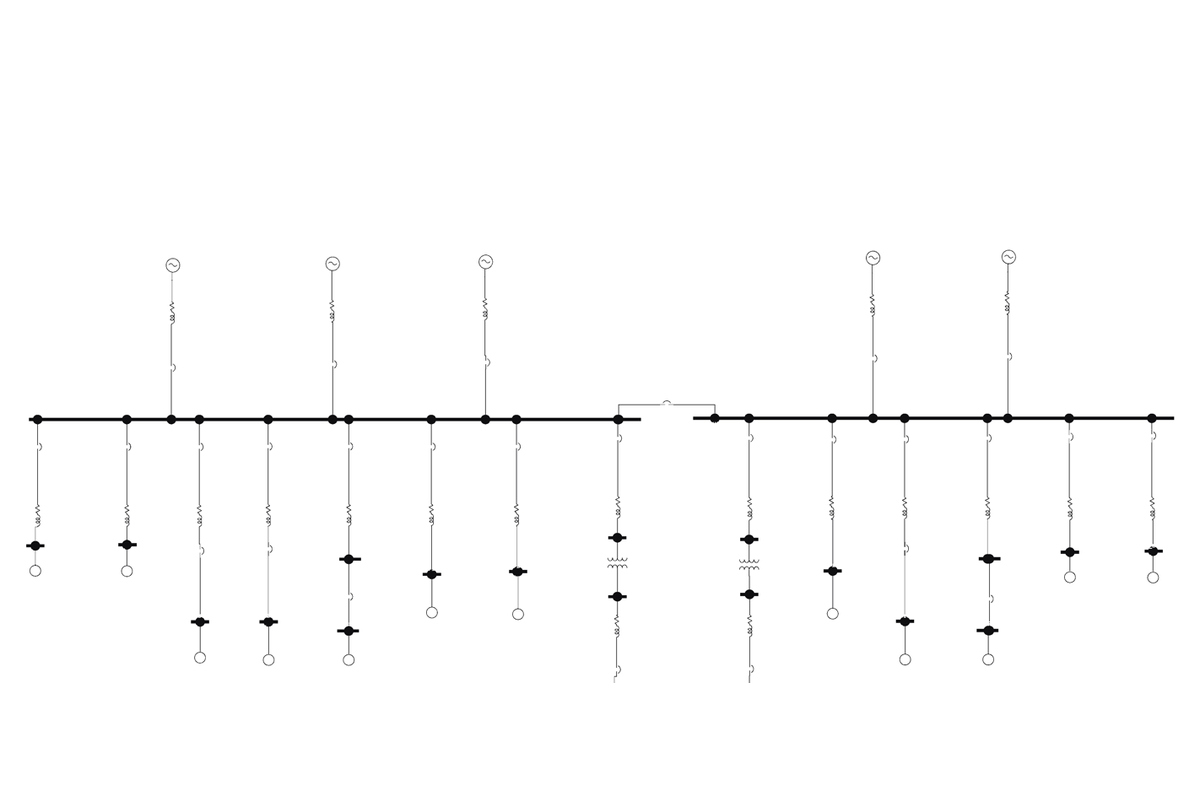
VB has dedicated engineering teams with hands-on expertise in ETAP, SKM PowerTools, CYME, EasyPower, PSS®E and NEPLAN. Your study runs in the software your plant or group electrical standard already uses, and the model is handed over with the report.
Before you book
Questions buyers ask about power system study cost and scope
How much does a power system study cost in India?
The cost depends on the number of buses, the studies selected, the operating cases and whether field data has to be collected. Send an enquiry with your single line diagram or bus count and the studies you need, and a VB engineer replies with a fixed price and scope for your plant.
How much does a power system study cost in the GCC?
GCC studies are priced the same way: by bus count, studies selected, operating cases and the state of the data, plus any utility connection requirements. Send an enquiry with your single line diagram, and a VB engineer replies with a fixed price and scope.
How long does a power system study take?
A base load flow and short circuit study takes about 3 weeks once complete data is in hand, and most industrial studies with motor starting, harmonics and coordination take 4 to 6 weeks. Field data collection, when needed, runs before that clock starts.
Do I need a new study when I add a DG, UPS, solar plant or BESS?
Yes. Every new source or large load changes fault levels, voltage drops and transformer loading, so the existing study no longer describes the plant. VB updates the existing model when one is available, which costs less than starting again.
Can my existing transformer take the new load, and which study tells me?
The load flow study shows the transformer's loading with the new load in every operating case. When the margin is small, a transformer sizing and loading study checks the rating, temperature and the cost of a new unit against an upgrade.
What does an insurer, parent company or EPC specification usually ask for?
They usually ask for a current short circuit study with equipment ratings checked, documented protection settings, and an arc flash study built on the same model. Many multinational parents also ask for the study to be updated after every major plant change.
What data should we keep ready before the study starts?
Keep the single line diagram, the utility fault level, transformer and generator nameplates, cable sizes and lengths, motor data and the present relay and breaker settings ready. If the SLD is outdated, VB's field team records the data on site.
What does the final report contain, and do we receive the software model?
The report lists the input data and assumptions, the results of every study and operating case, non-compliant equipment with recommended fixes, and the settings to apply. VB hands over the ETAP or SKM model with the report.
Is field data collection included in the price?
No. VB prices field data collection as its own line, per site, so you can compare the engineering price directly with other quotes and skip data collection when your SLD and nameplate data are current.
How often should a power system study be updated?
Update the study after every major change to the network, such as a new transformer, generator, solar plant, BESS or large motor, and review it at least every five years. VB PowerPulse keeps the model and settings current every year. See VB PowerPulse.
Where next
Where can you read more about each study?
Count your buses, pick your studies, send your enquiry.
A VB engineer checks the count against your single line diagram and replies with a fixed price, the scope of work and the data list for your plant.
Get price estimatePrefer email? Write to connect@groupvb.com with your bus count in the subject line.