Piping isometric drawing services in India, checked against your plant
12,000+ drawings delivered. Isometrics, P&IDs and layouts for operating plants across India since 2014.
Trusted by the World’s Most Demanding Plants.















What is a piping isometric drawing?
A piping isometric drawing is a single-line drawing of one pipeline, shown in three dimensions at 30 degrees, with every length, fitting, valve, weld and support needed to fabricate and install it. It is not drawn to scale: the dimensions carry the truth, not the picture. Each isometric covers one line number, so a plant with 400 lines usually needs 400 or more isometric sheets.
Fabricators cut spools from it, stress engineers model the line from it, and inspectors mark thickness-monitoring points on it. That is why an isometric that does not match the installed pipe costs money the moment someone uses it.
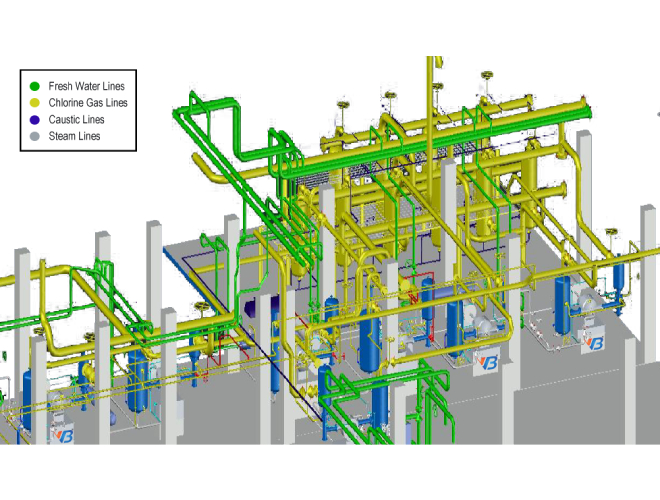
What is the difference between a P&ID and an isometric drawing?
A P&ID shows how the process is connected and controlled; an isometric shows where one pipe physically runs and how to build it. Plants need both, and they must agree: the line number, size and valves on the isometric come from the P&ID.
| Question | P&ID | Piping isometric |
|---|---|---|
| What it shows | Equipment, lines, valves and instruments, and how they connect | One line in 3D: lengths, elevations, fittings, welds, supports |
| Scale | Schematic, not to scale | Not to scale, fully dimensioned |
| One sheet covers | A process unit or a system | One line number, or part of it |
| Who uses it | Process, operations, HAZOP teams | Fabricators, erectors, stress and inspection engineers |
| Built from | Process design, then site updates | The P&ID plus the 3D model, a site walk or a laser scan |
If your P&IDs no longer match the plant, fix them first: see P&ID drafting and updation.
Can isometrics be drawn without a 3D model?
Yes. VB draws isometrics from four sources, and picks the one that gives a correct drawing at the lowest cost for each area of your plant.
| Source | What we do | Best for |
|---|---|---|
| Your 3D model | Extract isometrics from AutoCAD Plant 3D, AVEVA or Smart 3D models, then check against the plant | New units and recent projects with a maintained model |
| Site walk | Measure each line with tapes, laser distance meters and photos; draw and dimension | Single lines, tie-ins and open areas |
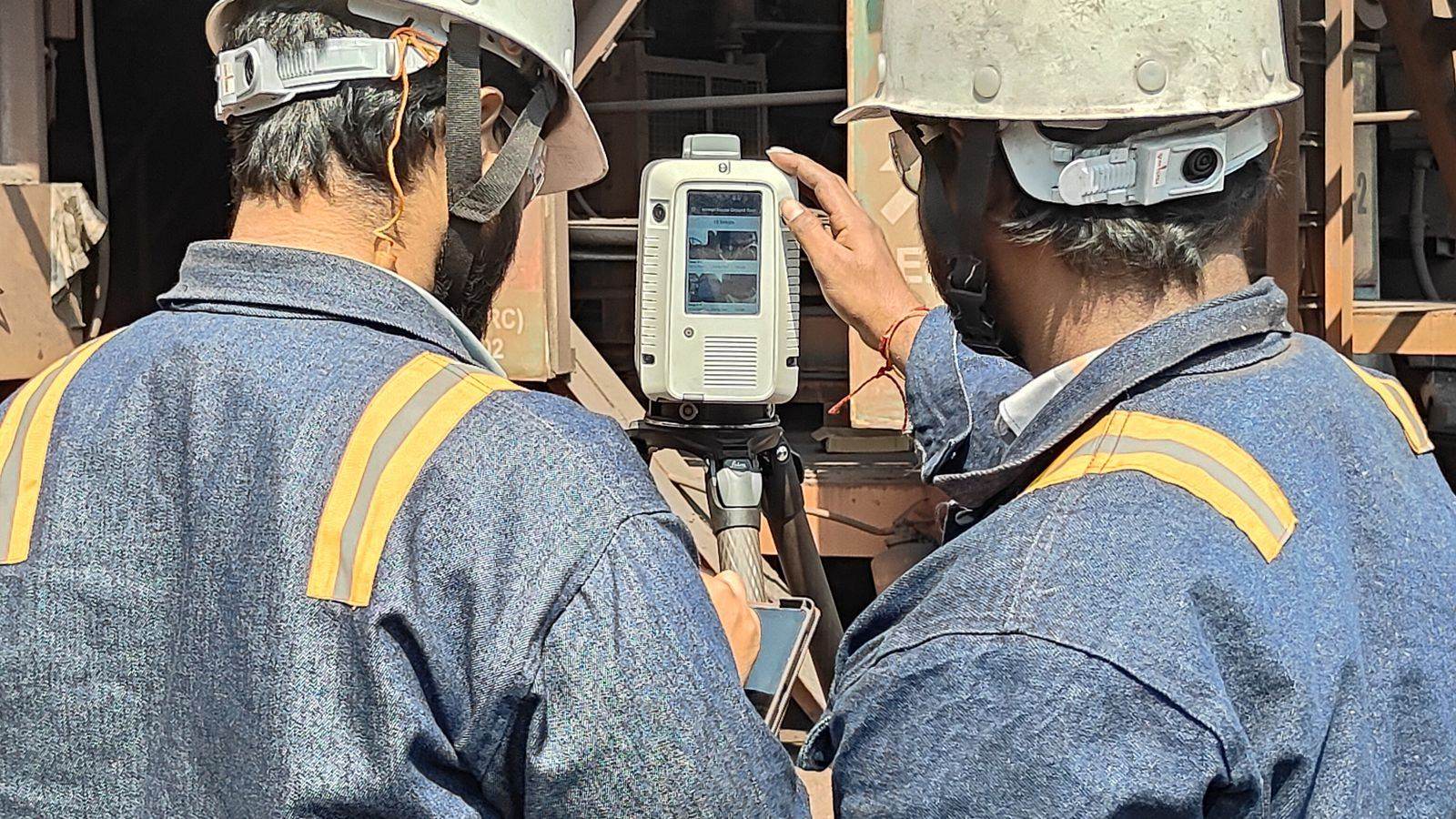
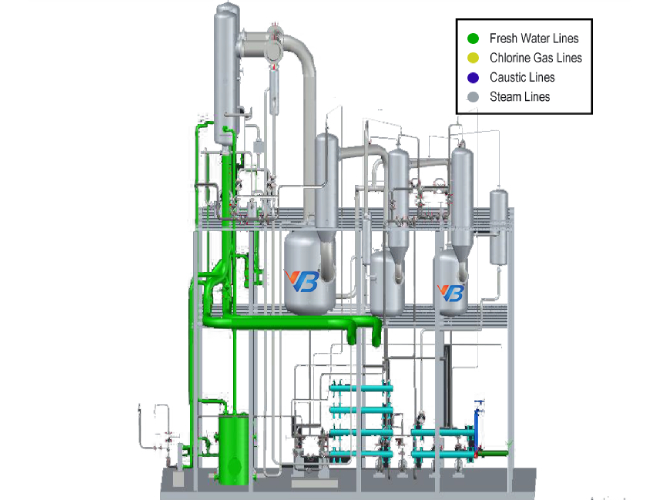
| Laser scan | Scan with a Leica RTC360, model the lines from the point cloud, extract isometrics | Congested racks, high or hot areas, shutdown prefabrication. See laser scan to as-built isometrics |
| Old drawings and redlines | Redraw paper or PDF isometrics in CAD, then walk the lines that changed | Plants with a full set of legacy isometrics. See drawing digitisation |
Which plants do we draw isometrics for?
Refineries, terminals and petrochemical units, where shutdown spools are fabricated against the clock. Pharma and API plants, where every modification needs drawings the quality team can sign (see VB FieldSure for pharma). Specialty and bulk chemical plants (see VB FieldSure for chemicals). Power and utility blocks: steam, condensate and cooling water lines.
When do plants need new piping isometrics?
Plants order isometrics when a pipe has to be cut, moved, replaced or analysed and nobody trusts the drawing in the file, usually weeks before a shutdown.
Which standards do piping isometrics follow?
Isometrics follow ISO 6412-2 for how a pipeline is represented, carry the design data required by ASME B31.3 for process piping, describe fittings to the ASME B16 series, and keep your plant piping class and drafting standard.
| Standard | What it governs on your isometrics |
|---|---|
| ISO 6412-2 | Simplified representation of pipelines in isometric projection: axes, symbols, dimensions and flow direction. |
| ASME B31.3 | Process piping code. The isometric carries the data it relies on: material, schedule, design and test conditions, weld identification. |
| ASME B16 series | Flanges (B16.5), butt-weld fittings (B16.9) and valves, so every BOM line describes a part a fabricator can buy. |
| Your piping class and standard | Line numbering, specification codes and title block follow your plant, so new and old isometrics read alike. |
Need the P&IDs corrected before the isometrics are drawn? See P&ID drafting and updation.
What does each isometric package include?
Every package delivers one dimensioned isometric per line, the material take-off your fabricator needs, and a record of what was checked on site.
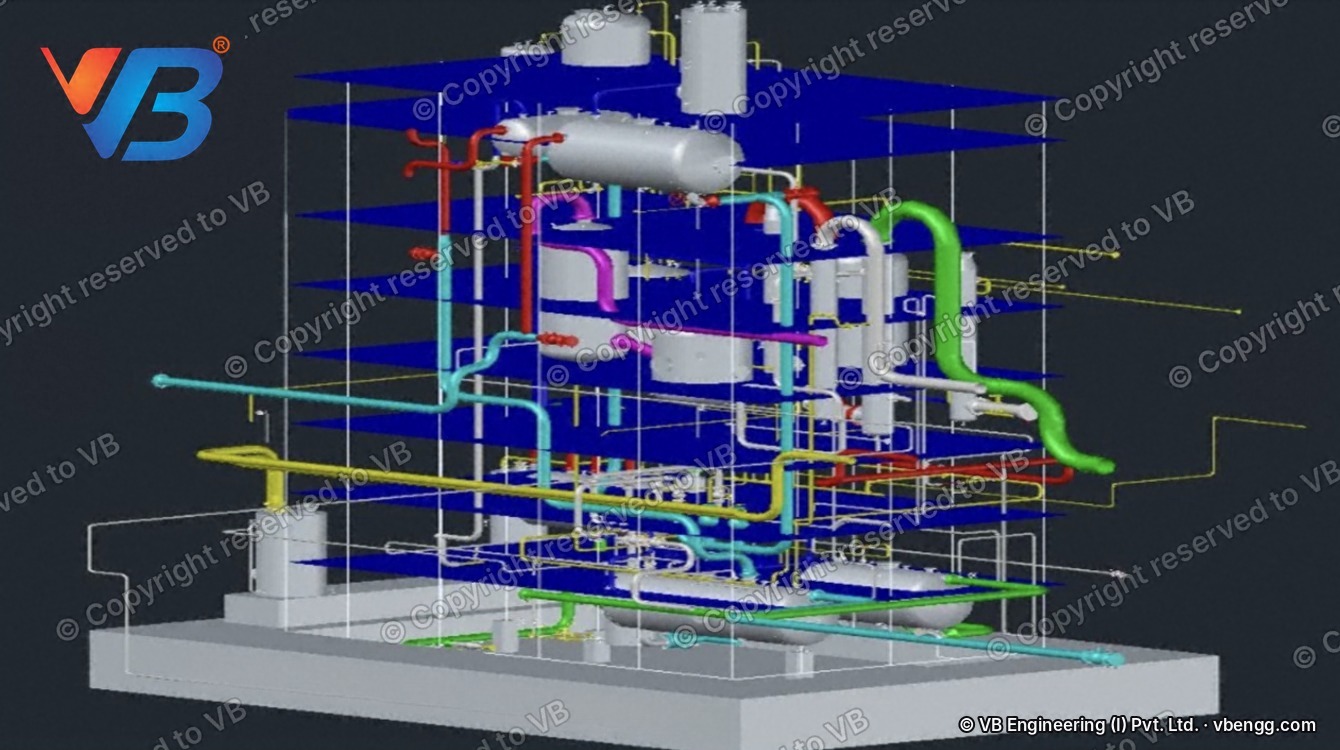
- One isometric per line number, dimensioned, with elevations, slope and flow direction
- Bill of materials and material take-off per sheet and for the package
- Weld numbers, spool breaks and cut lengths for fabrication
- Supports, insulation, test pressure and piping class in the title block
- Line list reconciled with the P&ID, with differences logged
- DWG and PDF, or AutoCAD Plant 3D native files on request
Send one P&ID sheet and its layout: we draw three sample isometrics first.
How is piping isometric drafting priced?
Piping isometrics are priced per isometric sheet: sheets extracted from a maintained 3D model cost least, sheets drawn from a site walk add the field time, and laser scanning is priced by area where lines are congested or out of reach.
| Part of the work | How it is priced | What moves the price |
|---|---|---|
| Isometrics from your model or drawings | Per isometric sheet | Fittings per line, BOM and weld detail, output format |
| Isometrics with a site walk | Per isometric sheet, plus site days | Plant access, line length, height and congestion |
| Laser scan for congested areas | Per scanned area, plus modelling | Area size, rack density, accuracy needed |
Get a price estimate
Answer three questions about your lines. A piping engineer benchmarks them against past isometric packages and replies with an estimate.
No figures on screen: a piping engineer reviews your answers first. Three sample isometrics can be drawn first if you want proof.
How does VB produce piping isometrics?
An isometric package runs in four steps: the line list is built from your P&IDs, the lines are captured on site or taken from your model, the isometrics are drawn, and each sheet is checked against the plant before issue.
Line list
Line list built from your P&IDs, piping class and the lines in scope.Capture
Lines walked and measured, or scanned with a Leica RTC360 where congested.Draw
Isometrics drawn or extracted in AutoCAD Plant 3D with BOM, welds and spools.Check and issue
Each sheet checked against the P&ID and the plant, then issued with the line list.An isometric drawn from an outdated drawing is a precise drawing of the wrong pipe. Spools cut to it are found wrong at the tie-in, during the shutdown, when every hour costs the most. That is why each line is checked against the plant before the sheet is issued.
Which scanners and software does VB use for P&ID and as-built work?
VB captures plants with the Leica RTC360 laser scanner, registers the scans in Leica Cyclone REGISTER 360 PLUS and Autodesk ReCap Pro, and draws P&IDs and 3D models in AutoCAD Plant 3D and Autodesk Revit. Your drawings come back in the format your engineers already open every day.
| Stage | Tools we work in | What you receive |
|---|---|---|
| Capture | Leica RTC360 laser scanner · FARO Focus and Trimble X7 where your site specifies them · field walkdown with redline markup | Coloured 3D scans of every area in scope, with photos |
| Register | Leica Cyclone REGISTER 360 PLUS · Autodesk ReCap Pro | One registered point cloud (E57, RCP or RCS) |
| Draw P&IDs | AutoCAD Plant 3D P&ID · AutoCAD P&ID · AVEVA and Hexagon Smart P&ID formats on request | Verified P&IDs in DWG and PDF, with the tag database |
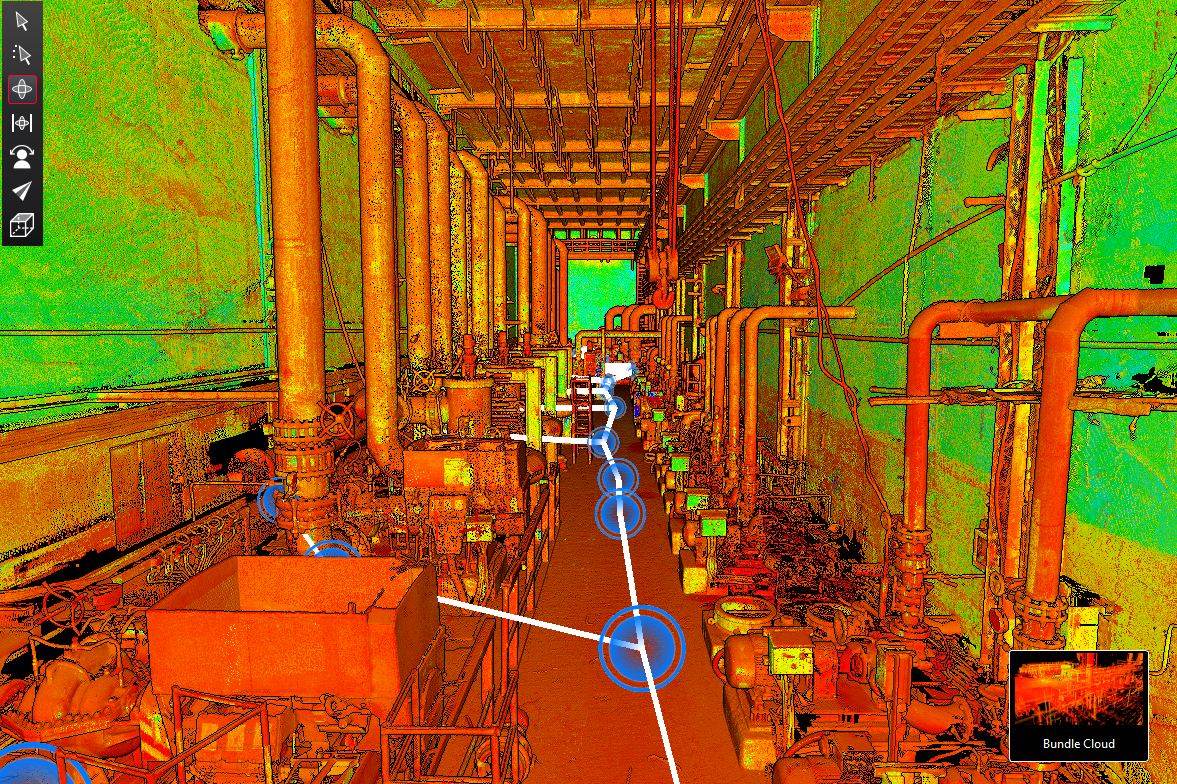
| Model | AutoCAD Plant 3D · Autodesk Revit | 3D plant model, isometrics and general arrangement drawings |
| Review | Autodesk Navisworks | One federated model your team can walk through and mark up (NWD) |
Running a different platform? Tell us which one in the form. We deliver in the software and drawing standard your plant already uses.
Product names are trademarks of their respective owners.
What does an isometric package look like from start to finish?
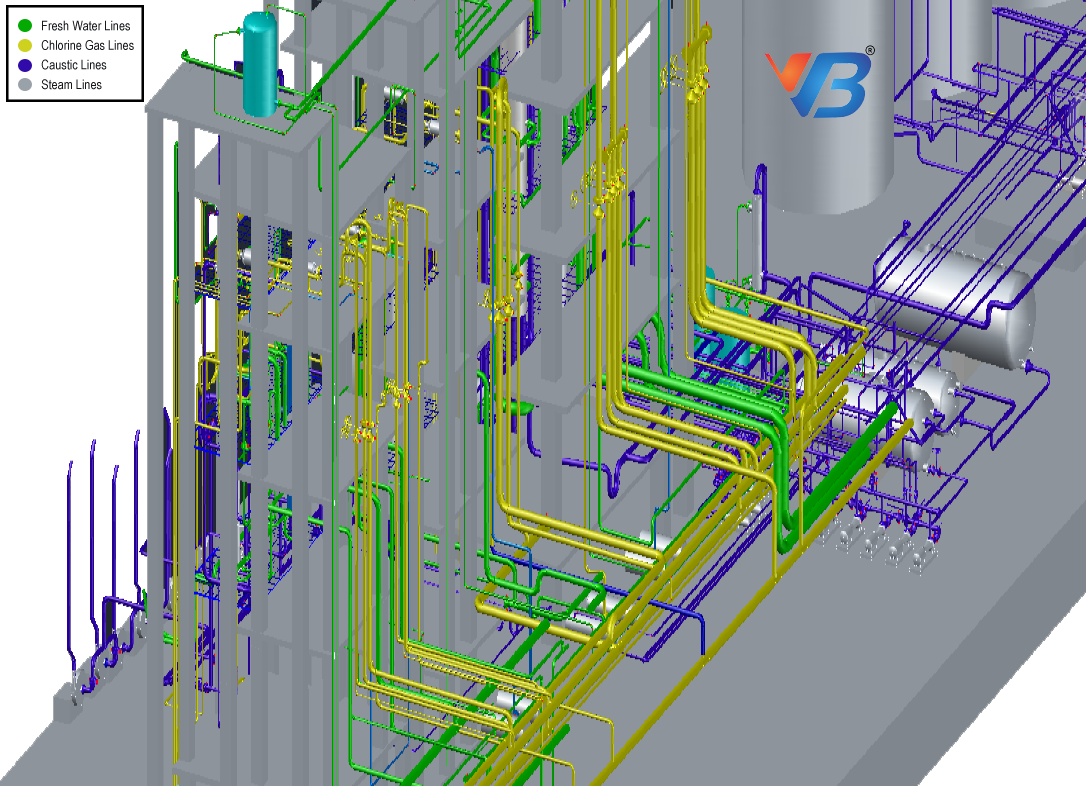
A typical package starts with a line list and a shutdown date, and ends with dimensioned isometrics a fabrication shop can cut spools from without a site visit of its own.
The differences found on site follow a pattern: a line rerouted around equipment added after the original design, a valve changed for a different type, supports moved, and spools replaced in kind with different fittings. Each one is logged against the line, drawn into the isometric and reported back, so the P&ID and the isometric agree when the package is issued.
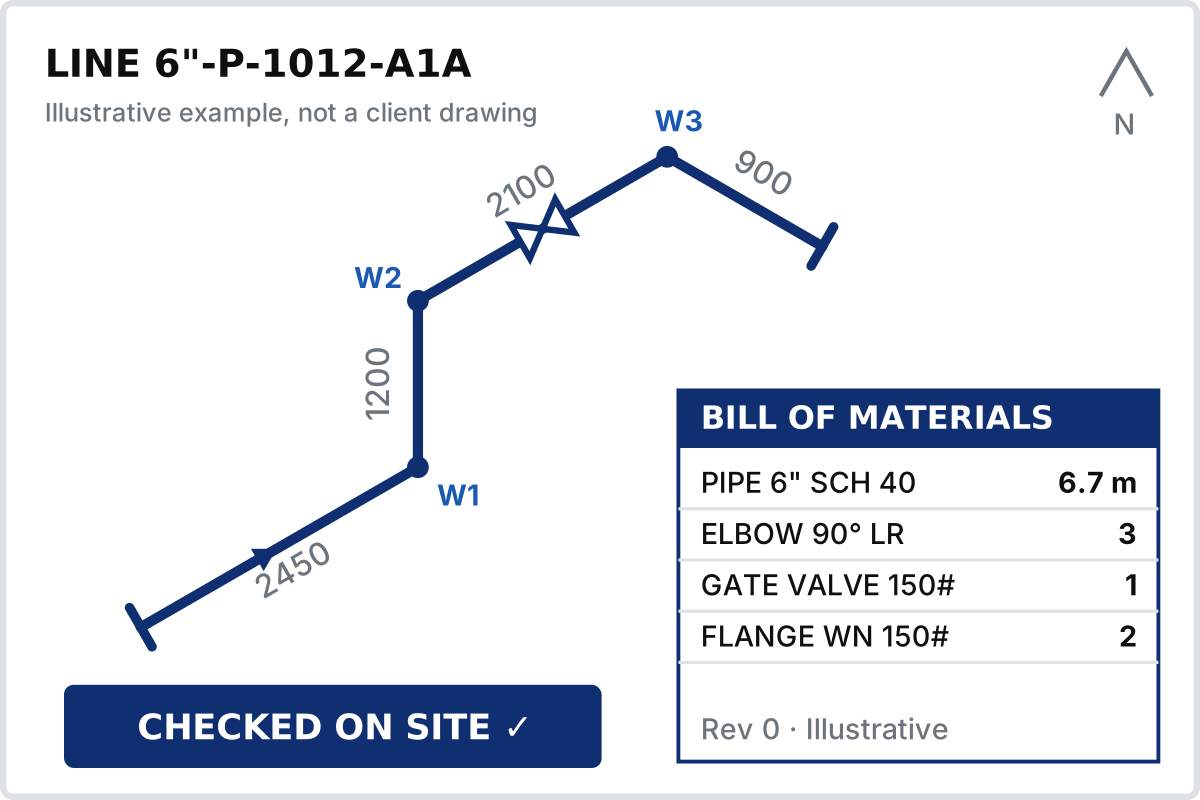
Want proof first? Start with three sample isometrics.
Who draws, checks and approves your isometrics?
Every proposal names the piping designer who draws, the engineer who checks against the plant, and the approver, with CVs.
Piping design lead
CV shared with the proposalChecking engineer
CV shared with the proposalVB Engineering approver
CV shared with the proposalPiping isometrics: questions buyers ask
What is a piping isometric drawing?
A piping isometric drawing is a dimensioned, single-line 3D drawing of one pipeline at 30 degrees. It shows every length, elevation, fitting, valve, weld and support, and lists the material, so a fabricator can cut and assemble the line without visiting the plant.
What is the difference between a P&ID and an isometric drawing?
A P&ID shows how equipment, lines and instruments are connected and controlled. An isometric shows where one line physically runs, with dimensions and material. The line number, size and valves on the isometric must match the P&ID.
Who makes piping isometric drawings for plants in India?
VB Engineering draws piping isometrics for operating refineries, chemical, pharma and power plants across India, from a site walk, a laser scan or the plant 3D model, and checks each sheet against the plant before issue.
Can isometrics be made from a laser scan or point cloud?
Yes. The area is scanned with a Leica RTC360, the lines are modelled from the point cloud, and isometrics are extracted from the model. It is the fastest route for congested racks, high or hot lines, and shutdown prefabrication.
Can you produce isometrics from our existing 3D model?
Yes. Isometrics can be extracted from AutoCAD Plant 3D, AVEVA E3D or PDMS, and Smart 3D models. Because models drift from the plant after handover, lines that have been modified are checked on site before the sheets are issued.
What does each isometric include?
Line number and piping class, dimensions and elevations, fittings, valves and flanges, weld numbers and spool breaks, supports, insulation and test data, and a bill of materials. The package also includes a line list reconciled with the P&ID.
Do you check the isometrics against the plant?
Yes. Every line in scope is checked on site or against a laser scan before its sheet is issued, and any difference from the P&ID or the old drawing is logged and reported.
How long does an isometric package take?
It depends on the number of lines, the source of the data and plant access. The proposal states a schedule for your line count, and three sample isometrics can be drawn first so you can judge the quality before the full package starts.
Can the isometrics be used for pipe stress analysis?
Yes. Isometrics with verified geometry, supports and design data are the input a stress engineer needs. VB also runs pipe stress analysis on the same lines.
How is isometric drafting priced?
Per isometric sheet. Sheets from a maintained 3D model cost least; a site walk adds field time; laser scanning is priced by area. The estimator on this page gets you an estimate by email with a written proposal.
Where to go next
Get a price estimate for your piping isometrics
Share the number of lines, where the data will come from and the date you need the drawings. A piping engineer reviews it and replies with an estimate and a written proposal.
- Three sample isometrics drawn first, if you want proof
- A line list for the lines in scope
- An estimate and schedule for the full package
Prefer to write? connect@groupvb.com · or WhatsApp us from the chat button
VB Group® · Sustainability A Certainty.
Short form. Written proposal.
Your name, work email and company, the type of work, and whether the lines need a site check.